Palpitations History Taking Guide
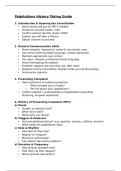
1. Introduction & Opening the Consultation
Wash hands and put on PPE if needed
Introduce yourself (name, role)
Confirm patient identity (name, DOB)
Explain you will take a history
Obtain consent to proceed
2. General Communication Skills
Show empathy (respond to verbal & non-verbal cues)
Use active listening (body language, verbal responses)
Maintain appropriate eye contact
Use open, relaxed, professional body language
Avoid interrupting the patient
Establish rapport (ask how they are, offer seat)
Signpost during consultation (explain what you are discussing)
Summarise regularly
3. Presenting Complaint
Open questions to explore symptoms:
o “What brought you in today?”
o “Tell me about your palpitations.”
Confirm patient’s understanding of palpitations (pounding,
fluttering, irregular heartbeat)
4. History of Presenting Complaint (HPC)
a) Onset
Sudden or gradual start?
When did it start?
What were you doing?
b) Triggers & Relievers
Any precipitating factors? (e.g. exertion, anxiety, caffeine, alcohol)
What helps the palpitations stop?
c) Rate & Rhythm
How fast do they feel?
Regular or irregular?
Missed or extra beats?
Can patient tap out the pattern?
d) Duration & Frequency
How long do episodes last?
How often do they happen?
Worst episode description?
1. Introduction & Opening the Consultation
Wash hands and put on PPE if needed
Introduce yourself (name, role)
Confirm patient identity (name, DOB)
Explain you will take a history
Obtain consent to proceed
2. General Communication Skills
Show empathy (respond to verbal & non-verbal cues)
Use active listening (body language, verbal responses)
Maintain appropriate eye contact
Use open, relaxed, professional body language
Avoid interrupting the patient
Establish rapport (ask how they are, offer seat)
Signpost during consultation (explain what you are discussing)
Summarise regularly
3. Presenting Complaint
Open questions to explore symptoms:
o “What brought you in today?”
o “Tell me about your palpitations.”
Confirm patient’s understanding of palpitations (pounding,
fluttering, irregular heartbeat)
4. History of Presenting Complaint (HPC)
a) Onset
Sudden or gradual start?
When did it start?
What were you doing?
b) Triggers & Relievers
Any precipitating factors? (e.g. exertion, anxiety, caffeine, alcohol)
What helps the palpitations stop?
c) Rate & Rhythm
How fast do they feel?
Regular or irregular?
Missed or extra beats?
Can patient tap out the pattern?
d) Duration & Frequency
How long do episodes last?
How often do they happen?
Worst episode description?