10/6/25, 11:21 PM WGU D358 Study Guide
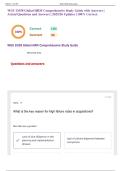
WGU D358 Global HRM Comprehensive Study Guide with Answers |
Actual Questions and Answers | 2025/26 Updates | 100% Correct.
Correct
Incorrect
WGU D358 Global HRM Comprehensive Study Guide
184 Correct terms
Questions and answers
Lack of due diligence in the
companies
phases
,10/6/25, 11:21 PM WGU D358 Study Guide
Overestimation of market growth Insufficient financial resources for
potential integration
Don't know?
2 of 184
Term
What is challenges faced by IHRM?
7. Global Talent Management
Give this one a go later!
Compensation and Benefits
Balancing fairness and comparability while accounting for cost-of-living differences,
currency fluctuations, and host-country norms.
Global Talent Management
Attracting, retaining, and developing talent in competitive global markets.
Dealing with “brain drain” vs. “brain circulation.”
Political and Economic Risks
Instability, currency devaluation, trade disputes, or sudden changes in host-country
laws.
,10/6/25, 11:21 PM WGU D358 Study Guide
Managing across diverse values, communication styles, leadership expectations,
and work ethics.
Example: Individualism in the U.S. vs. collectivism in Asia.
Don't know?
3 of 184
Definition
are structured plans and processes developed by organizations to
prepare for, respond to, and recover from emergencies or unexpected
events that can disrupt operations and endanger employees,
especially across international locations.
Give this one a go later!
The Hr Information System Crisis Management Programs
Employee Stock Ownership Plans Internet Interventions
Don't know?
4 of 184
Definition
is a legal framework in which employees have the right to participate in
a company's management and decision-making processes, particularly
, 10/6/25, 11:21 PM WGU D358 Study Guide
at the board or supervisory level.
It's most commonly associated with Germany and some other
European countries
Give this one a go later!
Divergence Common Law
Mediation Co-determination
Don't know?
5 of 184
Term
Geocentrism
Give this one a go later!
Culture is the shared set of values, beliefs, norms, and behaviors that guide how
people in a society or group interact and interpret the world.
Best practices are drawn from all regions/cultures rather favoring than the
headquarters or local preferences.
WGU D358 Global HRM Comprehensive Study Guide with Answers |
Actual Questions and Answers | 2025/26 Updates | 100% Correct.
Correct
Incorrect
WGU D358 Global HRM Comprehensive Study Guide
184 Correct terms
Questions and answers
Lack of due diligence in the
companies
phases
,10/6/25, 11:21 PM WGU D358 Study Guide
Overestimation of market growth Insufficient financial resources for
potential integration
Don't know?
2 of 184
Term
What is challenges faced by IHRM?
7. Global Talent Management
Give this one a go later!
Compensation and Benefits
Balancing fairness and comparability while accounting for cost-of-living differences,
currency fluctuations, and host-country norms.
Global Talent Management
Attracting, retaining, and developing talent in competitive global markets.
Dealing with “brain drain” vs. “brain circulation.”
Political and Economic Risks
Instability, currency devaluation, trade disputes, or sudden changes in host-country
laws.
,10/6/25, 11:21 PM WGU D358 Study Guide
Managing across diverse values, communication styles, leadership expectations,
and work ethics.
Example: Individualism in the U.S. vs. collectivism in Asia.
Don't know?
3 of 184
Definition
are structured plans and processes developed by organizations to
prepare for, respond to, and recover from emergencies or unexpected
events that can disrupt operations and endanger employees,
especially across international locations.
Give this one a go later!
The Hr Information System Crisis Management Programs
Employee Stock Ownership Plans Internet Interventions
Don't know?
4 of 184
Definition
is a legal framework in which employees have the right to participate in
a company's management and decision-making processes, particularly
, 10/6/25, 11:21 PM WGU D358 Study Guide
at the board or supervisory level.
It's most commonly associated with Germany and some other
European countries
Give this one a go later!
Divergence Common Law
Mediation Co-determination
Don't know?
5 of 184
Term
Geocentrism
Give this one a go later!
Culture is the shared set of values, beliefs, norms, and behaviors that guide how
people in a society or group interact and interpret the world.
Best practices are drawn from all regions/cultures rather favoring than the
headquarters or local preferences.