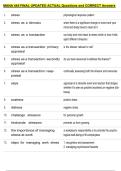
MANA 445 FINAL UPDATED ACTUAL Questions and CORRECT Answers
1. stress physiological response pattern
2. stress as a stimulus when there is a significant change or event and your
mind and body have to react to it
3. stress as a transaction our body and mind react to stress which is how it tells
apart different stressors
4. stress as a transaction: primary is the stressor relevant to me?
appraisal
5. stress as a transaction: secondly do you have resources to address the stressor?
appraisal
6. stress as a transaction: reap- continually assessing both the stressor and resources
praisal
7. selye appraisal of a stressful event and reaction that shapes
whether it's seen as positive (eustress) or negative (dis-
tress)
8. eustress positive stress
9. distress negative stress
10. challenge stressors for personal growth
11. hindrande stressors prevents us from growing
12. the importance of managing a workplace's responsibility is to promote the psycho-
stress at work logical well-being of it's employees
13. steps for managing work stress 1. recognition and assessment
2. managing psychosocial hazards
, 14. managing psychosocial hazards: reduction or removal of actual stressors
primary interventions
15. managing psychosocial hazards: minimizing negative consequences
secondary interventions
16. managing psychosocial hazards: helps individuals who can not maintain stress effectively
tertiary interventions
17. organizational approaches to works design, communication, wellness programs
stress management
18. violence an actual physical assault or threat of an assault
19. workplace aggression not all aggression is violent but all violence is aggressive
20. 5 types of workplace aggression harassment, bullying, incivility, abusive supervision, sex-
ual harassment
21. risk factor (SAVT1) scheduling, authority, valuables, taking care of others
22. risk factor (SAVT1): scheduling working alone, at night, on weekends
23. risk factor (SAVT1): authority have influence over others
24. risk factor (SAVT1): valuables working around valuable products or objects
25. risk factor (SAVT1): taking care of physical or emotional care of others
others
26. imminent risk (SAVT2) swearing, agitation, volume, threat
27. limits of SAVT many risky occupations cannot stop providing their ser-
vice to manage risk
1. stress physiological response pattern
2. stress as a stimulus when there is a significant change or event and your
mind and body have to react to it
3. stress as a transaction our body and mind react to stress which is how it tells
apart different stressors
4. stress as a transaction: primary is the stressor relevant to me?
appraisal
5. stress as a transaction: secondly do you have resources to address the stressor?
appraisal
6. stress as a transaction: reap- continually assessing both the stressor and resources
praisal
7. selye appraisal of a stressful event and reaction that shapes
whether it's seen as positive (eustress) or negative (dis-
tress)
8. eustress positive stress
9. distress negative stress
10. challenge stressors for personal growth
11. hindrande stressors prevents us from growing
12. the importance of managing a workplace's responsibility is to promote the psycho-
stress at work logical well-being of it's employees
13. steps for managing work stress 1. recognition and assessment
2. managing psychosocial hazards
, 14. managing psychosocial hazards: reduction or removal of actual stressors
primary interventions
15. managing psychosocial hazards: minimizing negative consequences
secondary interventions
16. managing psychosocial hazards: helps individuals who can not maintain stress effectively
tertiary interventions
17. organizational approaches to works design, communication, wellness programs
stress management
18. violence an actual physical assault or threat of an assault
19. workplace aggression not all aggression is violent but all violence is aggressive
20. 5 types of workplace aggression harassment, bullying, incivility, abusive supervision, sex-
ual harassment
21. risk factor (SAVT1) scheduling, authority, valuables, taking care of others
22. risk factor (SAVT1): scheduling working alone, at night, on weekends
23. risk factor (SAVT1): authority have influence over others
24. risk factor (SAVT1): valuables working around valuable products or objects
25. risk factor (SAVT1): taking care of physical or emotional care of others
others
26. imminent risk (SAVT2) swearing, agitation, volume, threat
27. limits of SAVT many risky occupations cannot stop providing their ser-
vice to manage risk