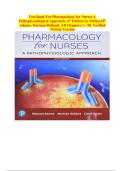
Test Bank for Philosophies and Theories
for Advanced Nursing Practice 3rd Edition
Janie B. Butts and Karen L. Rich
,Table of contents
• Chapter 1: Introduction to Philosophy and Science
• Chapter 2: Philosophy, Science, and Nursing
• Chapter 3: Philosophical Schools of Thought
• Chapter 4: Epistemology and Nursing Science
• Chapter 5: Theory Development in Nursing Science
• Chapter 6: Concept Development in Nursing Theory
• Chapter 7: Analysis and Evaluation of Nursing Theories
• Chapter 8: Nursing Theories and Their Application
• Chapter 9: Philosophical Underpinnings of Nursing Research
• Chapter 10: Grand Nursing Theories
• Chapter 11: Middle-Range Nursing Theories
• Chapter 12: Practice Theories and Nursing Models
• Chapter 13: Application of Nursing Theories to Advanced Practice
• Chapter 14: Emerging Trends in Nursing Philosophy and Theory
• Chapter 15: Integration of Nursing Philosophies and Theories into Practice
, Chapter 1 – Philosophy of Science: An Introduction
1.
Philosophy in nursing primarily serves to:
A. Define the laws governing healthcare practice
B. Provide a framework for examining beliefs and guiding practice
C. Establish empirical rules for research
D. Replace evidence-based practice with theoretical assumptions
Answer: B. Provide a framework for examining beliefs and guiding practice
Rationale:
Philosophy offers a systematic approach to understanding beliefs and values, guiding nurses
in decision-making and practice. It supports, not replaces, evidence-based practice and research.
2.
The primary purpose of nursing science is to:
A. Generate universal theories for all healthcare disciplines
B. Develop knowledge that directly improves patient care
C. Study the history of nursing education
D. Focus solely on biological aspects of patient health
Answer: B. Develop knowledge that directly improves patient care
Rationale:
Nursing science emphasizes applied research and theory development aimed at enhancing
care outcomes and addressing patient-specific needs, beyond biology alone.
3.
Which statement best differentiates science from philosophy in nursing?
A. Science deals with ethics, while philosophy deals with facts.
B. Philosophy uses systematic observation, while science uses personal values.
C. Science focuses on empirical evidence, whereas philosophy examines meaning and values.
D. Science and philosophy are interchangeable in nursing practice.
, Answer: C. Science focuses on empirical evidence, whereas philosophy examines meaning and
values.
Rationale:
Science is evidence-based and empirical, while philosophy analyzes beliefs, ethics, and
meaning, complementing scientific findings.
4.
Which philosophical branch addresses the nature of knowledge and methods for acquiring it?
A. Ontology
B. Ethics
C. Epistemology
D. Metaphysics
Answer: C. Epistemology
Rationale:
Epistemology explores how knowledge is constructed, its validity, and its application in
disciplines like nursing.
5.
An advanced practice nurse examines their personal values and beliefs about patient autonomy
before implementing a new policy. This is an example of:
A. Epistemological analysis
B. Ethical relativism
C. Philosophical reflection
D. Empirical testing
Answer: C. Philosophical reflection
Rationale:
Philosophical reflection involves examining one’s beliefs and values, which is essential for
ethical nursing decisions and leadership.
6.
In nursing, the integration of philosophy and science is necessary to:
for Advanced Nursing Practice 3rd Edition
Janie B. Butts and Karen L. Rich
,Table of contents
• Chapter 1: Introduction to Philosophy and Science
• Chapter 2: Philosophy, Science, and Nursing
• Chapter 3: Philosophical Schools of Thought
• Chapter 4: Epistemology and Nursing Science
• Chapter 5: Theory Development in Nursing Science
• Chapter 6: Concept Development in Nursing Theory
• Chapter 7: Analysis and Evaluation of Nursing Theories
• Chapter 8: Nursing Theories and Their Application
• Chapter 9: Philosophical Underpinnings of Nursing Research
• Chapter 10: Grand Nursing Theories
• Chapter 11: Middle-Range Nursing Theories
• Chapter 12: Practice Theories and Nursing Models
• Chapter 13: Application of Nursing Theories to Advanced Practice
• Chapter 14: Emerging Trends in Nursing Philosophy and Theory
• Chapter 15: Integration of Nursing Philosophies and Theories into Practice
, Chapter 1 – Philosophy of Science: An Introduction
1.
Philosophy in nursing primarily serves to:
A. Define the laws governing healthcare practice
B. Provide a framework for examining beliefs and guiding practice
C. Establish empirical rules for research
D. Replace evidence-based practice with theoretical assumptions
Answer: B. Provide a framework for examining beliefs and guiding practice
Rationale:
Philosophy offers a systematic approach to understanding beliefs and values, guiding nurses
in decision-making and practice. It supports, not replaces, evidence-based practice and research.
2.
The primary purpose of nursing science is to:
A. Generate universal theories for all healthcare disciplines
B. Develop knowledge that directly improves patient care
C. Study the history of nursing education
D. Focus solely on biological aspects of patient health
Answer: B. Develop knowledge that directly improves patient care
Rationale:
Nursing science emphasizes applied research and theory development aimed at enhancing
care outcomes and addressing patient-specific needs, beyond biology alone.
3.
Which statement best differentiates science from philosophy in nursing?
A. Science deals with ethics, while philosophy deals with facts.
B. Philosophy uses systematic observation, while science uses personal values.
C. Science focuses on empirical evidence, whereas philosophy examines meaning and values.
D. Science and philosophy are interchangeable in nursing practice.
, Answer: C. Science focuses on empirical evidence, whereas philosophy examines meaning and
values.
Rationale:
Science is evidence-based and empirical, while philosophy analyzes beliefs, ethics, and
meaning, complementing scientific findings.
4.
Which philosophical branch addresses the nature of knowledge and methods for acquiring it?
A. Ontology
B. Ethics
C. Epistemology
D. Metaphysics
Answer: C. Epistemology
Rationale:
Epistemology explores how knowledge is constructed, its validity, and its application in
disciplines like nursing.
5.
An advanced practice nurse examines their personal values and beliefs about patient autonomy
before implementing a new policy. This is an example of:
A. Epistemological analysis
B. Ethical relativism
C. Philosophical reflection
D. Empirical testing
Answer: C. Philosophical reflection
Rationale:
Philosophical reflection involves examining one’s beliefs and values, which is essential for
ethical nursing decisions and leadership.
6.
In nursing, the integration of philosophy and science is necessary to: