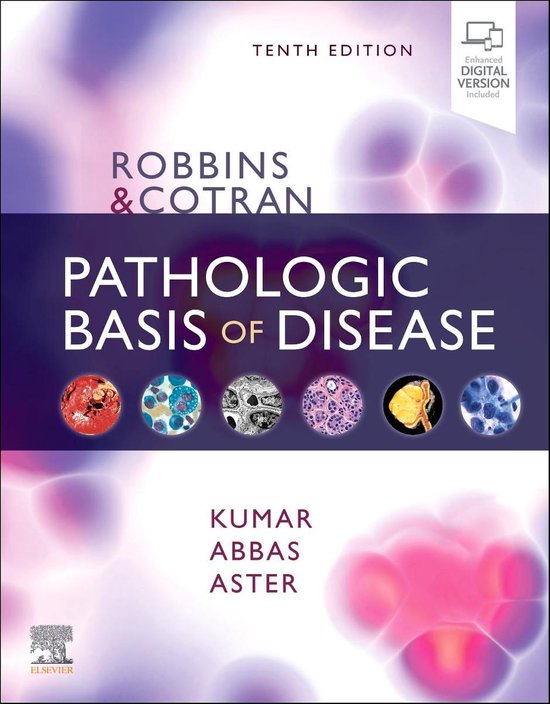
Robbins & Cotran 10th Ed. Pathology Test Bank | Chapter-
by-Chapter Questions & Verified Solutions
Robbins & Cotran Pathologic Basis of Disease
10th Edition
• Author(s)Vinay Kumar; Abul K. Abbas; Jon C. Aster
The Genome & Cellular Housekeeping
1. Chapter 1, Section: The Genome
A 42-year-old patient is diagnosed with a disorder linked
to a mutation in a long non-coding RNA (lncRNA) gene.
When reviewing the genetic report, the nurse understands
that the mutation most likely contributes to disease by
disrupting which of the following processes?
A. Encoding structural proteins for the cytoskeleton
B. Providing the blueprint for a key metabolic enzyme
C. Regulating the expression of other genes through
chromatin remodeling
D. Directly participating in the electron transport chain
Correct Answer: C
Rationale: The correct answer is C. Only about 1.5% of the
,human genome codes for proteins, while the vast majority
of non-coding DNA, including genes for long non-coding
RNAs, plays crucial regulatory roles. lncRNAs are involved
in epigenetic modifications, such as chromatin remodeling
and histone modification, which control gene expression
without altering the DNA sequence itself . A and B are
incorrect because they describe functions of protein-
coding genes. D is incorrect as proteins involved in the
electron transport chain are encoded by specific protein-
coding genes, not lncRNAs.
Teaching Point: Non-coding RNAs are key epigenetic
regulators of gene expression, not templates for proteins.
2. Chapter 1, Section: The Genome
A research study identifies a specific single nucleotide
polymorphism (SNP) that increases susceptibility to
inflammatory bowel disease. The nurse explains to a
patient that this genetic variant represents a:
A. Large-scale deletion of multiple exons within a gene.
B. Variation in the number of tandem repeats of a DNA
sequence.
C. Change in a single DNA base pair in the genome.
D. Insertion of a retrotransposon into a regulatory region.
Correct Answer: C
Rationale: The correct answer is C. By definition, a Single
Nucleotide Polymorphism (SNP) is a variation in a single
nucleotide (base pair) at a specific position in the genome .
,A describes a type of copy number variation (CNV). B
describes a different form of genetic variation involving
repetitive sequences. D describes a mutation caused by a
mobile genetic element.
Teaching Point: An SNP is a common genetic variation
involving a change in a single base pair.
3. Chapter 1, Section: Cellular Housekeeping
A patient with a rare neurodegenerative disease has a
mutation affecting the PARKIN (PARK2) gene. The nurse
understands that this mutation most directly impairs which
fundamental cellular process?
A. Synthesis of phospholipids for membrane integrity
B. Quality control through the removal of damaged
mitochondria
C. Fusion of healthy mitochondria to optimize energy
production
D. Regulation of the cell cycle and prevention of apoptosis
Correct Answer: B
Rationale: The correct answer is B. The PARKIN gene,
together with PINK1, is a central component of a quality
control pathway called mitophagy, which identifies and
clears damaged mitochondria via ubiquitylation,
preventing them from fusing with and poisoning healthy
organelles . A is a general function of mitochondria but is
not the primary role of PARKIN. C is the opposite of the
process PARKIN promotes; it helps remove mitochondria
, unfit for fusion. D is not a primary function of the PARKIN
pathway.
Teaching Point: The PINK1-PARKIN pathway is essential
for mitochondrial quality control by targeting damaged
organelles for destruction.
4. Chapter 1, Section: Cellular Housekeeping
During a lecture on cellular injury, the professor states that
the ubiquitin-proteasome system is crucial for degrading
misfolded proteins. A malfunction in this system would
most likely lead to the accumulation of damaged proteins
and is implicated in the pathogenesis of:
A. Cystic fibrosis, due to defective chloride channel
synthesis.
B. Amyotrophic lateral sclerosis (ALS) and Alzheimer
disease.
C. Pernicious anemia, due to lack of intrinsic factor.
D. Myocardial infarction, due to acute ischemia.
Correct Answer: B
Rationale: The correct answer is B. Neurodegenerative
diseases such as Alzheimer disease and ALS are
characterized by the accumulation of aggregated
misfolded proteins, often due to impairments in the
ubiquitin-proteasome system and other protein-quality
control mechanisms. A is caused by a mutation in the CFTR
gene leading to a functional defect, not primarily a protein
degradation failure. C is an autoimmune disorder. D is
by-Chapter Questions & Verified Solutions
Robbins & Cotran Pathologic Basis of Disease
10th Edition
• Author(s)Vinay Kumar; Abul K. Abbas; Jon C. Aster
The Genome & Cellular Housekeeping
1. Chapter 1, Section: The Genome
A 42-year-old patient is diagnosed with a disorder linked
to a mutation in a long non-coding RNA (lncRNA) gene.
When reviewing the genetic report, the nurse understands
that the mutation most likely contributes to disease by
disrupting which of the following processes?
A. Encoding structural proteins for the cytoskeleton
B. Providing the blueprint for a key metabolic enzyme
C. Regulating the expression of other genes through
chromatin remodeling
D. Directly participating in the electron transport chain
Correct Answer: C
Rationale: The correct answer is C. Only about 1.5% of the
,human genome codes for proteins, while the vast majority
of non-coding DNA, including genes for long non-coding
RNAs, plays crucial regulatory roles. lncRNAs are involved
in epigenetic modifications, such as chromatin remodeling
and histone modification, which control gene expression
without altering the DNA sequence itself . A and B are
incorrect because they describe functions of protein-
coding genes. D is incorrect as proteins involved in the
electron transport chain are encoded by specific protein-
coding genes, not lncRNAs.
Teaching Point: Non-coding RNAs are key epigenetic
regulators of gene expression, not templates for proteins.
2. Chapter 1, Section: The Genome
A research study identifies a specific single nucleotide
polymorphism (SNP) that increases susceptibility to
inflammatory bowel disease. The nurse explains to a
patient that this genetic variant represents a:
A. Large-scale deletion of multiple exons within a gene.
B. Variation in the number of tandem repeats of a DNA
sequence.
C. Change in a single DNA base pair in the genome.
D. Insertion of a retrotransposon into a regulatory region.
Correct Answer: C
Rationale: The correct answer is C. By definition, a Single
Nucleotide Polymorphism (SNP) is a variation in a single
nucleotide (base pair) at a specific position in the genome .
,A describes a type of copy number variation (CNV). B
describes a different form of genetic variation involving
repetitive sequences. D describes a mutation caused by a
mobile genetic element.
Teaching Point: An SNP is a common genetic variation
involving a change in a single base pair.
3. Chapter 1, Section: Cellular Housekeeping
A patient with a rare neurodegenerative disease has a
mutation affecting the PARKIN (PARK2) gene. The nurse
understands that this mutation most directly impairs which
fundamental cellular process?
A. Synthesis of phospholipids for membrane integrity
B. Quality control through the removal of damaged
mitochondria
C. Fusion of healthy mitochondria to optimize energy
production
D. Regulation of the cell cycle and prevention of apoptosis
Correct Answer: B
Rationale: The correct answer is B. The PARKIN gene,
together with PINK1, is a central component of a quality
control pathway called mitophagy, which identifies and
clears damaged mitochondria via ubiquitylation,
preventing them from fusing with and poisoning healthy
organelles . A is a general function of mitochondria but is
not the primary role of PARKIN. C is the opposite of the
process PARKIN promotes; it helps remove mitochondria
, unfit for fusion. D is not a primary function of the PARKIN
pathway.
Teaching Point: The PINK1-PARKIN pathway is essential
for mitochondrial quality control by targeting damaged
organelles for destruction.
4. Chapter 1, Section: Cellular Housekeeping
During a lecture on cellular injury, the professor states that
the ubiquitin-proteasome system is crucial for degrading
misfolded proteins. A malfunction in this system would
most likely lead to the accumulation of damaged proteins
and is implicated in the pathogenesis of:
A. Cystic fibrosis, due to defective chloride channel
synthesis.
B. Amyotrophic lateral sclerosis (ALS) and Alzheimer
disease.
C. Pernicious anemia, due to lack of intrinsic factor.
D. Myocardial infarction, due to acute ischemia.
Correct Answer: B
Rationale: The correct answer is B. Neurodegenerative
diseases such as Alzheimer disease and ALS are
characterized by the accumulation of aggregated
misfolded proteins, often due to impairments in the
ubiquitin-proteasome system and other protein-quality
control mechanisms. A is caused by a mutation in the CFTR
gene leading to a functional defect, not primarily a protein
degradation failure. C is an autoimmune disorder. D is