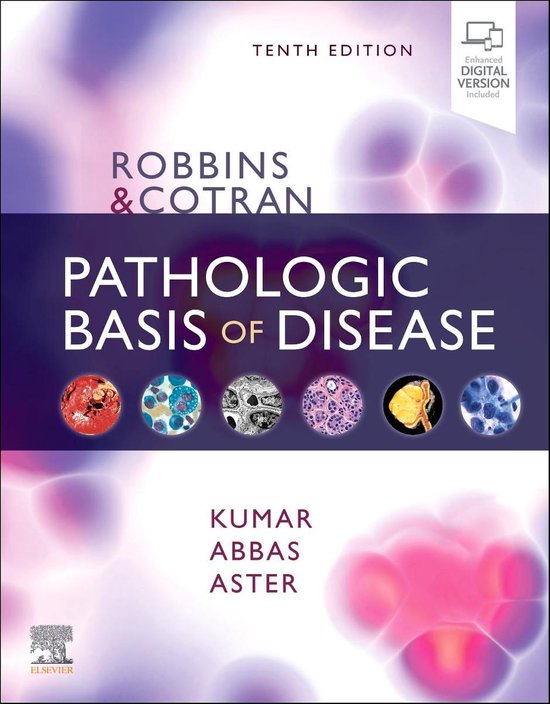
Robbins & Cotran 10th Ed. Pathology Test Bank | Chapter-
by-Chapter Questions & Verified Solutions
Robbins & Cotran Pathologic Basis of Disease
10th Edition
• Author(s)Vinay Kumar; Abul K. Abbas; Jon C. Aster
1. Cellular Housekeeping
A 45-year-old patient with a history of chronic smoking is
diagnosed with lung cancer. Genetic analysis reveals a mutation
in a gene encoding a protein critical for degrading damaged
proteins and organelles. A deficiency in this process leads to the
accumulation of toxic cellular debris, contributing to
carcinogenesis. Which fundamental cellular process is most
directly impaired by this mutation?
• A) Ubiquitin-proteasome degradation
• B) Autophagy
• C) DNA mismatch repair
• D) Mitochondrial fission
Correct Answer: B) Autophagy
Rationale: Autophagy is the primary cellular process for the
,degradation of damaged organelles and long-lived proteins via
lysosomes. Impaired autophagy leads to the accumulation of
toxic cellular debris, which can promote oxidative stress and
genomic instability, key factors in carcinogenesis . The
ubiquitin-proteasome system (A) primarily degrades short-lived
and misfolded proteins, not entire organelles. DNA mismatch
repair (C) is involved in correcting errors during DNA
replication, not clearing cytoplasmic debris. Mitochondrial
fission (D) is a dynamic process related to organelle division and
quality control, but not the primary degradation mechanism.
Teaching Point: Autophagy is a essential housekeeping process
that removes damaged organelles and proteins; its failure can
promote cancer.
2. Cellular Metabolism and Mitochondrial Function
A pathologist is explaining to medical students how a toxin
inhibiting mitochondrial cytochrome c oxidase would cause cell
injury. Which of the following fundamental cellular functions
would be most directly disrupted?
• A) Synthesis of phospholipids for membrane integrity
• B) Production of ATP via oxidative phosphorylation
• C) Detoxification of reactive oxygen species (ROS)
• D) Regulation of calcium ion storage
Correct Answer: B) Production of ATP via oxidative
phosphorylation
Rationale: Cytochrome c oxidase is Complex IV of the
mitochondrial electron transport chain. Its inhibition halts the
,transfer of electrons to oxygen, preventing the establishment of
the proton gradient necessary to drive ATP synthesis by ATP
synthase. This direct failure of oxidative phosphorylation is a
major cause of cellular energy failure . While mitochondria are
involved in other processes like phospholipid synthesis (A),
ROS detoxification (C), and calcium storage (D), these are not
the primary function of cytochrome c oxidase.
Teaching Point: The electron transport chain (Complexes I-IV)
creates the proton gradient used by ATP synthase to produce
ATP; inhibiting any complex disrupts energy production.
3. The Genome
A patient is found to have a genetic disorder caused by a
mutation in a non-protein-coding region of DNA that alters
chromatin structure. This mutation most likely affects which of
the following mechanisms?
• A) Splicing of messenger RNA (mRNA) exons
• B) Fidelity of DNA polymerase during replication
• C) Regulation of gene expression via epigenetic marks
• D) Amino acid sequence of a specific enzyme
Correct Answer: C) Regulation of gene expression via
epigenetic marks
Rationale: Non-coding DNA plays critical roles in the
regulation of gene expression, largely through epigenetic
mechanisms such as DNA methylation and histone modification.
These modifications alter chromatin structure (e.g., converting it
from open/euchromatin to closed/heterochromatin), thereby
, controlling gene accessibility without changing the protein
sequence . While non-coding DNA contains elements for
splicing (A), the scenario specifically describes altered
chromatin structure. It does not directly affect DNA polymerase
fidelity (B) or the amino acid sequence of a protein (D).
Teaching Point: Non-coding DNA is crucial for regulating gene
expression, primarily through epigenetic modifications that alter
chromatin structure.
4. Cellular Activation
A growth factor binds to its specific receptor tyrosine kinase
(RTK) on the surface of a quiescent cell, prompting it to enter
the cell cycle. Which of the following events must occur
immediately after receptor binding to initiate the intracellular
signaling cascade?
• A) Dimerization and trans-autophosphorylation of the
receptor
• B) Transcription of immediate-early genes in the nucleus
• C) Hydrolysis of GTP by small G-proteins
• D) Influx of calcium ions from the extracellular space
Correct Answer: A) Dimerization and trans-
autophosphorylation of the receptor
Rationale: The initial step for most RTKs upon ligand binding
is dimerization, which brings the intracellular kinase domains
together, allowing them to phosphorylate each other (trans-
autophosphorylation). This phosphorylation creates docking
sites for downstream signaling proteins, activating pathways like
by-Chapter Questions & Verified Solutions
Robbins & Cotran Pathologic Basis of Disease
10th Edition
• Author(s)Vinay Kumar; Abul K. Abbas; Jon C. Aster
1. Cellular Housekeeping
A 45-year-old patient with a history of chronic smoking is
diagnosed with lung cancer. Genetic analysis reveals a mutation
in a gene encoding a protein critical for degrading damaged
proteins and organelles. A deficiency in this process leads to the
accumulation of toxic cellular debris, contributing to
carcinogenesis. Which fundamental cellular process is most
directly impaired by this mutation?
• A) Ubiquitin-proteasome degradation
• B) Autophagy
• C) DNA mismatch repair
• D) Mitochondrial fission
Correct Answer: B) Autophagy
Rationale: Autophagy is the primary cellular process for the
,degradation of damaged organelles and long-lived proteins via
lysosomes. Impaired autophagy leads to the accumulation of
toxic cellular debris, which can promote oxidative stress and
genomic instability, key factors in carcinogenesis . The
ubiquitin-proteasome system (A) primarily degrades short-lived
and misfolded proteins, not entire organelles. DNA mismatch
repair (C) is involved in correcting errors during DNA
replication, not clearing cytoplasmic debris. Mitochondrial
fission (D) is a dynamic process related to organelle division and
quality control, but not the primary degradation mechanism.
Teaching Point: Autophagy is a essential housekeeping process
that removes damaged organelles and proteins; its failure can
promote cancer.
2. Cellular Metabolism and Mitochondrial Function
A pathologist is explaining to medical students how a toxin
inhibiting mitochondrial cytochrome c oxidase would cause cell
injury. Which of the following fundamental cellular functions
would be most directly disrupted?
• A) Synthesis of phospholipids for membrane integrity
• B) Production of ATP via oxidative phosphorylation
• C) Detoxification of reactive oxygen species (ROS)
• D) Regulation of calcium ion storage
Correct Answer: B) Production of ATP via oxidative
phosphorylation
Rationale: Cytochrome c oxidase is Complex IV of the
mitochondrial electron transport chain. Its inhibition halts the
,transfer of electrons to oxygen, preventing the establishment of
the proton gradient necessary to drive ATP synthesis by ATP
synthase. This direct failure of oxidative phosphorylation is a
major cause of cellular energy failure . While mitochondria are
involved in other processes like phospholipid synthesis (A),
ROS detoxification (C), and calcium storage (D), these are not
the primary function of cytochrome c oxidase.
Teaching Point: The electron transport chain (Complexes I-IV)
creates the proton gradient used by ATP synthase to produce
ATP; inhibiting any complex disrupts energy production.
3. The Genome
A patient is found to have a genetic disorder caused by a
mutation in a non-protein-coding region of DNA that alters
chromatin structure. This mutation most likely affects which of
the following mechanisms?
• A) Splicing of messenger RNA (mRNA) exons
• B) Fidelity of DNA polymerase during replication
• C) Regulation of gene expression via epigenetic marks
• D) Amino acid sequence of a specific enzyme
Correct Answer: C) Regulation of gene expression via
epigenetic marks
Rationale: Non-coding DNA plays critical roles in the
regulation of gene expression, largely through epigenetic
mechanisms such as DNA methylation and histone modification.
These modifications alter chromatin structure (e.g., converting it
from open/euchromatin to closed/heterochromatin), thereby
, controlling gene accessibility without changing the protein
sequence . While non-coding DNA contains elements for
splicing (A), the scenario specifically describes altered
chromatin structure. It does not directly affect DNA polymerase
fidelity (B) or the amino acid sequence of a protein (D).
Teaching Point: Non-coding DNA is crucial for regulating gene
expression, primarily through epigenetic modifications that alter
chromatin structure.
4. Cellular Activation
A growth factor binds to its specific receptor tyrosine kinase
(RTK) on the surface of a quiescent cell, prompting it to enter
the cell cycle. Which of the following events must occur
immediately after receptor binding to initiate the intracellular
signaling cascade?
• A) Dimerization and trans-autophosphorylation of the
receptor
• B) Transcription of immediate-early genes in the nucleus
• C) Hydrolysis of GTP by small G-proteins
• D) Influx of calcium ions from the extracellular space
Correct Answer: A) Dimerization and trans-
autophosphorylation of the receptor
Rationale: The initial step for most RTKs upon ligand binding
is dimerization, which brings the intracellular kinase domains
together, allowing them to phosphorylate each other (trans-
autophosphorylation). This phosphorylation creates docking
sites for downstream signaling proteins, activating pathways like