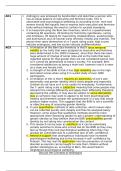
AO1 Androgyny was proposed by Sandra Bem and describes a person who
has an equal balance of masculine and feminine traits. This is
associated with psychological wellbeing as according to her, men and
women should feel equally free to express both masculine and feminine
traits without feelings the need to conform to societal standards.
It is measured using the Bem Sex Inventory, which is a questionnaire
containing 60 questions, 20 testing for femininity (gentleness, caring
and kindness), 20 testing for masculinity (independence, assertiveness
and dominance) and 20 neutral traits (friendly, helpful and truthful). The
person then rates themselves on a 7-point rating scale, high scores
indicate androgyny, and low scores indicate undifferentiated.
AO3 1. A limitation of this Bem Sex Inventory is that it lacks temporal
validity as the traits that were assigned as masculine and feminine
were determined in the 1950’s however, since then there has been
huge amount of change of social roles and so the traits that were
regarded typical for that gender then are not considered typical now
so it cannot be generalised to today’s society. For example, Bem
considered athleticism as being a male trait, however now it is seen
as a male and female trait.
2. A strength of the BSRI is that it has high reliability due to the high
test-retest scores when using it in a pilot study of over 1000
participants.
3. A limitation of this is that it requires an awareness of one’s own
personality and gender identity which many people and especially
children do not have so it is not useful for everybody. Furthermore,
the 7- point rating scale is subjective meaning that some people may
interpret the ratings differently and apply them differently therefore
decreasing the validity. It may also be subject to social desirability
bias as someone may want to appear to be more psychologically
healthy and therefore answer the questionnaire in a way that would
produce higher scores. This suggests that the BSRI is not a scientific
or objective way of assessing gender identity.
4. It uses quantitative methods of data collection, which means data
can be collected quickly and cheaply and then be analysed easily.
However, some argue that qualitative methods would be more
appropriate when assessing gender to get a greater understanding of
gender identity as they believe that the BSRI oversimplifies gender
identity by not taking into consideration the context.
5. This research can be seen as unethical as it can be potentially
socially sensitive to those who scored low on the BSRI as they may
feel as though they lack psychological wellbeing when they may
already be vulnerable due to a potential lack of self- confidence.
6. Research support that androgenous individuals have increased
psychological wellbeing due to the increase in self- confidence by
Prakash. This has real life application into the prevention of mental
disorder as parents can be taught to raise their children without
gender stereotypes as, according to Bem, this would lead to
heightened psychological wellbeing.
Discuss the Concepts of Androgyny
, Discuss what psychological research has told us about atypical gender
development.
AO1 Gender dysphoria is distress due to a mix match between the sex
assigned at birth and psychological experience of being male or female.
Biological explanations can be used to explain this as it may have a
genetic basis. Twin studies found GID occurred in 2.3% of 157 pairs of
twins and that over half of such a prevalence could be explained by
genetics. Considering that MZ twins share 100% of genes with each
other, whilst DZ twins are 50% of their genes, this is also indicative of a
biological/genetic basis for GID.
Biological explanations also use the brain sex theory. This relies on the
belief that male and female brains are different and that maybe the
brain of transsexuals does not match their genetic sex. The BST has
been found to be twice as large in men than women. This suggests that
the size of the BST correlates with preferred sex not biological sex,
leading to the formation of gender identity disorder.
Psychodynamic explanations- this theory suggests that a key cause of
GID amongst males is the fear of separation from the mother-figure
during the critical period of attachment formation (i.e. the first 2 years
of life) and so the child ‘becomes’ the mother themselves in order to
reduce their anxiety, which may explain the preference of a male for
identifying with a female gender.
AO3 1. Brain sex theory is criticised as the BST of transgendered individuals
changed significantly while taking hormone treatment. This suggests
that the difference in BST could be a result of the hormone treatment
rather than the cause of gender dysphoria.
2. The psychodynamic explanation is considered limited and gender-
biased because it only offers an explanation for the development of
GID in males, because females (according to this theory) do not feel
the same pressure to take on the role of the mother in fear of
separation. This idea was supported by Rekers (1986), who
suggested that GID in males is more motivated by the lack of a
father during the critical period for attachment formation, as opposed
to an absent mother. Therefore, the subjective nature of the
unconscious concepts proposed by the psychoanalytic theory
reduces the scientific credibility of such explanations.
3. The findings from twin studies are not always conclusive because
they cannot separate the effects of nature and nurture. For example,
despite both dizygotic twins and ordinary siblings sharing 50% of
their genes with each other, the former often have higher
concordance rates than the latter. This may be due to DZ twins being
more likely to be raised in a similar environment, and so exposed to
the same social-psychological factors which may affect the
development of GID. Therefore, twin studies should not be used to
state that GID has a biological cause, but rather that there are
has an equal balance of masculine and feminine traits. This is
associated with psychological wellbeing as according to her, men and
women should feel equally free to express both masculine and feminine
traits without feelings the need to conform to societal standards.
It is measured using the Bem Sex Inventory, which is a questionnaire
containing 60 questions, 20 testing for femininity (gentleness, caring
and kindness), 20 testing for masculinity (independence, assertiveness
and dominance) and 20 neutral traits (friendly, helpful and truthful). The
person then rates themselves on a 7-point rating scale, high scores
indicate androgyny, and low scores indicate undifferentiated.
AO3 1. A limitation of this Bem Sex Inventory is that it lacks temporal
validity as the traits that were assigned as masculine and feminine
were determined in the 1950’s however, since then there has been
huge amount of change of social roles and so the traits that were
regarded typical for that gender then are not considered typical now
so it cannot be generalised to today’s society. For example, Bem
considered athleticism as being a male trait, however now it is seen
as a male and female trait.
2. A strength of the BSRI is that it has high reliability due to the high
test-retest scores when using it in a pilot study of over 1000
participants.
3. A limitation of this is that it requires an awareness of one’s own
personality and gender identity which many people and especially
children do not have so it is not useful for everybody. Furthermore,
the 7- point rating scale is subjective meaning that some people may
interpret the ratings differently and apply them differently therefore
decreasing the validity. It may also be subject to social desirability
bias as someone may want to appear to be more psychologically
healthy and therefore answer the questionnaire in a way that would
produce higher scores. This suggests that the BSRI is not a scientific
or objective way of assessing gender identity.
4. It uses quantitative methods of data collection, which means data
can be collected quickly and cheaply and then be analysed easily.
However, some argue that qualitative methods would be more
appropriate when assessing gender to get a greater understanding of
gender identity as they believe that the BSRI oversimplifies gender
identity by not taking into consideration the context.
5. This research can be seen as unethical as it can be potentially
socially sensitive to those who scored low on the BSRI as they may
feel as though they lack psychological wellbeing when they may
already be vulnerable due to a potential lack of self- confidence.
6. Research support that androgenous individuals have increased
psychological wellbeing due to the increase in self- confidence by
Prakash. This has real life application into the prevention of mental
disorder as parents can be taught to raise their children without
gender stereotypes as, according to Bem, this would lead to
heightened psychological wellbeing.
Discuss the Concepts of Androgyny
, Discuss what psychological research has told us about atypical gender
development.
AO1 Gender dysphoria is distress due to a mix match between the sex
assigned at birth and psychological experience of being male or female.
Biological explanations can be used to explain this as it may have a
genetic basis. Twin studies found GID occurred in 2.3% of 157 pairs of
twins and that over half of such a prevalence could be explained by
genetics. Considering that MZ twins share 100% of genes with each
other, whilst DZ twins are 50% of their genes, this is also indicative of a
biological/genetic basis for GID.
Biological explanations also use the brain sex theory. This relies on the
belief that male and female brains are different and that maybe the
brain of transsexuals does not match their genetic sex. The BST has
been found to be twice as large in men than women. This suggests that
the size of the BST correlates with preferred sex not biological sex,
leading to the formation of gender identity disorder.
Psychodynamic explanations- this theory suggests that a key cause of
GID amongst males is the fear of separation from the mother-figure
during the critical period of attachment formation (i.e. the first 2 years
of life) and so the child ‘becomes’ the mother themselves in order to
reduce their anxiety, which may explain the preference of a male for
identifying with a female gender.
AO3 1. Brain sex theory is criticised as the BST of transgendered individuals
changed significantly while taking hormone treatment. This suggests
that the difference in BST could be a result of the hormone treatment
rather than the cause of gender dysphoria.
2. The psychodynamic explanation is considered limited and gender-
biased because it only offers an explanation for the development of
GID in males, because females (according to this theory) do not feel
the same pressure to take on the role of the mother in fear of
separation. This idea was supported by Rekers (1986), who
suggested that GID in males is more motivated by the lack of a
father during the critical period for attachment formation, as opposed
to an absent mother. Therefore, the subjective nature of the
unconscious concepts proposed by the psychoanalytic theory
reduces the scientific credibility of such explanations.
3. The findings from twin studies are not always conclusive because
they cannot separate the effects of nature and nurture. For example,
despite both dizygotic twins and ordinary siblings sharing 50% of
their genes with each other, the former often have higher
concordance rates than the latter. This may be due to DZ twins being
more likely to be raised in a similar environment, and so exposed to
the same social-psychological factors which may affect the
development of GID. Therefore, twin studies should not be used to
state that GID has a biological cause, but rather that there are