NUR 130 Exam 6
Save
Terms in this set (88)
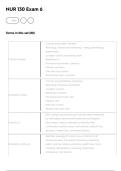
Course: prolonged, variable
Pathology: Transmural thickening - deep, penetrating
granulomas
Location: Ileum, ascending colon
Crohn's Disease Bleeding: no
Perianal involvement: common
Fistulas: common
Diarrhea: less severe
Abdominal mass: common
Course: exacerbations, remissions
Pathology: Mucosal ulcerations
Location: rectum
Bleeding: common
Ulcerative Colitis
Perianal involvement: rare
Fistulas: rare
Diarrhea: severe
Abdominal mass: rare
RLQ crampy, abdominal pain and diarrhea unrelieved
by defecation, abdominal tenderness and spasms
Crohn's s/s after meals, weepy, edematous intestine that
continually empties, fever, leukocytosis, steatorrhea,
anorexia, weight loss, nutritional deficits
diarrhea, passage of mucus, pus, or blood, LLQ
abdominal pain, intermittent tenesmus, bleeding,
Ulcerative colitis s/s pallor, anemia, fatigue, anorexia, weight loss, fever,
vomiting, dehydration, cramping, electrolyte
imbalances, skin lesions
, diverticulum becomes inflamed, causing perforation,
Diverticulitis - what is it? and potential complications such as obstruction,
abscess, fistula formation, peritonitis, and hemorrhage
Appendix becomes inflamed and edematous as a
result of becoming kinked or occluded by fecalith,
Appendicitis - what is it?
lymphoid hyperplasia, or foreign bodies. Eventually
gangrene and perforation occurs
A nurse is preparing to A) Watery w/blood and mucus
provide care for a patient
whose exacerbation of
ulcerative colitis has
required hospital
admission. During an
exacerbation of this health
problem, the nurse would
anticipate that the patients
stools will have what
characteristics?
A)
Watery with blood and
mucus
B)
Hard and black or tarry
C)
Dry and streaked with
blood
D)
Loose with visible fatty
streaks
,A patient has had an B) apply a skin barrier to the peristomal skin prior to
ileostomy created for the applying the pouch
treatment of irritable
bowel disease and the
patient is now preparing
for discharge. What should
the patient be taught
about changing this
device in the home
setting?
A)
Apply antibiotic ointment
as ordered after cleaning
the stoma.
B)
Apply a skin barrier to the
peristomal skin prior to
applying the pouch.
C)
Dispose of the clamp with
each bag change.
D)
Cleanse the area
surrounding the stoma
with alcohol or
chlorhexidine.
, A patient admitted with B) contact the primary care provider promptly and
acute diverticulitis has report these signs of perforation
experienced a sudden
increase in temperature
and complains of a
sudden onset of exquisite
abdominal tenderness.
The nurses rapid
assessment reveals that
the patients abdomen is
uncharacteristically rigid
on palpation. What is the
nurses best response?
A)
Administer a Fleet enema
as ordered and remain
with the patient.
B)
Contact the primary care
provider promptly and
report these signs of
perforation.
C)
Position the patient supine
and insert an NG tube.
D)
Page the primary care
provider and report that
Save
Terms in this set (88)
Course: prolonged, variable
Pathology: Transmural thickening - deep, penetrating
granulomas
Location: Ileum, ascending colon
Crohn's Disease Bleeding: no
Perianal involvement: common
Fistulas: common
Diarrhea: less severe
Abdominal mass: common
Course: exacerbations, remissions
Pathology: Mucosal ulcerations
Location: rectum
Bleeding: common
Ulcerative Colitis
Perianal involvement: rare
Fistulas: rare
Diarrhea: severe
Abdominal mass: rare
RLQ crampy, abdominal pain and diarrhea unrelieved
by defecation, abdominal tenderness and spasms
Crohn's s/s after meals, weepy, edematous intestine that
continually empties, fever, leukocytosis, steatorrhea,
anorexia, weight loss, nutritional deficits
diarrhea, passage of mucus, pus, or blood, LLQ
abdominal pain, intermittent tenesmus, bleeding,
Ulcerative colitis s/s pallor, anemia, fatigue, anorexia, weight loss, fever,
vomiting, dehydration, cramping, electrolyte
imbalances, skin lesions
, diverticulum becomes inflamed, causing perforation,
Diverticulitis - what is it? and potential complications such as obstruction,
abscess, fistula formation, peritonitis, and hemorrhage
Appendix becomes inflamed and edematous as a
result of becoming kinked or occluded by fecalith,
Appendicitis - what is it?
lymphoid hyperplasia, or foreign bodies. Eventually
gangrene and perforation occurs
A nurse is preparing to A) Watery w/blood and mucus
provide care for a patient
whose exacerbation of
ulcerative colitis has
required hospital
admission. During an
exacerbation of this health
problem, the nurse would
anticipate that the patients
stools will have what
characteristics?
A)
Watery with blood and
mucus
B)
Hard and black or tarry
C)
Dry and streaked with
blood
D)
Loose with visible fatty
streaks
,A patient has had an B) apply a skin barrier to the peristomal skin prior to
ileostomy created for the applying the pouch
treatment of irritable
bowel disease and the
patient is now preparing
for discharge. What should
the patient be taught
about changing this
device in the home
setting?
A)
Apply antibiotic ointment
as ordered after cleaning
the stoma.
B)
Apply a skin barrier to the
peristomal skin prior to
applying the pouch.
C)
Dispose of the clamp with
each bag change.
D)
Cleanse the area
surrounding the stoma
with alcohol or
chlorhexidine.
, A patient admitted with B) contact the primary care provider promptly and
acute diverticulitis has report these signs of perforation
experienced a sudden
increase in temperature
and complains of a
sudden onset of exquisite
abdominal tenderness.
The nurses rapid
assessment reveals that
the patients abdomen is
uncharacteristically rigid
on palpation. What is the
nurses best response?
A)
Administer a Fleet enema
as ordered and remain
with the patient.
B)
Contact the primary care
provider promptly and
report these signs of
perforation.
C)
Position the patient supine
and insert an NG tube.
D)
Page the primary care
provider and report that