Contents
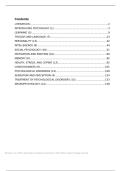
LITERATUUR.....................................................................................................2
INTRODUCING PSYCHOLOGY (1)......................................................................3
LEARNING (5)...................................................................................................9
THOUGH AND LANGUAGE (7).........................................................................23
PERSONALITY (13)..........................................................................................32
INTELLEGENCE (8).........................................................................................44
SOCIAL PSYCHOLOGY (16).............................................................................51
MOTIVATION AND EMOTION (10)....................................................................69
MEMORY (6)...................................................................................................82
HEALTH, STRESS, AND COPING (12)..............................................................92
CONSCIOUSNESS (9)....................................................................................101
PSYCHOLOGICAL DISORDERS (14)...............................................................109
SENSATION AND PERCEPTION (4)................................................................124
TREATMENT OF PSYCHOLOGICAL DISORDERS (15)......................................133
NEUROPSYCHOLOGY (14)............................................................................148
Bernstein, D.A. (2016). Psychology Foundations and Frontiers (10th edition). Boston Cengage Learning
, LITERATUUR
Hoofdstuk 1, 5, 7, 13, 8, 16, 10, 6, 12, 9, 14, 4, 15, 18.
Let op : voor een aantal hoofdstukken geldt dat je niet
het gehele hoofdstuk hoeft te bestuderen:
Hoofdstuk 4, Sensation and perception, NIET bestuderen pagina 92 (vanaf SEEING)
t/m pagina 116 (tot aan PERCEPTION)
Hoofdstuk 6, Memory, NIET bestuderen paragraaf ‘the biochemistry of memory’ (p.
206). Het stuk ‘brain structures and memory’ daarna (vanaf p.207) behoort wel tot de
tentamenstof.
Hoofdstuk 9, Consciousness, NIET bestuderen 'psychoactive drugs' (p. 312 – 323).
Hoofdstuk 10, Motivation and emotion, NIET bestuderen:
Hunger and the brain (pg 337-338)
The biology of emotions (pg 359-361)
Oefenvragen correctie
H7 Vraag 13 moet zijn A ipv. C
H10 Vraag 11 moet zijn B ipv. C
H6 Vraag 5 moet zijn B ipv. A
H12 Vraag 17 is zowel A als C goed
H12 Vraag 18 kan zowel precontemplation als contemplation zijn
Bernstein, D.A. (2016). Psychology Foundations and Frontiers (10th edition). Boston Cengage Learning
, INTRODUCING PSYCHOLOGY (1)
Psychology is much broader and more diverse than you may have expected.
Psychology reviews several theories and approaches
interrelated specialty areas, or subfields, is affected by the activities of psychologist by human
diversity. Age, gender, ethnicity etc.
Psychology = the science that studies behavior and mental processes and seeks to apply that
study in the service of human welfare.
Psychologist = Someone that is involved in studying, predicting, improving, or explaining some
aspect of behavior and mental processes. Some focus on what can go wrong in behavior and
mental processes and some focus on what can go right.
psychological disorders, problems in childhood development, stress-related illnesses—>wrong
happy and satisfied with their lives, to achieve at a high level, to be creative, to help others, and
to develop their full potential as human beings—>right
Right Positive psychology focus on the things that make life most worth living.
Subfields of psychology, psychologist choose to focus their attention on certain aspects.
Biological psychologist or physiological psychologists (BIOLOGISCHE EN NEURO) study
how the brain and the body’s biological processes affect, and are affected by, behavior and
mental processes. Déjà vu.
Cognitive psychologist or experimental psychologists (COGNITIEVE) study mental abilities
such as sensation and perception, learning and memory, thinking, consciousness, intelligence,
and creativity. Engineering psychology is a field in which psychologists study human factors in
the use of equipment and help designers create better versions of equipment.
Developmental psychologists (ONTWIKKELINGS) describe how behavior and mental
processes change from birth through old age and try to understand the causes and effects of those
changes
Personality psychologists (PERSOONLIJKHEID) study individuality—the unique features that
characterize each of us. Personality phycologists are interested in positive psychology.
Clinical psychologists and counseling psychologists (KLINISCHE) conduct research on the
causes and treatment of mental disorders and offer services to help troubled people overcome
those disorders.
Bernstein, D.A. (2016). Psychology Foundations and Frontiers (10th edition). Boston Cengage Learning
, Community psychologists work to ensure that psychological services reach the homeless and
others who need help but tend not to seek it.
Health psychologists (GEZONDHEIDS) who study the effects of behavior and mental
processes on health and illness and vice versa.
Educational psychologists (ONDERWIJS) conduct research and develop theories about
teaching and learning.
School psychologists once specialized in IQ testing, diagnosing learning disabilities and other
academic problems, and setting up programs to improve students’ achievement and satisfaction
in school. Als preventing bullying, early detection of students’ mental health problems, and crisis
intervention following school violence.
Social psychologists study the ways that people think about others and how people influence one
another.
Industrial and organizational psychologists (ORGANISATIE) who study ways to improve
efficiency, productivity, and satisfaction among workers and the organizations that employ them,
learning more about how businesses and industrial organizations work or fail to work. Positive
organizational behavior the results include more effective employee training programs,
ambitious but realistic goal-setting procedures, fair and reasonable evaluation tools, and
incentive systems that motivate and reward outstanding performance.
Quantitative psychologists who develop and use statistical tools to analyze research data.
Sport psychologists who explore the relationships between athletic performance and such
psychological variables motivation and emotion.
Forensic psychologists Psychologists who assist in jury selection, evaluate defendants’ mental
competence to stand trial, and deal with other issues involving psychology and the law.
environmental psychologists Psychologists who study the effects of the physical environment
on behavior and mental processes.
Neuroscience scientific study of all levels of the nervous system, including neuroanatomy,
neurophysiology, neurochemistry, neuropharmacology, genetics and other disciplines.
Psychologists perform experiments and other scientific procedures to systematically gather and
analyze information about behavior and mental processes and then base their conclusions—and
their next questions—on the results of those procedures. methods of sciencescientific
research methods and the foundation of evidence they provide is important.
Empiricism is the theory that all knowledge is derived from sensory experience and observation.
Bernstein, D.A. (2016). Psychology Foundations and Frontiers (10th edition). Boston Cengage Learning
LITERATUUR.....................................................................................................2
INTRODUCING PSYCHOLOGY (1)......................................................................3
LEARNING (5)...................................................................................................9
THOUGH AND LANGUAGE (7).........................................................................23
PERSONALITY (13)..........................................................................................32
INTELLEGENCE (8).........................................................................................44
SOCIAL PSYCHOLOGY (16).............................................................................51
MOTIVATION AND EMOTION (10)....................................................................69
MEMORY (6)...................................................................................................82
HEALTH, STRESS, AND COPING (12)..............................................................92
CONSCIOUSNESS (9)....................................................................................101
PSYCHOLOGICAL DISORDERS (14)...............................................................109
SENSATION AND PERCEPTION (4)................................................................124
TREATMENT OF PSYCHOLOGICAL DISORDERS (15)......................................133
NEUROPSYCHOLOGY (14)............................................................................148
Bernstein, D.A. (2016). Psychology Foundations and Frontiers (10th edition). Boston Cengage Learning
, LITERATUUR
Hoofdstuk 1, 5, 7, 13, 8, 16, 10, 6, 12, 9, 14, 4, 15, 18.
Let op : voor een aantal hoofdstukken geldt dat je niet
het gehele hoofdstuk hoeft te bestuderen:
Hoofdstuk 4, Sensation and perception, NIET bestuderen pagina 92 (vanaf SEEING)
t/m pagina 116 (tot aan PERCEPTION)
Hoofdstuk 6, Memory, NIET bestuderen paragraaf ‘the biochemistry of memory’ (p.
206). Het stuk ‘brain structures and memory’ daarna (vanaf p.207) behoort wel tot de
tentamenstof.
Hoofdstuk 9, Consciousness, NIET bestuderen 'psychoactive drugs' (p. 312 – 323).
Hoofdstuk 10, Motivation and emotion, NIET bestuderen:
Hunger and the brain (pg 337-338)
The biology of emotions (pg 359-361)
Oefenvragen correctie
H7 Vraag 13 moet zijn A ipv. C
H10 Vraag 11 moet zijn B ipv. C
H6 Vraag 5 moet zijn B ipv. A
H12 Vraag 17 is zowel A als C goed
H12 Vraag 18 kan zowel precontemplation als contemplation zijn
Bernstein, D.A. (2016). Psychology Foundations and Frontiers (10th edition). Boston Cengage Learning
, INTRODUCING PSYCHOLOGY (1)
Psychology is much broader and more diverse than you may have expected.
Psychology reviews several theories and approaches
interrelated specialty areas, or subfields, is affected by the activities of psychologist by human
diversity. Age, gender, ethnicity etc.
Psychology = the science that studies behavior and mental processes and seeks to apply that
study in the service of human welfare.
Psychologist = Someone that is involved in studying, predicting, improving, or explaining some
aspect of behavior and mental processes. Some focus on what can go wrong in behavior and
mental processes and some focus on what can go right.
psychological disorders, problems in childhood development, stress-related illnesses—>wrong
happy and satisfied with their lives, to achieve at a high level, to be creative, to help others, and
to develop their full potential as human beings—>right
Right Positive psychology focus on the things that make life most worth living.
Subfields of psychology, psychologist choose to focus their attention on certain aspects.
Biological psychologist or physiological psychologists (BIOLOGISCHE EN NEURO) study
how the brain and the body’s biological processes affect, and are affected by, behavior and
mental processes. Déjà vu.
Cognitive psychologist or experimental psychologists (COGNITIEVE) study mental abilities
such as sensation and perception, learning and memory, thinking, consciousness, intelligence,
and creativity. Engineering psychology is a field in which psychologists study human factors in
the use of equipment and help designers create better versions of equipment.
Developmental psychologists (ONTWIKKELINGS) describe how behavior and mental
processes change from birth through old age and try to understand the causes and effects of those
changes
Personality psychologists (PERSOONLIJKHEID) study individuality—the unique features that
characterize each of us. Personality phycologists are interested in positive psychology.
Clinical psychologists and counseling psychologists (KLINISCHE) conduct research on the
causes and treatment of mental disorders and offer services to help troubled people overcome
those disorders.
Bernstein, D.A. (2016). Psychology Foundations and Frontiers (10th edition). Boston Cengage Learning
, Community psychologists work to ensure that psychological services reach the homeless and
others who need help but tend not to seek it.
Health psychologists (GEZONDHEIDS) who study the effects of behavior and mental
processes on health and illness and vice versa.
Educational psychologists (ONDERWIJS) conduct research and develop theories about
teaching and learning.
School psychologists once specialized in IQ testing, diagnosing learning disabilities and other
academic problems, and setting up programs to improve students’ achievement and satisfaction
in school. Als preventing bullying, early detection of students’ mental health problems, and crisis
intervention following school violence.
Social psychologists study the ways that people think about others and how people influence one
another.
Industrial and organizational psychologists (ORGANISATIE) who study ways to improve
efficiency, productivity, and satisfaction among workers and the organizations that employ them,
learning more about how businesses and industrial organizations work or fail to work. Positive
organizational behavior the results include more effective employee training programs,
ambitious but realistic goal-setting procedures, fair and reasonable evaluation tools, and
incentive systems that motivate and reward outstanding performance.
Quantitative psychologists who develop and use statistical tools to analyze research data.
Sport psychologists who explore the relationships between athletic performance and such
psychological variables motivation and emotion.
Forensic psychologists Psychologists who assist in jury selection, evaluate defendants’ mental
competence to stand trial, and deal with other issues involving psychology and the law.
environmental psychologists Psychologists who study the effects of the physical environment
on behavior and mental processes.
Neuroscience scientific study of all levels of the nervous system, including neuroanatomy,
neurophysiology, neurochemistry, neuropharmacology, genetics and other disciplines.
Psychologists perform experiments and other scientific procedures to systematically gather and
analyze information about behavior and mental processes and then base their conclusions—and
their next questions—on the results of those procedures. methods of sciencescientific
research methods and the foundation of evidence they provide is important.
Empiricism is the theory that all knowledge is derived from sensory experience and observation.
Bernstein, D.A. (2016). Psychology Foundations and Frontiers (10th edition). Boston Cengage Learning