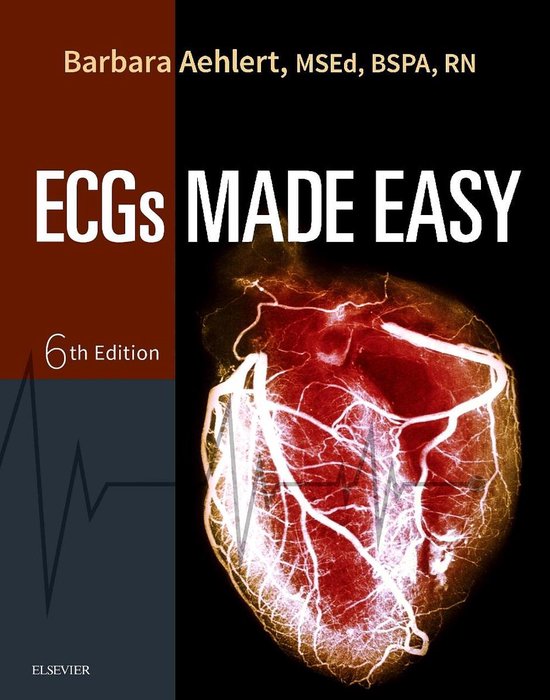
Test bank for ECGs Made Easy
ui ui ui ui ui
8th Edition by Barbara J Aehlert
ui ui ui ui ui
Chapters 1 – 10 Latest Version 2025
ui ui ui ui ui ui
,ECGs Made Easy 7th Edition by Barbara Aehlert Test Bank
ui ui ui ui ui ui ui ui ui
Table of Contents:
ui ui
Chapter 1. Anatomy & Physiology
ui ui ui ui
Chapter 2. Basic Electrophysiology
ui ui ui
Chapter 3. Sinus Mechanisms
ui ui ui
Chapter 4. Atrial Rhythms
ui ui ui
Chapter 5. Junctional Rhythms
ui ui ui
Chapter 6. Ventricular Rhythms
ui ui ui
Chapter 7. Atrioventricular Blocks
ui ui ui
Chapter 8. Pacemaker Rhythms
ui ui ui
Chapter 9. Introduction to the 12-Lead ECG
ui ui ui ui ui ui
Chapter 10. Post-Test
ui ui
,Chapter 01: Anatomy and Physiology
ui ui ui ui
Aehlert: ECGs Made Easy, 7th Edition
ui ui ui ui ui ui
MULTIPLECHOICE ui
1. The apex of the heart is formed by the
ui ui ui ui ui ui ui ui .
a. tip of the left ventricle ui ui ui ui
b. tip of the right atrium ui ui ui ui
c. right atrium and right ventricle ui ui ui ui
d. left atrium and left ventricle ui ui ui ui
ANSWER: A u i
The heart’s apex, or lower portion, is formed by the tip of the left ventricle. The apex lies just
ui ui ui ui ui ui ui ui ui ui ui ui ui ui ui ui ui ui
above the diaphragm, between the fifth and sixth ribs, in the midclavicular line.
ui ui ui ui ui ui ui ui ui ui ui ui ui
OBJ: Identifythe surfaces of the heart.
ui ui ui ui ui ui
2. The left atrium receives blood from the
ui ui ui ui ui ui .
a. pulmonary veins ui
b. aorta
c. pulmonary arteries ui
d. inferior vena cava ui ui
ANSWER: A u i
The left atrium receives freshly oxygenated blood from the lungs via the right and left
ui ui ui ui ui ui ui ui ui ui ui ui ui ui
pulmonary veins.
ui ui
OBJ: Identify and describe the chambers of the heart and the vessels that enter or leave each.
ui ui ui ui ui ui ui ui ui ui ui ui ui ui ui ui
3. The anterior surface of the heart consists primarily of the
ui ui ui ui ui ui ui ui ui .
a. left atrium ui
b. right atrium ui
c. left ventricle ui
d. right ventricle ui
ANSWER: D u i
The front (anterior) surface of the heart lies behind the sternum and costal cartilages. It is formed
ui ui ui ui ui ui ui ui ui ui ui ui ui ui ui ui
by portions of the right atrium and the left and right ventricles. However, because the heart is
ui ui ui ui ui ui ui ui ui ui ui ui ui ui ui ui ui
tilted slightly toward the left in the chest, the right ventricle is the area of the heart thatlies most
ui ui ui ui ui ui ui ui ui ui ui ui ui ui ui ui ui ui ui ui
directly behind the sternum.
ui ui ui ui
OBJ: Identifythe surfaces of the heart.
ui ui ui ui ui ui
4. Blood pressure is determined by ui multiplied by ui ui ui ui .
a. stroke volume; heart rate ui ui ui
b. heart rate; cardiac output ui ui ui
c. cardiac output; peripheral vascular resistance ui ui ui ui
d. stroke volume; peripheral vascular resistance ui ui ui ui
ANSWER: C u i
Blood pressure is equal to cardiac output multiplied by peripheral vascular resistance.
ui ui ui ui ui ui ui ui ui ui ui
, OBJ: Identifyand explain the components of blood pressure and cardiac output.
ui ui ui ui ui ui ui ui ui ui ui
5. The right atrium receives venous blood from the head, neck, and thorax via the
ui ui ui ui ui ui ui ui ui ui ui ui ui ,from
ui
the remainder of the body via the
ui ui , and from the heart via the ui ui ui ui ui ui ui ui ui ui ui .
a. coronary sinus; superior vena cava; inferior vena cava ui ui ui ui ui ui ui
b. superior vena cava; coronary sinus; inferior vena cava ui ui ui ui ui ui ui
c. inferior vena cava; superior vena cava; coronary sinus ui ui ui ui ui ui ui
d. superior vena cava; inferior vena cava; coronary sinus ui ui ui ui ui ui ui
ANSWER: D u i
The right atrium receives blood low in oxygen from the superior vena cava, which carries
ui ui ui ui ui ui ui ui ui ui ui ui ui ui
blood from the head and upper extremities; the inferior vena cava, which carries blood from
ui ui ui ui ui ui ui ui ui ui ui ui ui ui ui
the lower body; and the coronary sinus, which is the largest vein that drains the heart.
ui ui ui ui ui ui ui ui ui ui ui ui ui ui ui ui
OBJ: u i Identify and describe the chambers of the heart and the vessels that enter or leave each.
ui ui ui ui ui ui ui ui ui ui ui ui ui ui ui
6. The heart is divided into
ui ui ui ui chambers but functions as a ui ui ui ui -sided pump. ui
a. two; four ui
b. three; two ui
c. four; two ui
d. four; three ui
ANSWER: C u i
The heart has four chambers: two atria and two ventricles. The right and left sides of the heartare
ui ui ui ui ui ui ui ui ui ui ui ui ui ui ui ui ui i
u
separated by an internal wall of connective tissue called a septum. The interatrial septum
ui ui ui ui ui ui ui ui ui ui ui ui ui ui
separates the right and left atria. The interventricular septum separates the right and left
ui ui ui ui ui ui ui ui ui ui ui ui ui ui
ventricles. The septa separate the heart into two functional pumps. The right atrium and right
ui ui ui ui ui ui ui ui ui ui ui ui ui ui ui
ventricle make up one pump. The left atrium and left ventricle make up the other.
ui ui ui ui ui ui ui ui ui ui ui ui ui ui ui
OBJ: Identify and describe the chambers of the heart and the vessels that enter or leave each.
ui ui ui ui ui ui ui ui ui ui ui ui ui ui ui ui
7. Stimulation of alpha1 receptors results in ui ui ui ui ui .
a. increased heart rate ui ui
b. peripheral vasoconstriction ui
c. constriction of bronchial smooth muscle ui ui ui ui
d. increased force of myocardial contraction ui ui ui ui
ANSWER: B u i
Alpha1 receptors are found in the eyes, blood vessels, bladder, and male reproductive organs.
ui ui ui ui ui ui ui ui ui ui ui ui ui
Stimulation of alpha1 receptor sites results in constriction.
ui ui ui ui ui ui ui ui
OBJ: Compare and contrast the effects of sympathetic and parasympathetic stimulation of the heart.
ui ui ui ui ui ui ui ui ui ui ui ui ui
8. Which side of the heart is a low-pressure system that pumps venous blood to the lungs?
ui ui ui ui ui ui ui ui ui ui ui ui ui ui ui
a. Left
b. Right
ANSWER: B u i
The job of the right side of the heart is to pump unoxygenated blood to and through the lungs to
ui ui ui ui ui ui ui ui ui ui ui ui ui ui ui ui ui ui ui
the left side of the heart. This is called the pulmonary circulation. The right side of the heartis a
ui ui ui ui ui ui ui ui ui ui ui ui ui ui ui ui ui ui i
u ui
low-pressure system.
ui ui
ui ui ui ui ui
8th Edition by Barbara J Aehlert
ui ui ui ui ui
Chapters 1 – 10 Latest Version 2025
ui ui ui ui ui ui
,ECGs Made Easy 7th Edition by Barbara Aehlert Test Bank
ui ui ui ui ui ui ui ui ui
Table of Contents:
ui ui
Chapter 1. Anatomy & Physiology
ui ui ui ui
Chapter 2. Basic Electrophysiology
ui ui ui
Chapter 3. Sinus Mechanisms
ui ui ui
Chapter 4. Atrial Rhythms
ui ui ui
Chapter 5. Junctional Rhythms
ui ui ui
Chapter 6. Ventricular Rhythms
ui ui ui
Chapter 7. Atrioventricular Blocks
ui ui ui
Chapter 8. Pacemaker Rhythms
ui ui ui
Chapter 9. Introduction to the 12-Lead ECG
ui ui ui ui ui ui
Chapter 10. Post-Test
ui ui
,Chapter 01: Anatomy and Physiology
ui ui ui ui
Aehlert: ECGs Made Easy, 7th Edition
ui ui ui ui ui ui
MULTIPLECHOICE ui
1. The apex of the heart is formed by the
ui ui ui ui ui ui ui ui .
a. tip of the left ventricle ui ui ui ui
b. tip of the right atrium ui ui ui ui
c. right atrium and right ventricle ui ui ui ui
d. left atrium and left ventricle ui ui ui ui
ANSWER: A u i
The heart’s apex, or lower portion, is formed by the tip of the left ventricle. The apex lies just
ui ui ui ui ui ui ui ui ui ui ui ui ui ui ui ui ui ui
above the diaphragm, between the fifth and sixth ribs, in the midclavicular line.
ui ui ui ui ui ui ui ui ui ui ui ui ui
OBJ: Identifythe surfaces of the heart.
ui ui ui ui ui ui
2. The left atrium receives blood from the
ui ui ui ui ui ui .
a. pulmonary veins ui
b. aorta
c. pulmonary arteries ui
d. inferior vena cava ui ui
ANSWER: A u i
The left atrium receives freshly oxygenated blood from the lungs via the right and left
ui ui ui ui ui ui ui ui ui ui ui ui ui ui
pulmonary veins.
ui ui
OBJ: Identify and describe the chambers of the heart and the vessels that enter or leave each.
ui ui ui ui ui ui ui ui ui ui ui ui ui ui ui ui
3. The anterior surface of the heart consists primarily of the
ui ui ui ui ui ui ui ui ui .
a. left atrium ui
b. right atrium ui
c. left ventricle ui
d. right ventricle ui
ANSWER: D u i
The front (anterior) surface of the heart lies behind the sternum and costal cartilages. It is formed
ui ui ui ui ui ui ui ui ui ui ui ui ui ui ui ui
by portions of the right atrium and the left and right ventricles. However, because the heart is
ui ui ui ui ui ui ui ui ui ui ui ui ui ui ui ui ui
tilted slightly toward the left in the chest, the right ventricle is the area of the heart thatlies most
ui ui ui ui ui ui ui ui ui ui ui ui ui ui ui ui ui ui ui ui
directly behind the sternum.
ui ui ui ui
OBJ: Identifythe surfaces of the heart.
ui ui ui ui ui ui
4. Blood pressure is determined by ui multiplied by ui ui ui ui .
a. stroke volume; heart rate ui ui ui
b. heart rate; cardiac output ui ui ui
c. cardiac output; peripheral vascular resistance ui ui ui ui
d. stroke volume; peripheral vascular resistance ui ui ui ui
ANSWER: C u i
Blood pressure is equal to cardiac output multiplied by peripheral vascular resistance.
ui ui ui ui ui ui ui ui ui ui ui
, OBJ: Identifyand explain the components of blood pressure and cardiac output.
ui ui ui ui ui ui ui ui ui ui ui
5. The right atrium receives venous blood from the head, neck, and thorax via the
ui ui ui ui ui ui ui ui ui ui ui ui ui ,from
ui
the remainder of the body via the
ui ui , and from the heart via the ui ui ui ui ui ui ui ui ui ui ui .
a. coronary sinus; superior vena cava; inferior vena cava ui ui ui ui ui ui ui
b. superior vena cava; coronary sinus; inferior vena cava ui ui ui ui ui ui ui
c. inferior vena cava; superior vena cava; coronary sinus ui ui ui ui ui ui ui
d. superior vena cava; inferior vena cava; coronary sinus ui ui ui ui ui ui ui
ANSWER: D u i
The right atrium receives blood low in oxygen from the superior vena cava, which carries
ui ui ui ui ui ui ui ui ui ui ui ui ui ui
blood from the head and upper extremities; the inferior vena cava, which carries blood from
ui ui ui ui ui ui ui ui ui ui ui ui ui ui ui
the lower body; and the coronary sinus, which is the largest vein that drains the heart.
ui ui ui ui ui ui ui ui ui ui ui ui ui ui ui ui
OBJ: u i Identify and describe the chambers of the heart and the vessels that enter or leave each.
ui ui ui ui ui ui ui ui ui ui ui ui ui ui ui
6. The heart is divided into
ui ui ui ui chambers but functions as a ui ui ui ui -sided pump. ui
a. two; four ui
b. three; two ui
c. four; two ui
d. four; three ui
ANSWER: C u i
The heart has four chambers: two atria and two ventricles. The right and left sides of the heartare
ui ui ui ui ui ui ui ui ui ui ui ui ui ui ui ui ui i
u
separated by an internal wall of connective tissue called a septum. The interatrial septum
ui ui ui ui ui ui ui ui ui ui ui ui ui ui
separates the right and left atria. The interventricular septum separates the right and left
ui ui ui ui ui ui ui ui ui ui ui ui ui ui
ventricles. The septa separate the heart into two functional pumps. The right atrium and right
ui ui ui ui ui ui ui ui ui ui ui ui ui ui ui
ventricle make up one pump. The left atrium and left ventricle make up the other.
ui ui ui ui ui ui ui ui ui ui ui ui ui ui ui
OBJ: Identify and describe the chambers of the heart and the vessels that enter or leave each.
ui ui ui ui ui ui ui ui ui ui ui ui ui ui ui ui
7. Stimulation of alpha1 receptors results in ui ui ui ui ui .
a. increased heart rate ui ui
b. peripheral vasoconstriction ui
c. constriction of bronchial smooth muscle ui ui ui ui
d. increased force of myocardial contraction ui ui ui ui
ANSWER: B u i
Alpha1 receptors are found in the eyes, blood vessels, bladder, and male reproductive organs.
ui ui ui ui ui ui ui ui ui ui ui ui ui
Stimulation of alpha1 receptor sites results in constriction.
ui ui ui ui ui ui ui ui
OBJ: Compare and contrast the effects of sympathetic and parasympathetic stimulation of the heart.
ui ui ui ui ui ui ui ui ui ui ui ui ui
8. Which side of the heart is a low-pressure system that pumps venous blood to the lungs?
ui ui ui ui ui ui ui ui ui ui ui ui ui ui ui
a. Left
b. Right
ANSWER: B u i
The job of the right side of the heart is to pump unoxygenated blood to and through the lungs to
ui ui ui ui ui ui ui ui ui ui ui ui ui ui ui ui ui ui ui
the left side of the heart. This is called the pulmonary circulation. The right side of the heartis a
ui ui ui ui ui ui ui ui ui ui ui ui ui ui ui ui ui ui i
u ui
low-pressure system.
ui ui