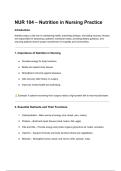
NUR 104 – Nutrition in Nursing Practice
Introduction
Nutrition plays a vital role in maintaining health, preventing disease, and aiding recovery. Nurses
are responsible for assessing a patient’s nutritional needs, providing dietary guidance, and
ensuring patients receive proper nourishment in hospitals and communities.
1. Importance of Nutrition in Nursing
● Provides energy for body functions.
● Builds and repairs body tissues.
● Strengthens immunity against diseases.
● Aids recovery after illness or surgery.
● Improves mental health and well-being.
💡 Example: A patient recovering from surgery needs a high-protein diet to heal wounds faster.
2. Essential Nutrients and Their Functions
1. Carbohydrates – Main source of energy (rice, bread, yam, maize).
2. Proteins – Build and repair tissues (meat, beans, fish, eggs).
3. Fats and Oils – Provide energy and protect organs (groundnut oil, butter, avocado).
4. Vitamins – Support immunity and body functions (fruits and vegetables).
5. Minerals – Strengthen bones, blood, and nerves (milk, spinach, nuts).
Introduction
Nutrition plays a vital role in maintaining health, preventing disease, and aiding recovery. Nurses
are responsible for assessing a patient’s nutritional needs, providing dietary guidance, and
ensuring patients receive proper nourishment in hospitals and communities.
1. Importance of Nutrition in Nursing
● Provides energy for body functions.
● Builds and repairs body tissues.
● Strengthens immunity against diseases.
● Aids recovery after illness or surgery.
● Improves mental health and well-being.
💡 Example: A patient recovering from surgery needs a high-protein diet to heal wounds faster.
2. Essential Nutrients and Their Functions
1. Carbohydrates – Main source of energy (rice, bread, yam, maize).
2. Proteins – Build and repair tissues (meat, beans, fish, eggs).
3. Fats and Oils – Provide energy and protect organs (groundnut oil, butter, avocado).
4. Vitamins – Support immunity and body functions (fruits and vegetables).
5. Minerals – Strengthen bones, blood, and nerves (milk, spinach, nuts).