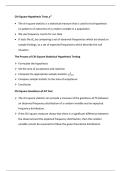
Chi-Square Hypothesis Tests 𝝌𝟐
• The chi-square statistic is a statistical measure that is used to test hypothesis
on patterns of outcomes of a random variable in a population.
• We use frequency counts for our data
• It tests the 𝐻0 by comparing a set of observed frequencies which are based on
sample findings, to a set of expected frequencies which describe the null
situation
The Process of Chi-Square Statistical Hypothesis Testing
➢ Formulate the hypothesis
➢ Set the area of acceptance and rejection
2
➢ Compute the appropriate sample statistics 𝜒𝑠𝑡𝑎𝑡
➢ Compare sample statistic to the area of acceptance
➢ Conclusion
Chi-Square Goodness-of-Fit Test
➢ The chi-square statistic can provide a measure of the goodness-of-fit between
an observed frequency distribution of a random variable and an expected
frequency distribution.
➢ If the Chi-square measure shows that there is a significant difference between
the observed and the expected frequency distribution, then the random
variable cannot be assumed to follow the given theoretical distribution.
, Example
An accountant for a department store knows from past experience that 23% of
the store’s customers pay cash, 35% Debit cards and remaining 42% use credit
cards. The accountant examines a random sample of 200 sales receipts for the
week before Christmas and makes the following sales summary:
Cash Debit Cards Credit Cards Total
Number of 37 47 116 200
Customers
Use the Chi-square goodness-of-fit test to see if the preceding percentages fit
these observations. Use 𝛼 = 0.05. What should the accountant conclude about
customer payment methods as Christmas draws near? [Hint: Use a critical value
of X2= 5.991]
Solution
𝑯𝟎 : The customers’ payment methods remain the same with the past observed
period.
𝑯𝟏 : The customers' payment method differ for the Christmas period from the
past observed period
Decision Rule
Accept 𝑯𝟎 𝒊𝒇 𝑿𝟐𝒔𝒕𝒂𝒕 ≤ 𝟓. 𝟗𝟗𝟏
Reject 𝑯𝟎 𝒊𝒇 𝑿𝟐𝒔𝒕𝒂𝒕 > 𝟓. 𝟗𝟗𝟏
• The chi-square statistic is a statistical measure that is used to test hypothesis
on patterns of outcomes of a random variable in a population.
• We use frequency counts for our data
• It tests the 𝐻0 by comparing a set of observed frequencies which are based on
sample findings, to a set of expected frequencies which describe the null
situation
The Process of Chi-Square Statistical Hypothesis Testing
➢ Formulate the hypothesis
➢ Set the area of acceptance and rejection
2
➢ Compute the appropriate sample statistics 𝜒𝑠𝑡𝑎𝑡
➢ Compare sample statistic to the area of acceptance
➢ Conclusion
Chi-Square Goodness-of-Fit Test
➢ The chi-square statistic can provide a measure of the goodness-of-fit between
an observed frequency distribution of a random variable and an expected
frequency distribution.
➢ If the Chi-square measure shows that there is a significant difference between
the observed and the expected frequency distribution, then the random
variable cannot be assumed to follow the given theoretical distribution.
, Example
An accountant for a department store knows from past experience that 23% of
the store’s customers pay cash, 35% Debit cards and remaining 42% use credit
cards. The accountant examines a random sample of 200 sales receipts for the
week before Christmas and makes the following sales summary:
Cash Debit Cards Credit Cards Total
Number of 37 47 116 200
Customers
Use the Chi-square goodness-of-fit test to see if the preceding percentages fit
these observations. Use 𝛼 = 0.05. What should the accountant conclude about
customer payment methods as Christmas draws near? [Hint: Use a critical value
of X2= 5.991]
Solution
𝑯𝟎 : The customers’ payment methods remain the same with the past observed
period.
𝑯𝟏 : The customers' payment method differ for the Christmas period from the
past observed period
Decision Rule
Accept 𝑯𝟎 𝒊𝒇 𝑿𝟐𝒔𝒕𝒂𝒕 ≤ 𝟓. 𝟗𝟗𝟏
Reject 𝑯𝟎 𝒊𝒇 𝑿𝟐𝒔𝒕𝒂𝒕 > 𝟓. 𝟗𝟗𝟏