
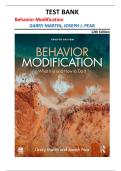
TEST BANK
Behavior Modification
GARRY MARTIN, JOSEPH J. PEAR
12th Edition
, OPTION-BASED QUESTIONS
Chapter 1. Introduction
Type: Conceptual
1. A behavioral excess is:
* a) too much of a particular type of behavior
b) too little of a particular type of behavior
c) an appropriate behavior occurring to the wrong stimulus
d) an appropriate behavior occurring at the wrong time or place
Difficulty: Easy
Type: Conceptual
2. Which of the following is an example of behavior?
a) hair color b) the color of someone’s eyes
c) the clothes someone is wearing *d) dressing in the morning
Difficulty: Medium
Type: Factual
3. In behavior modification, motivation and intelligence refer to:
a) inner mental processes * b) ways of behaving
c) causes of behavior d) major sources of abnormality
Difficulty: Easy
Type: Conceptual
4. In behavior modification, the term “environment” refers to:
a) the neighborhood in which a person is raised
b) the natural habitat of an organism
* c) the specific physical variables in one’s immediate surroundings
d) the general situation where one happens to be
Difficulty: Easy
Type: Factual
5. A child does not pronounce words clearly and does not interact with other
children. These are examples of:
a) behavioral excesses b) behavioral abnormalities
* c) behavioral deficits d) behavioral characteristics
Difficulty: Medium
Type: Conceptual
6. Behavior modifiers stress the importance of defining problems in
terms of specific behavioral deficits or behavioral excesses because:
a) therapists can then focus on the individual’s problem behaviors rather than on his
or her strengths
* b) it is behavior that causes concern, and there are specific procedures
now available to change behavior
1|Page
,c) labeling an individual implies that a particular treatment program will be helpful
d) labeling an individual is useful for quickly providing general information about how
that individual might perform
Difficulty: Hard
Type: Applied
7. Which of the following is not a characteristic of behavior modification?
a) It defines problems in terms of behavior.
b) Its treatment procedures and techniques are ways of rearranging an
individual’s environment.
c) Its techniques draw extensively from the principles of operant and
Pavlovian conditioning.
* d) It emphasizes the use of summary labels for classifying individuals.
Difficulty: Easy
Type: Applied
8. Which of the following is an example of covert behavior?
* a) a skier thinking, “I hope I don’t fall” b) a pitcher throwing a ball
c) a student drinking coffee d) a child talking to her dog in the backyard
Difficulty: Medium
Type: Conceptual
9. Which of the following is an example of overt behavior?
a) feelings of nervousness * b) yelling at someone
c) a boy on a date thinking, “I like this girl” d) imagining a beautiful sunset
Difficulty: Medium
Type: Conceptual
10. Behavior therapy was first used to refer to:
a) behavior modification in which there is typically an attempt to analyze or
clearly demonstrate controlling variables
b) the scientific study of laws that govern the behavior of human beings and other animals
*c) Joseph Wolpe’s behavioral treatment for specific phobias
d) behavior modification that focuses on overt behaviors that are of social significance
Difficulty: Easy
Type: Conceptual
11. Which of the following is an example of an outcome of behavior?
a) throwing a baseball
b) lifting a heavy weight
*c) scoring a goal in ice hockey
d) standing at the free throw line in basketball
Difficulty: Medium
Type: Conceptual
12. Behavior modifiers are cautious about using summary labels to refer to
individuals or their actions because:
a) the label for the behavior is often used as a pseudo-explanation for the behavior
b) labels can negatively affect the way an individual might be treated
c) labeling may influence us to focus on an individual’s problem behaviors rather
than on his or her strengths
* d) all of the above
2|Page
, Difficulty: Hard
Type: Conceptual
13. The people, objects, and events that make up a person’s environment are called:
* a) stimuli b) conditioned stimuli
c) unconditioned stimuli d) reinforcing stimuli
Difficulty: Easy
Type: Factual
14. Which of the following is not a characteristic of behavior modification?
a) Its treatment procedures are ways of altering an individual’s environment.
b) Its methods and rationales can be described precisely.
* c) Its techniques stem primarily from cognitive psychology.
d) Its techniques are often applied by individuals in everyday life.
Difficulty: Easy
Type: Conceptual
15. Behavioral assessment seeks to:
a) determine the underlying mental disturbance responsible for behavioral symptoms
b) identify the type of mental disorder assumed to underlie particular patterns of
abnormal behavior
* c) identify potential controlling variables of problem behaviors, and
select behavioral treatment
d) determine the necessary intelligence level of potential clients as a prerequisite to
behavior modification programs
Difficulty: Medium
Type: Applied
16. Which of the following is not a misconception about behavior modification?
a) Behavior modifiers only deal with the observable and they don’t deal with the
thoughts and feelings of clients.
* b) Behavior modification involves the systematic application of learning
principles to improve covert and overt behaviors.
c) Behavior modification involves the use of drugs, psychosurgery, and
electroconvulsive therapy.
d) Behavior modification only changes symptoms; it doesn’t get at the underlying problems.
Difficulty: Hard
Type: Applied
17. Which of the following is an example of cognitive behavior?
a) a child reading out loud for a parent
b) a baseball player talking to her coach
* c) a person on a hot day imagining that he is sitting at the ocean
d) a student writing with a pen
Difficulty: Medium
Type: Conceptual
18. Behaviors to be improved in a behavior modification program are frequently called:
a) overt behaviors b) covert behaviors
c) cognitive behaviors * d) target behaviors
Difficulty: Easy
3
Behavior Modification
GARRY MARTIN, JOSEPH J. PEAR
12th Edition
, OPTION-BASED QUESTIONS
Chapter 1. Introduction
Type: Conceptual
1. A behavioral excess is:
* a) too much of a particular type of behavior
b) too little of a particular type of behavior
c) an appropriate behavior occurring to the wrong stimulus
d) an appropriate behavior occurring at the wrong time or place
Difficulty: Easy
Type: Conceptual
2. Which of the following is an example of behavior?
a) hair color b) the color of someone’s eyes
c) the clothes someone is wearing *d) dressing in the morning
Difficulty: Medium
Type: Factual
3. In behavior modification, motivation and intelligence refer to:
a) inner mental processes * b) ways of behaving
c) causes of behavior d) major sources of abnormality
Difficulty: Easy
Type: Conceptual
4. In behavior modification, the term “environment” refers to:
a) the neighborhood in which a person is raised
b) the natural habitat of an organism
* c) the specific physical variables in one’s immediate surroundings
d) the general situation where one happens to be
Difficulty: Easy
Type: Factual
5. A child does not pronounce words clearly and does not interact with other
children. These are examples of:
a) behavioral excesses b) behavioral abnormalities
* c) behavioral deficits d) behavioral characteristics
Difficulty: Medium
Type: Conceptual
6. Behavior modifiers stress the importance of defining problems in
terms of specific behavioral deficits or behavioral excesses because:
a) therapists can then focus on the individual’s problem behaviors rather than on his
or her strengths
* b) it is behavior that causes concern, and there are specific procedures
now available to change behavior
1|Page
,c) labeling an individual implies that a particular treatment program will be helpful
d) labeling an individual is useful for quickly providing general information about how
that individual might perform
Difficulty: Hard
Type: Applied
7. Which of the following is not a characteristic of behavior modification?
a) It defines problems in terms of behavior.
b) Its treatment procedures and techniques are ways of rearranging an
individual’s environment.
c) Its techniques draw extensively from the principles of operant and
Pavlovian conditioning.
* d) It emphasizes the use of summary labels for classifying individuals.
Difficulty: Easy
Type: Applied
8. Which of the following is an example of covert behavior?
* a) a skier thinking, “I hope I don’t fall” b) a pitcher throwing a ball
c) a student drinking coffee d) a child talking to her dog in the backyard
Difficulty: Medium
Type: Conceptual
9. Which of the following is an example of overt behavior?
a) feelings of nervousness * b) yelling at someone
c) a boy on a date thinking, “I like this girl” d) imagining a beautiful sunset
Difficulty: Medium
Type: Conceptual
10. Behavior therapy was first used to refer to:
a) behavior modification in which there is typically an attempt to analyze or
clearly demonstrate controlling variables
b) the scientific study of laws that govern the behavior of human beings and other animals
*c) Joseph Wolpe’s behavioral treatment for specific phobias
d) behavior modification that focuses on overt behaviors that are of social significance
Difficulty: Easy
Type: Conceptual
11. Which of the following is an example of an outcome of behavior?
a) throwing a baseball
b) lifting a heavy weight
*c) scoring a goal in ice hockey
d) standing at the free throw line in basketball
Difficulty: Medium
Type: Conceptual
12. Behavior modifiers are cautious about using summary labels to refer to
individuals or their actions because:
a) the label for the behavior is often used as a pseudo-explanation for the behavior
b) labels can negatively affect the way an individual might be treated
c) labeling may influence us to focus on an individual’s problem behaviors rather
than on his or her strengths
* d) all of the above
2|Page
, Difficulty: Hard
Type: Conceptual
13. The people, objects, and events that make up a person’s environment are called:
* a) stimuli b) conditioned stimuli
c) unconditioned stimuli d) reinforcing stimuli
Difficulty: Easy
Type: Factual
14. Which of the following is not a characteristic of behavior modification?
a) Its treatment procedures are ways of altering an individual’s environment.
b) Its methods and rationales can be described precisely.
* c) Its techniques stem primarily from cognitive psychology.
d) Its techniques are often applied by individuals in everyday life.
Difficulty: Easy
Type: Conceptual
15. Behavioral assessment seeks to:
a) determine the underlying mental disturbance responsible for behavioral symptoms
b) identify the type of mental disorder assumed to underlie particular patterns of
abnormal behavior
* c) identify potential controlling variables of problem behaviors, and
select behavioral treatment
d) determine the necessary intelligence level of potential clients as a prerequisite to
behavior modification programs
Difficulty: Medium
Type: Applied
16. Which of the following is not a misconception about behavior modification?
a) Behavior modifiers only deal with the observable and they don’t deal with the
thoughts and feelings of clients.
* b) Behavior modification involves the systematic application of learning
principles to improve covert and overt behaviors.
c) Behavior modification involves the use of drugs, psychosurgery, and
electroconvulsive therapy.
d) Behavior modification only changes symptoms; it doesn’t get at the underlying problems.
Difficulty: Hard
Type: Applied
17. Which of the following is an example of cognitive behavior?
a) a child reading out loud for a parent
b) a baseball player talking to her coach
* c) a person on a hot day imagining that he is sitting at the ocean
d) a student writing with a pen
Difficulty: Medium
Type: Conceptual
18. Behaviors to be improved in a behavior modification program are frequently called:
a) overt behaviors b) covert behaviors
c) cognitive behaviors * d) target behaviors
Difficulty: Easy
3

