100% satisfaction guarantee Immediately available after payment Both online and in PDF No strings attached 4.2 TrustPilot
logo-home
Summary

Summary Coding Clinic for ICD-10 | Official Guidelines for Coding & Reporting (OCG) | AHA Coding Clinic - Complete Coding Guidelines – Overview.

Rating
-
Sold
-
Pages
102
Uploaded on
08-09-2025
Written in
2025/2026

Coding Clinic for ICD-10 | Official Guidelines for Coding & Reporting (OCG) | AHA Coding Clinic - Complete Coding Guidelines – Overview. CODING GUIDELINES Coding Guidelines – Overview The ICD-10-CM and ICD-10-PCS authoritative sources for coding and reporting are listed below. These should be reviewed and referenced routinely for specific situations and circumstances to ensure accurate coding. 1. ICD-10 Coding Classifications 2. Official Guidelines for Coding & Reporting (OCG) 3. AHA Coding Clinic The instructions and coding conventions in ICD-10 take precedence over the Official Coding Guidelines (OCG), which in turn take precedence over Coding Clinic advice. Coding Clinic advice is the official source of advice where ICD-10 and the OCG are ambiguous, conflicting or silent. Coding Clinic for ICD-10 began in 2012. In the absence of changes to ICD-10 codes and guidance, prior Coding Clinics will stand as long as there is nothing new published by Coding Clinic to replace them. When there is a discrepancy between the conventions in the classification, the guidelines, and/or advice published in Coding Clinic, coding professionals should adhere to the hierarchy shown above. Coding Clinic advises to submit any apparent conflicts with the specific case example(s) and rationale to the AHA Central Office for review. 1. ICD-10 Coding Classifications. An example of an ICD-10-CM instructional rule are the two Excludes Notes included in the Tabular List: Excludes1 means “Not Coded Here.” The code excluded should not be used at the same time as the code above the Excludes1 note. The two conditions cannot be coded together, except when the two conditions are clearly unrelated to each other. Excludes2 means “Not Included Here.” The condition excluded is not part of the condition it is excluded from, but a patient may have both conditions at the same time. It is acceptable to code both together. Examples N39.0 Urinary tract infection, site not specified. Excludes1: Cystitis (N30.-). Codes N39.0 and N30.- cannot be coded together. Cystitis is more specific than UTI. D63.0 Anemia in neoplastic disease. Excludes2: Anemia due to antineoplastic chemotherapy (D64.81). Both D63.0 and D64.81 can be coded together. 2. Official Coding Guidelines (OCG). The OCG includes specific guidelines regarding the definition and selection of the principal diagnosis and secondary diagnoses: "The definition for "other diagnoses" is interpreted as additional clinically significant conditions that affect patient care in terms of requiring: clinical evaluation, or therapeutic treatment, or diagnostic procedures, or extended length of hospital stay, or increased nursing care and/or monitoring." 3. Coding Clinic. The purpose of Coding Clinic is to provide official coding advice and clarification on code assignment based on the ICD-10 classification and Official Coding Guidelines and provider documentation. It is outside the scope of Coding Clinic to determine,endorse or approve diagnostic criteria for any condition. Coding Clinic will not respond to any questions regarding MS-DRGs, reimbursement, payment or coverage issues, or mediating differences of opinion between providers and auditors or payers—unless it relates to the application of specific coding guidelines or specific previously published coding advice., Coding Clinic advice is specific to the question asked and case scenario included. Do not consider this general advice to be applied across the board. For example: Question: A 94-year-old patient presented after being down on the floor for 8 hours. The patient reported falling down steps after feeling weak. The provider's final diagnostic statement listed "Rhabdomyolysis, dehydration and acute kidney injury." What is the appropriate code assignment for rhabdomyolysis for this patient, traumatic or unspecified? Answer: In this case, assign code M62.82, Rhabdomyolysis. Rhabdomyolysis is caused by the breakdown of muscle tissue, resulting in the leakage of muscle contents into the blood. Since this condition may occur secondary to traumatic injury or other non-traumatic causes (e.g., conditions that damage skeletal muscle), it is only coded as traumatic when the provider explicitly documents "traumatic rhabdomyolysis." Coding Guidelines - Principal Diagnosis DEFINITION OF THE PRINCIPAL DIAGNOSIS Official Coding Guidelines (OCG) Section II specifies rules for the selection of the principal diagnosis, first noting that the definition is: “That condition established after study to be chiefly responsible for occasioning the admission of the patient to the hospital for care.” The words “after study” in the definition are important, since it is not necessarily the admitting diagnosis, but rather the diagnosis found after diagnostic workup (or surgery) that proved to be the primary reason for or focus of the admission. Consider WHY the patient was admitted to the hospital and could not be in observation or go home. Many patients are admitted with several medical problems, but those that could have been individually treated as an outpatient or observation are unlikely to be chiefly responsible for the admission. The condition (or at least some signs or symptoms referable to the condition) must have been present on admission. But in some cases, it may be several days before the provider arrives at or documents a definitive diagnosis. This does not mean that the condition was not present on admission if the signs and symptoms of it were present on admission (POA). The OCG POA Guidelines includes an important definition of POA with implications for assigning the principal diagnosis: Diagnoses subsequently confirmed after admission are considered POA if at the time of admission they "constitute an underlying cause of a symptom that is present at the time of admission.” The circumstances of admission always govern the selection of the principal diagnosis (unless coding guidance states otherwise), and the selection of the principal diagnosis is based on the entire medical record: “The entire record should be reviewed to determine the specific reason for the encounter and the conditions treated.” (OCG p. 1). Important considerations for determining circumstances of admission:  Severity of each condition or greatest mortality/complication risk  Complexity of care, evaluation, management, number/types of consultants Medications required, risks, route of administration (IV vs. po)  Diagnostic workup: Endoscopy, imaging, MRI/CT, ultrasound, catheterization; nonroutine laboratory tests  Intensity of monitoring (vital signs, nursing time, etc.)  Plans for follow-up care. If treatment was totally or primarily directed toward one condition or only one condition would have required inpatient care, that condition would be designated as principal diagnosis. In most circumstances, the diagnosis for which a major or definitive surgical procedure is performed would be assigned as the principal diagnosis. See topic Unrelated OR Procedure DRGs. CODING RULES—PRINCIPAL DIAGNOSIS 1. TWO OR MORE DIAGNOSES THAT EQUALLY MEET THE CRITERIA FOR PRINCIPAL DIAGNOSIS “In the unusual instance when two or more diagnoses equally meet the criteria for principal diagnosis as determined by the circumstances of admission, diagnostic workup, and/or therapy provided and the Alphabetic Index, Tabular List, or another coding guideline does not provide sequencing direction, any one of the diagnoses may be sequenced first.” (OCG Section II.C). It is not uncommon for a patient to be admitted with multiple conditions. When management is equally directed towards more than one condition and each condition would typically require inpatient care, any one of the diagnoses can be assigned as principal diagnosis. EXAMPLES Pt admitted with CHF and pneumonia. Patient given IV Lasix and IV antibiotics. Pt admitted with acute atrial fibrillation and acute heart failure. Patient is digitalized to reduce the ventricular rate and given IV Lasix for systolic heart failure. 2. TWO OR MORE INTER RELATED CONDITIONS, EACH POTENTIALLY MEETING THE DEFINITION OF PRINCIPAL DIAGNOSIS “When there are two or more interrelated conditions (such as diseases in the same ICD-10-CM chapter or manifestations characteristically associated with a certain disease) potentially meeting the definition of principal diagnosis, either condition may be sequenced first, unless the circumstances of the admission, the therapy provided, the Tabular List, or the Alphabetic Index indicate otherwise.” (OCG II.B). EXAMPLE Patient admitted with SOB, chest pain, 4+ pitting edema, pain and erythema in both legs. Found to have multiple bilateral pulmonary emboli due to extensive bilateral DVTs in femoral and popliteal veins. Treated with IV heparin and discharged on Eliquis. Either PE or DVT may be sequenced as principal diagnosis. 3. UNCERTAIN DIAGNOSIS “If the diagnosis documented at the time of discharge is qualified as 'probable,' 'suspected,' 'likely,' 'questionable,' 'possible,' 'still to be ruled out,' 'compatible with', 'consistent with', or other similar terms indicating uncertainty, code the condition as if it existed or was established.The bases for these guidelines are the diagnostic workup, arrangements for further workup or observation, and initial therapeutic approach that correspond most closely with the established diagnosis.” (OCG Section II.H). This guideline is applicable only to inpatient admissions, not outpatient visits. Exceptions: Code only confirmed cases of HIV, COVID-19, Zika, and certain influenza viruses (J09-J10), e.g., H1N1, avian, etc. Other terms that indicate uncertainty are "indicative of," "suggestive of," "comparable with," "appears to be" and "concern for." "Evidence of" is considered definitive, not uncertain. "At the time of discharge" may mean in the final discharge note, when a consultant has signed off, or in the discharge summary. EXAMPLE RLL pneumonia possibly due to aspiration.” Assign code J69.0 for aspiration pneumonia. If an uncertain diagnosis is determined to not be present, not clinically supported, or obviously ruled out at the time of discharge, it would not be coded. At the time of discharge may mean in the final discharge note, when a consultant has signed off, or in the discharge summary. For example, a code for “possible pneumonia” would not be assigned if negative CT scan and antibiotics were discontinued before discharge or a full course of treatment. "Borderline" diagnoses documented at discharge are considered confirmed (not uncertain) and should be coded as such unless ICD-10 has a specific index term, e.g., borderline hypertension (R03.0). Impending or Threatened Condition. Any condition described at the time of discharge as “impending” or “threatened” that actually occurred is coded as a confirmed diagnosis. If it did not occur and there is a specific “impending” or “threatened” ICD-10 index term, assign the given code. These are:  Impending coronary syndrome or myocardial infarction: Assign code I20.0, Unstable Angina.  Impending delirium tremens: Assign code F10.239, Alcohol dependence with withdrawal  Threatened abortion/miscarriage: Assign code O20.0, Threatened abortion  Threatened labor (without delivery): Assign code O47.9, False labor For all others, code only the existing underlying condition and not the condition described as impending or threatened. For example, provider documentation of “impending stroke with aphasia” and stroke was not confirmed, code only the aphasia. 4. CODES FOR SYMPTOMS, SIGNS, AND ILL-DEFINED CONDITIONS “Codes for symptoms, signs, and ill-defined conditions from Chapter 18 are not to be used as principal diagnosis when a related definitive diagnosis has been established.” (OCG Section II.A). EXAMPLE Syncope due to cardiac arrhythmia. Cardiac arrhythmia is the principal diagnosis, syncope is a secondary diagnosis. Do not assign a separate code at all for signs and symptoms that are routinely associated with a disease process or when a related definitive diagnosis has been established (confirmed) as the cause. See OCG Sections I.B.4 and I.C.18.a and b.EXAMPLE Viral gastroenteritis with fever, abdominal pain, nausea, vomiting, diarrhea. Code only viral gastroenteritis. When applying this rule, remember that Rule #3 treats uncertain diagnoses as “established.” EXAMPLE Fever possibly due to UTI. Code UTI only. See Signs & Symptoms topic for further details. 5. ORIGINAL TREATMENT PLAN NOT CARRIED OUT “Sequence as the principal diagnosis the condition, which after study occasioned the admission to the hospital, even though treatment may not have been carried out due to unforeseen circumstances.” (OCG Section II.F). Failure to carry out intended treatment due to patient refusal, provider decision not to treat, patient transferred to hospice or expires, does not exclude a condition from being assigned as principal diagnosis. EXAMPLES Patient with cholecystitis was admitted to the hospital for a cholecystectomy. Prior to surgery, the patient fell and sustained a left femur fracture. Surgery was cancelled, and a hip ORIF was performed on the second hospital day. The principal diagnosis remains cholecystitis since it necessitated the admission to the hospital. The fractured femur is sequenced as a secondary diagnosis. Patient admitted with N/V, hyperkalemia, and acidosis due to uremia. Patient is non-compliant with dialysis and stopped dialysis treatments one year ago. Nephrology recommended dialysis which patient refused. The principal diagnosis is uremia/CKD because it was the primary reason for admission and the intended treatment was dialysis but was not carried out due to patient refusal. 6. COMPLICATIONS OF SURGERY AND OTHER MEDICAL CARE “When the admission is for treatment of a complication resulting from surgery or other medical care, the complication code is sequenced as the principal diagnosis. If the complication is classified to the T80-T88 series and the code lacks the necessary specificity in describing the complication, an additional code for the specific complication should be assigned.” (OCG Section II.G). See Complications of Care section for further details. EXAMPLES Patient is admitted with wound dehiscence two days following a hysterectomy. Sequence the wound dehiscence as the principal diagnosis. Patient is admitted with respiratory distress and large iatrogenic pneumothorax three days following outpatient thoracentesis for malignant pleural effusion. Iatrogenic pneumothorax is the principal diagnosis. 7. ADMISSION FROM OBSERVATION UNITS Admission from medical observation: “When a patient is admitted to an observation unit for a medical condition, which either worsens or does not improve, and is subsequently admitted asan inpatient of the same hospital for this same medical condition, the principal diagnosis would be the medical condition which led to the hospital admission.” (OCG Section II.I.1). Sometimes the reason for transition from observation is not entirely clear in the record and may require thoughtful interpretation of the clinical circumstances or even a query for clarification. On occasion, a patient is treated as observation for several days before it’s recognized that no inpatient order was given. The principal diagnosis must be something that still required evaluation and was the focus of inpatient care at the time the inpatient order was written. EXAMPLE A patient is treated in an observation unit for 18 hours with dehydration, then admitted as an inpatient for low oxygen saturations and acute exacerbation of COPD. AECOPD is the principal diagnosis. Admission from postoperative observation: “When a patient is admitted to an observation unit to monitor a condition (or complication) that develops following outpatient surgery, and then is subsequently admitted as an inpatient of the same hospital, hospitals should apply the Uniform Hospital Discharge Data Set (UHDDS) definition of principal diagnosis as 'that condition established after study to be chiefly responsible for occasioning the admission of the patient to the hospital for care.' " (OCG Section II.I.2). 8. ADMISSION FROM OUTPATIENT SURGERY “When a patient receives surgery in the hospital’s outpatient surgery department and is subsequently admitted [directly] for continuing inpatient care at the same hospital, the following guidelines should be followed in selecting the principal diagnosis for the inpatient admission: o If the reason for the inpatient admission is a complication, assign the complication as the principal diagnosis. o If no complication, or other condition, is documented as the reason for the inpatient admission, assign the reason for the outpatient surgery as the principal diagnosis. o If the reason for the inpatient admission is another condition unrelated to the surgery, assign the unrelated condition as the principal diagnosis.” (OCG II.J). See also OCG II.I.2. Note that the surgical procedure is also coded. EXAMPLES Patient admitted for postoperative bleeding following outpatient TURP; postoperative bleeding is the principal diagnosis. Patient being observed for 24 hours following lumbar laminectomy develops rapid atrial fibrillation requiring admission; atrial fibrillation would be the principal diagnosis. Elderly patients with chronic cholecystitis admitted for three days following uncomplicated elective lap cholecystectomy without further explanation before being transferred to a SNF; chronic cholecystitis is the principal diagnosis. 9. TWO OR MORE COMPARATIVE/CONTRASTING DIAGNOSES “In those rare instances when two or more contrasting or comparative diagnoses are documented as “either/or” (or similar terminology), they are sequenced according to thecircumstances of the admission. If no further determination can be made as to which diagnosis should be principal, either diagnosis may be sequenced first.” (OCG Section II.D). EXAMPLE Acute pancreatitis vs. acute cholecystitis." Depending on the circumstances of admission, either may be sequenced as the principal diagnosis. Coding Guidelines - Secondary Diagnosis Other diagnoses are defined as: “All conditions that coexist at the time of admission, that develop subsequently, or that affect the treatment received and/or the length of stay. Diagnoses that relate to an earlier episode which have no bearing on the current hospital stay are to be excluded.” OCG Section III Reporting Additional Diagnoses; UHDDS item #11.b. The definition for "other diagnoses" is interpreted as additional clinically significant conditions present on admission or occurring during admission] that affect patient care in terms of requiring:  Clinical evaluation, or  Therapeutic treatment, or  Diagnostic procedures, or  Extended length of hospital stay, or  Increased nursing care and/or monitoring." Secondary conditions which are documented but do not meet one of these five requirements should not be reported. As with all codes, clinical evidence must be present in the medical record to support code assignment. Do not assign codes for acute conditions in the ED, observation, or outpatient surgery that resolve prior to the inpatient admission and no longer being managed or treated. Chronic conditions such as hypertension, congestive heart failure, asthma, COPD, Parkinson’s disease, diabetes mellitus, and many others typically require chronic treatment and meet the above definition. Coding Clinics (2008 Third Quarter and 2013 Second Quarter) state: "The terms 'exacerbated,' and 'decompensated' indicate that there has been a flare-up (acute phase) of a chronic condition." Therefore a chronic condition described as decompensated or exacerbated may be coded as “acute." Obesity and morbid obesity are always considered clinically significant when documented (Coding Clinic 2011 Third Quarter). However, documentation of “CHF” on an anesthesia assessment, without any further indications of ongoing treatment, does not suggest clinical significance and thus the condition would not be coded. The Uncertain Diagnosis rule also applies to the assignment of secondary diagnoses (OCG Section III). See 3. Uncertain Diagnosis in Principal Diagnosis guidelines. Abnormal findings: Laboratory, x-ray, pathology, and other diagnostic results are not coded and reported unless the provider indicates their clinical significance. If the findings are outside the normal range and the attending provider has ordered other tests to evaluate the condition or prescribed treatment, it is appropriate to ask the provider whether the abnormal finding should be added. (OCG Section III.B.) Examples: 1-Patient with serum sodium of 128. Do not code unless physician documents “hyponatremia.”2-Malignancy of lung on pathology report must be documented by a provider in the body of the medical record before a code can be assigned. Greater Specificity. It is an acceptable inpatient coding practice to assign greater specificity of established diagnoses based on diagnostic studies that have been interpreted by a physician. According to Coding Clinic, First Quarter 2013, p. 28, “If the x-ray report provides additional information regarding the site for a condition that the provider has already diagnosed, it would be appropriate to assign a code to identify the specificity that is documented in the x-ray report.” The same can be said for other situations where ICD-10 provides greater specificity for an established diagnosis such as:  Laterality and involved artery for a diagnosed nonspecific CVA from CT or MRI/MRA  Location of involved artery for an unspecified diagnosis of STEMI obtained from the EKG  Laterality of hip fracture from X-ray Diagnostic reports and other provider documentation can be used to assign laterality. In the inpatient setting it would be rare that laterality is not documented in the record, such as a diagnostic report (x-ray, CT, angiogram, etc.), or elsewhere in the record. A good compliance “rule of thumb” is to never assign greater specificity from an interpreted diagnostic test result without provider documentation if it will impact the DRG resulting in higher payment. For example, "CHF" is documented but the echocardiogram report shows "diastolic dysfunction." Diastolic heart failure should no be assigned unless the physician documents it. Conditions From Previous Encounters. According to the OCG Section III, “Diagnoses that relate to an earlier episode which have no bearing on the current hospital stay are to be excluded. Some providers include... resolved conditions or diagnoses... from a previous admission that have no bearing on the current stay. Such conditions are not to be reported and are coded only if required by hospital policy.” The 2022 AHIMA/ACDIS compliant query practice brief also states: "Code assignment is not determined by documentation from previous encounters. However, sending a query to clarify documentation using evidence from a prior encounter may be appropriate when relevant to the current encounter. When clinically pertinent to the present encounter, information from a prior health record can be used to support a query. This process reinforces the accuracy of information across the healthcare continuum. However, it is inappropriate to 'mine' a previous encounter’s documentation to generate queries not related to the current encounter." As an example, OCG requires that if AIDS or HIV disease has ever been previously diagnosed, code B20 must be assigned on every subsequent encounter. If only HIV or HIV-positive is documented for the current episode of care with a confirmed diagnosis of AIDS or HIV disease in prior records, clarification that the patient has AIDS/HIV disease must be obtained for correct assignment of code B20. In this situation code Z21 can never be assigned. Coding Guidelines - Outpatient Diagnostic  The ICD-10-CM authoritative sources for outpatient diagnostic coding and reporting are: 1. ICD-10-CM Coding Classification2. Official Coding Guidelines for Coding & Reporting (OCG) Sections I and IV 3. AHA Coding Clinic Note that the instructions and coding conventions in ICD-10 (#1 above) take precedence over the Official Coding Guidelines (#2), which in turn takes precedence over Coding Clinic advice. When there is a discrepancy between the conventions in the classification, the guidelines, and/or advice published in Coding Clinic, coding professionals should adhere to the hierarchy shown above. Coding Clinic advises to submit any apparent conflicts with the specific case example(s) and rationale to the AHA Central Office for review. See Coding Clinic Q4 2018, p. 90-91. Codes are assigned for both inpatient and outpatient diagnoses following the ICD-10 Index listings and Tabular instructions. Similarly, the instructions in OCG "Section I. Conventions, General Coding Guidelines" and "Chapter-Specific Guidelines" are the same for both inpatient and outpatient settings. OCG Section IV. "Diagnostic Coding and Reporting Guidelines for Outpatient Services" provides instructions specific to outpatient settings. By contrast, OCG Sections II. "Selection of Principal Diagnosis," Section III. "Reporting Additional Diagnoses," and the "Uniform Hospital Discharge Data Set" (UHDDS) definitions of principal and secondary (other) diagnoses apply only to inpatient encounters. Among the more important guidelines are the following:  The term “first-listed” diagnosis (not the principal diagnosis) is used for the condition chiefly responsible for the outpatient encounter.  Other documented conditions that coexist at the time of the encounter are also coded if they require or affect patient care during the encounter.  Uncertain diagnoses are not coded, in contrast to the inpatient setting. Instead, conditions are coded to the highest degree of certainty.  Conditions documented in diagnostic reports that have been interpreted by a physician are coded if they are addressed during the encounter. SPECIFIC CODING RULES 1. First-listed Diagnosis “List first the ICD-10-CM code for the diagnosis, condition, problem, or other reason for encounter/visit shown in the medical record to be chiefly responsible for the services provided. List additional codes that describe any coexisting conditions. In some cases the first-listed diagnosis may be a symptom when a diagnosis has not been established (confirmed) by the physician.” OCG Section IV.A. The term “first-listed diagnosis,” not principal diagnosis, is used for the condition chiefly responsible for the outpatient encounter. Often the patient’s chief complaint and the history contain this information. In the outpatient setting, assignment of a first-listed diagnosis has essentially no impact on reimbursement, severity adjustment, or quality reporting unlike the principal diagnosis assigned on inpatient claims that determines the DRG. All diagnoses coded typically have equal significance. Physician fees depend primarily on the E/M code submitted, but the number and severity of the diagnoses documented and addressed during the encounter support the E/M level of service and reimbursement.For new or acute conditions, a diagnosis may not be established at the time of the initial encounter because diagnostic testing needs to be completed first. Therefore, codes for signs and symptoms may be needed until a specific diagnosis is confirmed. The first-listed diagnosis is usually pretty clear for return visits addressing established chronic diagnoses. For example, a patient is seen for three weeks of mild diarrhea. Stool culture, C. diff testing, and blood work are ordered, anti-diarrheal medication is started, and a follow-up visit is scheduled in seven days. The first-listed diagnosis is diarrhea (code R19.7). Z-codes are also commonly used as first-listed diagnoses for visits related to health screening, diagnostic testing, vaccinations, counseling, genetic susceptibility, disease surveillance, aftercare, and status-post or history-of conditions. For example, if a patient is seen for a flu shot, assign code Z23 (encounter for immunization); or if a patient has a routine annual physical without any abnormal findings, assign code Z00.00 (general medical examination). 2. Uncertain Diagnoses “Do not code diagnoses documented as “probable,” “suspected,” “questionable,” “rule out,” or “working diagnosis” or other similar terms indicating uncertainty. Rather, code the condition(s) to the highest degree of certainty for that encounter/visit, such as symptoms, signs, abnormal test results, or other reason for the visit.” OCG Section IV.H. Other terms that indicate uncertainty include: consistent with, compatible with, indicative of, suggestive of, comparable with, appears to be (Coding Clinic Third Quarter 2005). Rule-out conditions are ambiguous and should be clarified whether ruled-in or ruled-out. “Evidence of” is considered definitive (Coding Clinic First Quarter 2014). 3. Chronic Conditions “Chronic diseases treated on an ongoing basis may be coded and reported as many times as the patient receives treatment and care for the condition(s).” OCG Section IV.I. Chronic diseases can be reported on an on-going basis as long as the patient receives treatment and care for the condition, but chronic diseases not specifically addressed during a visit are not coded for that visit. Diagnoses that have resolved or are no longer being managed or treated should not be included. For example, if a patient with diabetes and hypertension is seen for uncontrolled hypertension, and the medical record does not reflect that the diabetes was addressed in that particular encounter, diabetes would not be coded for that encounter. Malignancies can be reported as long as the malignancy has not been eradicated and the patient is no longer receiving treatment for the malignancy. The “problem list” of diagnoses maintained in the electronic health record may contain inaccurate information if not kept up-to-date and conditions listed have resolved. 4. Coexisting Conditions “Code all documented conditions that coexist at the time of the encounter/visit, and require or affect patient care treatment or management. Do not code conditions that were previously treated and no longer exist.” “History codes (categories Z80–Z87) may be used as secondary codes if the historical condition or family history has an impact on current care or influences treatment.” OCG Section IV.J. Conditions must be addressed during the visit to be coded and should be documented in the assessment and plan. However, “history codes may be used as secondary codes if the historicalcondition has an impact on current care or influences treatment,” which apparently may be inferred if documented elsewhere during the visit. Documentation of the status (stable, improved, well controlled, resolving, etc.) of a condition or care instructions given for the condition does not replace the need for a specific treatment plan. Providers often use “history of” in diagnostic statements which may indicate that the patient has had the condition in the past or continues to have the condition. This can be confusing and makes it difficult to determine whether or not to code the condition. Documentation of terms with “history of” should be coded to the appropriate “personal history” codes unless the condition can be clinically validated, i.e., the condition was managed (“addressed”) during that encounter. Coding of family history codes is usually not necessary. 5. Coding from Diagnostic Reports “For outpatient encounters for diagnostic tests that have been interpreted by a physician, and the final report is available at the time of coding, code any confirmed or definitive diagnosis(es) documented in the interpretation. Do not code related signs and symptoms as additional diagnoses.” OCG Section IV.K. For example, a patient is seen for palpitations and the EKG interpretation by the cardiologist, not documented by the provider, shows “premature ventricular contractions.” Assign code I49.3 for the premature ventricular contractions but do not code “palpitations.” See Coding Clinic 2017 First Quarter, p. 4. Incidental radiology findings. Per Coding Clinic 2010 Q3: "It is inappropriate to report an incidental finding found on a radiology report when the finding is unrelated to the sign, symptom, or condition that necessitated the performance of the test for a patient being seen." The provider would need to clarify that the finding was clinically significant and related to the visit for it to be coded. Example: Cardiomegaly or pulmonary congestion on chest x-ray. 6. Therapeutic Services Only “For patients receiving therapeutic services only during an encounter/visit, sequence first the diagnosis, condition, problem, or other reason for encounter/visit shown in the medical record to be chiefly responsible for the outpatient services provided during the encounter/visit. Codes for other diagnoses (e.g., chronic conditions) may be sequenced as additional diagnoses.” OCG Section IV.L. For example, a patient whose throat culture is positive for strep and called back for a penicillin injection should be assigned code J02.0 (streptococcal pharyngitis). The only exception to this rule is an encounter solely for chemotherapy or radiation therapy, where the appropriate Z code for the service is listed first, and the diagnosis or problem for which the service is being performed is listed second. 7. Ambulatory Surgery “For ambulatory surgery, code the diagnosis for which the surgery was performed. If the postoperative diagnosis is known to be different from the preoperative diagnosis at the time the diagnosis is confirmed, select the postoperative diagnosis for coding, since it is the most definitive.” OCG Section IV.N.8. General Medical Examinations with Abnormal Findings “The subcategories for encounters for general medical examinations, Z00.0-, provide codes for with and without abnormal findings. Should a general medical examination result in an abnormal finding, the code for general medical examination with abnormal finding should be assigned as the first-listed diagnosis. An examination with abnormal findings refers to a condition/diagnosis that is newly identified or a change in severity of a chronic condition (such as uncontrolled hypertension, or an acute exacerbation of chronic obstructive pulmonary disease) during a routine physical examination. A secondary code for the abnormal finding should also be coded.” OCG Section IV.P. An example might be a routine annual examination when the patient happens to have an acute exacerbation of COPD that day; the first-listed diagnosis would be code Z00.01 (general exam with abnormal findings), and code J44.1 would be assigned for the exacerbation of COPD. Coding Guidelines - Perinatal In general, coding rules for children (older than 28 days) are the same as adults. Perinatal and neonatal (≤ 28 days) have some unique rules as outlined below. Principal Diagnosis for Newborn Record. When coding the birth episode in a newborn record, the principal diagnosis is assigned a code from category Z38, Liveborn infants according to place of birth and type of delivery. For example: Z38.00 Single liveborn infant, delivered vaginally Z38.31 Twin liveborn infant, delivered by cesarean A category code Z38 is assigned only once to a newborn at the time of birth. If a newborn was transferred from another institution, a code from category Z38 would not be used at the receiving hospital. Present on Admission. Newborns are not considered to be admitted until after birth. Therefore, any condition present at birth or that developed in utero is considered present on admission. POA criteria for children are the same as adults. Perinatal period. For coding and reporting purposes the perinatal period is defined as before birth through the 28th day following birth. Perinatal conditions are included in Chapter 16: “Certain conditions originating in the perinatal period” categories P00-P96. These codes are never used in the maternal record. Perinatal conditions. All clinically significant conditions noted on routine newborn examination should be coded. A condition is clinically significant if it requires:  clinical evaluation; or  therapeutic treatment; or  diagnostic procedures; or  extended length of hospital stay; or  increased nursing care and/or monitoring; or  has implications for future health care needsThe above guidelines are the same as the general coding guidelines for additional diagnoses, except “has implications for future healthcare needs” (e.g., murmur that needs further evaluation, or sacral dimple requiring follow-up US or MRI). Should a condition originate in the perinatal period and continue throughout the life of the patient, the perinatal code should continue to be used regardless of the patient’s age (OCG I.C.16.a.4), e.g., pulmonary hypertension of newborn (P29.30). If a newborn has a condition that may be either due to the birth process or community acquired and the documentation does not indicate which it is, the default is due to the birth process and a P00-P96 code should be used. If the condition is community-acquired, these codes should not be assigned (OCG I.C.16.a.5). A provider query may be necessary. Preterm infants. Defined as birth prior to the beginning of the 37th week. Preterm and premature are considered synonymous terms. Providers sometimes utilize different criteria in determining prematurity. A code for prematurity should not be assigned unless it is documented. For accurate APR-DRG assignment of preterm infants, assign the appropriate code from categories P05 (Newborn disorders related to slow fetal growth and fetal malnutrition) and P07 (Newborn disorders related to short gestation and low birth weight) based on the recorded birth weight and estimated gestational age. When both birth weight and gestational age are available, assign two codes from category P07 with the code for birth weight sequenced before the code for gestational age (OCG I.C.16.d). For example:  P07.02 Extremely low birth weight newborn, 500-749 grams  P07.31 Preterm infant, gestational age 28 completed weeks Codes from P07 can continue to be used for a child or an adult who was premature or had a low birth weight as a newborn which continues to affect the patient’s current status (OCG I.C.16.e). Congenital disorders. When a malformation/deformation or chromosomal abnormality is documented, assign an appropriate code(s) from code categories Q00-Q99, Congenital malformations, deformations, and chromosomal abnormalities. For example, atrial septal defect (Q21.1) and isomerism of atrial appendages (Q20.6). When a malformation/deformation or chromosomal abnormality does not have a unique code assignment, assign additional code(s) for any manifestations that may be present. For example, heterotaxy syndrome may include intestinal malrotation, biliary atresia, atrial isomerism, and other types of congenital heart disease. Because there is not a unique code for heterotaxy syndrome, all the different manifestations would be coded separately. When the code assignment specifically identifies the malformation/deformation or chromosomal abnormality, manifestations that are an inherent component of the anomaly are not coded separately. Additional codes should be assigned for manifestations that are not an inherent component.Q00-Q99 codes may be used throughout the life of the patient. If a congenital malformation/deformity has been corrected, a personal history code should be used to identify the history of the malformation or deformity. Although present at birth, a malformation/deformation or chromosomal abnormality may not be identified until later in life. Child abuse. If the documentation in the medical record states abuse or neglect, it is coded as confirmed (T74.-). It is coded as suspected if it is documented as suspected (T76.-). The code from categories T74.- or T76.- are sequenced first followed by any accompanying injury or mental health code(s) due to the abuse. ICD-10-PCS Procedural Coding The UHDDS guidelines state all significant procedures are to be reported, and a significant procedure is defined as one that is:  Surgical in nature, or  Carries a procedural risk, or  Carries an anesthetic risk, or  Requires specialized training All ICD-10-PCS procedure codes are alphanumeric 7-digit codes. The most challenging part of constructing and assigning a PCS code is determining the specific root operation (3rd digit) and the approach (5th digit), both of which can impact DRG assignment. The 7th digit qualifier specifying the procedure as “diagnostic” rather than “therapeutic” is important particularly for excisional biopsies. ICD-10-PCS includes standard operative terms in the alphabetical index, such as cholecystectomy, which is then translated to the appropriate root operation, but does not include eponyms (e.g., Whipple procedure). The physician is not expected to use the specific root operation terms in the PCS code description. It is the coder's responsibility to determine which PCS definitions fit the medical record documentation. For example, the main term Cholecystectomy refers to Excision, Gallbladder (0FB4) or Resection, Gallbladder (0FT4). The definitions of these two root operations (excision and resection) will determine which one to select. ROOT OPERATIONS To help distinguish the different root operations, we have divided them into six groups that share similar characteristics: 1. Remove a body part 2. Implant or move a body part 3. Remove matter from a body part 4. Procedures on a tubular body part 5. Procedures with a device 6. Other procedures These different groups below include the root operations, their definitions and site, and examplesof PCS procedure codes for some of more commonly performed surgical procedures to help guide you in procedural code selection. APPROACH The seven techniques, or the "approach," to reach the procedural site are: External: directly on skin or by applying external force through the skin or membrane (closed reduction of a fracture, skin lesion biopsy, tonsillectomy) Through the skin or mucous membrane:  Open: cutting through the skin or mucous membrane (abdominal hysterectomy, colon resection, CABG)  Percutaneous: puncture/minor incision to reach the operative site (paracentesis, insertion of pacemaker lead, needle biopsy of liver)  Percutaneous endoscopic: percutaneous with visualization by endoscope (knee arthroscopy, lap cholecystectomy) Through a natural or artificial opening (urethra, esophagus, colostomy)  Via natural or artificial opening (vaginal endometrial ablation, ET intubation)  Via natural or artificial opening with endoscopy: with visualization by endoscope (bronchoscopy)  Via natural or artificial opening with percutaneous endoscopy: entry through a natural/artificial opening but with percutaneous endoscopy to aid in performing the procedure (EGD with gastric biopsy, lap-assisted vaginal hysterectomy) Diagnostic Qualifier. The 7th digit qualifier “X” (diagnostic) is used to identify excision, extraction and drainage procedures that are exclusively diagnostic procedures, i.e., biopsies. If there is a therapeutic component to the procedure the qualifier Z (no qualifier) should be used. An "excisional biopsy" of an entire mass or lesion if completely excised would be therapeutic as well as diagnostic, and coded with a 7th digit of Z, not X "diagnostic" for biopsy. For example, "excisional biopsy" of left thigh abscess that was completely excised is coded 0JBM0ZZ and considered an OR procedure. 1 - REMOVE A BODY PART RESECTION Cutting out or off, without replacement All of a body part Cholecystectomy: 0FT40ZZ Resection of Gallbladder, Open; Laparoscopic: 0FT44ZZ Resection of Gallbladder, Perc. Endoscopic Lung lobectomy: 0BTC0ZZ Resection of Right Upper Lung Lobe, Open Sigmoidectomy: 0DTN0ZZ Resection of Sigmoid Colon, Open Thoracoscopic lobectomy of lung: 0BTC4ZZ Resection of Right Upper Lung Lobe, Percutaneous Endoscopic EXCISION Cutting out or off, without replacement Portion of a body part Excisional wound debridement, leg: 0JBN0ZZ Excision of Right Lower Leg Subcutaneous Tissue and Fascia, Open Liver biopsy: 0FB03ZX Excision of liver, Percutaneous, DiagnosticLumbar laminectomy: 0SB00ZZ Excision of Lumbar Vertebral Joint, Open Pelvic bone biopsy: 0QB30ZX Excision of Left Pelvic Bone, Open, Diagnostic Partial lobectomy: 0BBL4ZZ Excision of Left Lung, Perc. Endoscopic Transbronchial lung biopsy: 0BBJ8ZX Excision of Left Lower Lung Lobe, Via Natural or Artificial Opening Endoscopic, Diagnostic DETACHMENT Cutting off without replacement All or a portion: Upper or lower extremities BKA: 0Y6J0Z1 Detachment at Left Lower Leg, High, Open AKA: 0Y6C0Z3 Detachment at Right Upper Leg, Low, Open Amputation of toe: 0Y6Y0Z2 Detachment at Left 5th Toe, Mid, Open DESTRUCTION Physical eradication All or a portion of a body part Cardiac ablation: 02563ZZ Destruction of Right Atrium, Percutaneous Sigmoidoscopy with rectal polyp fulguration: 0D5P8ZZ Destruction of Rectum, via Natural or Artificial Opening, Endoscopic EXTRACTION Pulling or stripping out or off All or a portion of a body part D&C: 0UDB7ZZ Extraction of Endometrium, Via Natural or Artificial Opening Non-excisional debridement rt upper leg: 0JDL0ZZ Extraction of Right Upper Leg Subcutaneous Tissue and Fascia, Open 2 - IMPLANT OR MOVE A BODY PART TRANSPLANTATION Putting in a living body part taken from a person or animal All or some of a body part Kidney transplant: 0TY10Z0 Transplantation of Left Kidney, Allogeneic, Open REATTACHMENT Putting back a separated body part to its normal location All or some of a body part Reattachment of rt index finger: 0XMP0ZZ Reattachment of Left Index Finger, Open REPOSITION Moving a body part to its normal location or other suitable location All or portion of a body part ORIF Femur: 0QSB04Z Reposition Right Lower Femur with Internal Fixation Device, Open Closed reduction of dislocated shoulder joint: 0RSJXZZ Reposition Rt Shoulder Joint, External TRANSFER Moving a body part to function for a similar body part All or a portion of a body part Tendon transfer: 0LXM0ZZ Transfer Left Upper Leg Tendon, Open Colon interposition following esophageal resection: 0DXE0Z5 Transfer Large Intestine to Esophagus, Open3 - REMOVE MATTER FROM A BODY PART DRAINAGE Taking or letting out fluids and/gases Within a body part Abdominal paracentesis: 0W9G3ZZ Drainage of Peritoneal Cavity, Percutaneous I&D of perianal abscess: 0D9QXZZ Drainage of Anus, External Drainage of retropharyngeal abscess: 0W960ZZ Drainage of Neck, Open EXTIRPATION Taking or cutting out solid matter Within a body part Carotid endarterectomy: 03CH4ZZ Extirpation of Matter from Right Common Carotid Artery, Percutaneous Endoscopic FRAGMENTATION Breaking solid matter into pieces Within a body part ESWL kidney: 0TF4XZZ Fragmentation in Left Kidney Pelvis, External PROCEDURES ON A TUBULAR BODY PART DILATION Expanding an orifice or the lumen of a tubular body part Tubular body part PTCA with stent: 027034Z Dilation of Coronary Artery, One Artery with Drug-eluting Intraluminal Device, Percutaneous RESTRICTION Partially closing an orifice or the lumen of a tubular body part Tubular body part Gastroesophageal fundoplication: 0DV48ZZ Restriction of Esophagogastric Junction, Via Natural or Artificial Opening Endoscopic OCCLUSION Completely closing an orifice or the lumen Tubular body part Ligation of bleeding gastric artery: 04L20ZZ Occlusion of Gastric Artery, Open Approach BYPASS Altering route of passage of the contents Tubular body part CABG: 02100AW Bypass Coronary Artery, One Artery from Aorta with Autologous Arterial Tissue, Open Approach Dialysis AV Shunt: 031C0ZF Bypass Left Radial Artery to Lower Arm Vein, Open Tracheostomy: 0B110F4 Bypass Trachea to Cutaneous with Tracheostomy Device, Open 4 - PROCEDURES WITH A DEVICE REPLACEMENT Putting in a device that Some of all of a body partreplaces a body part Total hip replacement: 0SR90JZ Replacement of Right Hip Joint with Synthetic Substitute, Open Total knee replacement: 0SRD0J9 Replacement of Left Knee Joint with Synthetic Substitute, Cemented, Open Aortic valve replacement: 02RF0KZ Replacement of Aortic Valve with Nonautologous Tissue Substitute, Open TAVR: 02RF4JZ Replacement of Aortic Valve with Synthetic Substitute, Percutaneous Endoscopic INSERTION Putting in a nonbiological device that monitors, assists, performs, or prevents a physiological function In or on a body part Cardiac pacemaker: 0JH636Z Insertion of Pacemaker, Dual Chamber into Chest Subcutaneous Tissue and Fascia, Percutaneous Defibrillator: 0JH609Z Insertion of Cardiac Resynchronization Defibrillator Pulse Generator into Chest Subcutaneous Tissue and Fascia, Open REMOVAL Taking out or off a device In or on a body part Cardiac pacemaker generator removal: 0JPT0PZ Removal of Cardiac Rhythm Related Device from Trunk Subcutaneous Tissue and Fascia, Open PEG tube removal: 0DP6XUZ Removal of Feeding Device from Stomach, via Natural or Artificial Opening, Endoscopic REVISION Correcting a malfunctioning or displaced device In or on a body part Adjustment of position of pacemaker lead: 02WA3MZ Revision of Cardiac Lead in Heart, Percutaneous Revision of rt hip arthroplasty: 0SW90JZ Revision of Synthetic Substitute in Right Hip Joint, Open SUPPLEMENT Putting in a device that physically reinforces and/or augments the function of a body part In or on a body part Incisional hernia repair with mesh: 0WUF0JZ Supplement Abdominal Wall with Synthetic Substitute, Open New acetabular liner in a previous hip replacement: 0QU50JZ Supplement Left Acetabulum with Synthetic Substitute, Open CHANGE Taking out or off a device from a body part without cutting or puncturing the skin or a mucous membrane. In or on a body partUrinary catheter change: 0T2DX0Z Change Drainage Device in Urethra, External 5 - OTHER PROCEDURES FUSION Joining together portions of an articular body part and rendering it immobile Joint Cervical spinal fusion: 0RG2371 Fusion of Two or More Cervical Vertebral Joints with Autologous Tissue Substitute, Posterior approach, Posterior column, Percutaneous Arthroscopic rt subtalar arthrodesis with internal fixation: OSGH44Z Fusion of Rt Tarsal Joint with Internal Fixation Device, Perc. Endoscopic Posterior lumbar fusion: 0SG007J Fusion Lumbar Joint w Autologous Tissue Substitute, Posterior Approach, Anterior Column, Open CONTROL Stopping, or attempting to stop, postprocedural or other acute bleeding General anatomical region Control of postoperative GI bleeding: 0W3P8ZZ Control Bleeding in Gastrointestinal Tract, Via Natural or Artificial Opening Endoscopic Cauterization of a bleeding cerebral artery: 0W310ZZ Control Bleeding in Cranial Cavity, Open INSPECTION Visual and/or manual exploration All of some of a body part Exploratory laparotomy: 0WJG0ZZ Inspection of Peritoneal Cavity, Open RELEASE Freeing body part from constraint by cutting or by use of force Around a body part Peritoneal adhesiolysis: 0DNW3ZZ Release Peritoneum, Percutaneous REPAIR Restoring, to the extent possible, a body part to its normal anatomic structure and function All of some of a body part Colostomy takedown: 0DQE0ZZ Repair Large Intestine, Open Suture of facial laceration: 0HQ1XZZ Repair Face Skin, External DIVISION Cutting into/separating or transecting Within a body part Neurotomy: 018F0ZZ Division of Sciatic Nerve, Open Approach Spinal cordotomy: 008X3ZZ Division of Thoracic Spinal Cord, Percutaneous APR-DRG OverviewMedicare DRGs (now MS-DRGs) were implemented in 1982 and developed primarily for the adult patient population. The 3M APR-DRG system was developed in 1990 by 3M and the National Association of Children’s Hospitals and Related Institutions for both adult and pediatric patient populations. APR-DRGs are a proprietary, severity-adjusted system used to adjust inpatient claims data for severity of illness and risk of mortality. More than 30 states have adopted APR-DRGs for inpatient payment or quality reporting for either Medicaid or Blue Cross. APR-DRGs are similar in structure to MS-DRGs, with generally comparable base DRGs split into severity subclasses based on secondary diagnoses. Each APR base DRG has four subclasses of severity of illness (SOI) and four subclasses of risk of mortality (ROM), as opposed to as many as three severity levels for MS-DRGs using MCCs and CCs. See Table 1 below. Consequently, there are almost twice as many APR-DRGs than MS-DRGs. Table 1: MS-DRGs vs. APR-DRGs MS-DRG APR-DRG Main Driver: Principal Diagnosis or Surgical Procedure Main Driver: Principal Diagnosis or Surgical Procedure Secondary Diagnosis - MCC - CC - Non-CC Secondary Diagnosis - SOI 4 (Extreme) - SOI 3 (Major) - SOI 2 (Moderate) - SOI 1 (Minor) APR-DRG Assignment: Assignment of APR-DRGs is highly complex; statistical algorithms and rerouting logic are used to determine the final DRG and severity subclass. By comparison, MS-DRGs are straightforward, intuitive, and transparent. The APR-DRG system assigns discharges to a DRG SOI subclass as follows: 1. Assign base DRG by principal diagnosis and principal procedure 2. Determine the standard SOI level for each secondary diagnosis 3. Assign the final DRG/SOI subclass based on the combination and hierarchy of all diagnoses Table 2: APR-DRG 139 Example*Version and weights are for Ohio Medicaid. These will vary by state and payer. The more common MS-DRG MCCs are classified in APR-DRGs as SOI Level 3 or 4, CCs are typically SOI 2 or 3, and most non-CCs are SOI 1. Some non-CCs are assigned SOI 2. While a single MCC or CC determines the MS-DRG, multiple secondary diagnoses can influence the APR-DRG. However, not all secondary diagnoses make a difference in the final APR-DRG assignment. In most circumstances, only two or three secondary diagnoses with the highest SOI levels are needed to determine the final APR-DRG SOI subclass. Table 3: APR-DRG SOI Levels COMBINATION OF SECONDARY DIAGNOSIS SOI LEVELS APR-DRG SOI SUBCLASS* Two SOI 4, or One SOI 4 and two SOI 3 4 (Extreme) Two SOI 3, or One SOI 3 and two SOI 2 3 (Major) One or more SOI 2 2 (Moderate) *APR rerouting logic, exclusions, and patient age may result in a different SOI subclass. A risk of mortality (ROM) score with four levels is also assigned to each APR-DRG based on principal and secondary diagnoses as with SOI. ROM may impact certain mortality reporting metrics. Optimal APR-DRG severity of illness. CDI should assign and group inpatient cases using the APR-DRG grouper when it is available for APR-DRG payers, such as Medicaid. Likewise, the MS-DRG grouper should be used for Medicare and other MS-DRG payers. If the APR-DRG grouper is not available, obtaining documentation of a combination of two or three MCC/CCs will usually approximate the expected APR-DRG SOI (see Table 4). While imperfect, the result will usually be a solid SOI classification without an APR-DRG grouper. BASE DRG SOI DRG DESCRIPTION V38.0 WEIGHT* 139 1 Other Pneumonia 0.4890 139 2 Other Pneumonia 0.6407 139 3 Other Pneumonia 0.9409 139 4 Other Pneumonia 1.7976Documentation and coding of at least two MCCs and/or CCs also guards against payer DRG denials, since audit contractors often focus on cases with only one MCC or CC. Table 4: Severity Impact Using MCC/CCs STRATEGY DESCRIPTION Two MCCs If only one MCC is identified and clinical indicators of another MCC are present, query the physician for this second MCC. One MCC + Two CCs If only one MCC is identified and there are no clinical indicators for a second MCC, search and query for up to two additional CCs. Two CCs If there are no clinical indicators for any MCC, search and query for up to 2 CCs. Cause and Effect (Etiology/Manifestation) The ICD-10 classification coding convention, “etiology/manifestation” (E/M), requires the underlying condition (cause/etiology) to be sequenced first followed by its manifestation (effect). It applies only to a very limited number of conditions that are specifically identified by the ICD-10 Index and Tabular instructional notes. See OCG I.A.13: "Etiology/manifestation convention." Wherever such a combination exists, there is a “code first” note at the manifestation code and/or “use additional code” note at the etiology code. These instructional notes indicate the proper sequencing order of the codes, etiology followed by manifestation. In some cases the manifestation codes includes “in diseases classified elsewhere” in the code title. Codes with this title are a component of the E/M convention. They cannot be used as a principal diagnosis or first-listed code. Examples - Malignant pleural effusion - “Code first underlying neoplasm” - Pyelonephritis due to multiple myeloma - “Code first underlying disease” - Bleeding esophageal varices in liver cirrhosis - “Code first underlying disease” - Type II MI due to anemia-"Code first the underlying cause" The E/M rule does not apply to other conditions. Conditions and codes outside of the E/M convention are not subject to this rule. Any such condition documented as "due to" that happens to be a cause or etiology of another plays no role in sequencing. Sequencing of all other diagnoses is based on the circumstances of admission and the definition of principal diagnosis, unless there is other authoritative coding direction. Example “Encephalopathy due to UTI” or “Acute renal failure due to dehydration” does not require sequencing the etiology (UTI or dehydration) as the principal diagnosis. Signs and symptoms of an established diagnosis are never sequenced first. Signs and symptoms routinely associated with an established condition are not separately coded at all. Clinical ValidationThe purpose of clinical documentation is to accurately capture a patient’s medical condition. Documentation not only guides patient care and treatment, but it also forms the basis for hospital statistics and, most importantly for the purposes of this guide, for proper code assignment. If clinical documentation and coding were easy, however, we wouldn't need CDI programs. One of the fundamental challenges for physicians is keeping abreast not only with updates to clinical criteria for numerous conditions but also with specific terminology to ensure proper code assignment. Of course, sometimes solutions bring their own problems: some clinicians have become overzealous in documenting conditions that are commonly queried. This is in part because they're trying to be good team players, but in some cases it's also to avoid queries which most find annoying and take up precious time. As a result, some hospitals are plagued with clinically invalid “over-diagnoses” that lead to improper DRG reimbursement and payer denials. Here's the difficulty in a nutshell: If your clinical documentation doesn't support the diagnoses, the hospital will lose revenue. If the clinical documentation results in diagnoses and claims that are not valid, there can be serious consequences for patients who are assigned a diagnosis that they do not have, and hospitals are submitting claims that result in over-payment. Roots of confusion: OCG vs. CMS Policy The Official Guidelines for Coding and Reporting (OCG) Section I.A.19 states: “The assignment of a diagnosis code is based on the provider’s diagnostic statement that the condition exists. The provider’s statement that the patient has a particular condition is sufficient. Code assignment is not based on clinical criteria used by the provider to establish the diagnosis. If there is conflicting medical record documentation, query the provider." This guideline has left many wondering whether clinical validation is no longer required. Following this new coding guideline in 2016, Coding Clinic was asked to explain the intent: "The guideline noted addresses coding, not clinical validation... Although ultimately related to the accuracy of the coding, clinical validation is a separate function from the coding process... Clinical validation involves a clinical review of the case to see whether or not the patient truly possesses the conditions that were documented in the medical record. Clinical validation is beyond the scope of DRG (coding) validation, and the skills of a certified coder." Clinical validation is essentially a "clinical issue outside the coding system." The answer to whether clinical validation is required is unequivocal: clinical validation is a Federal regulatory requirement for claims submission. The implications for clinical validation are clear from the statutes and regulations for billing and reimbursement:  CMS RAC Statement of Work: “Clinical validation is a separate process, which involves a clinical review of the case to see whether or not the patient truly possesses the conditions that were documented.”  CMS Medicare Program Integrity Manual: “The purpose of DRG validation is to ensure that diagnostic and procedural information…coded and reported by the hospital on its claims matches the attending physician’s description and the information contained in the medical record.”  The False Claims Act of 1863 imposes civil liability on any person (or organizations) who knowingly submits, or causes the submission of, a false or fraudulent claim to the Federal government. AHIMA's “Clinical Validation" practice brief (2023 Update) also defines clinical validation as "aseparate process, which involves a clinical review of the case to see whether or not the patient truly possesses the conditions that were documented. The consequences of submitting clinically invalid diagnoses are numerous and can be severe: improper DRG reimbursement, excessive denials, unnecessary appeals, and risk of regulatory audits. Over-diagnosis and over-coding also leads to MCC/CC classification downgrades, as have occurred with AKI and encephalopathy. To add insult to injury, denials and appeals are timeconsuming and enrich payer auditors at the expense of the Medicare trust fund. How to address clinically invalid diagnoses and avoid false claims: Rely on authoritative sources. In this Guide we rely on authoritative, evidenced-based consensus criteria and guidelines for clinical validation. When you need more information or a supporting clinical reference, consult these excellent authoritative resources for some of the most commonly queried conditions, such as KDIGO for AKI, Sepsis-2 and Sepsis-3 consensus definitions for sepsis, and ASPEN or GLIM for malnutrition. Make helpful clinical validation queries–when needed. The AHIMA Clinical Validation practice brief states, "If a diagnosis is reported as documented but lacks the clinical evidence within the health record to support it, a clinical validation query should be considered to mitigate inappropriate reporting." A clinical validation query can be submitted to the provider to confirm the presence of the condition and provide additional supporting information. The person making the query should include the pertinent clinical findings/criteria that support and do not support the diagnosis based on official consensus diagnostic criteria to ensure that the basis of the query is clear.

Show more Read less


Whoops! We can’t load your doc right now. Try again or contact support.

Document information

Uploaded on
September 8, 2025
Number of pages
102
Written in
2025/2026
Type
Summary

Subjects

Content preview

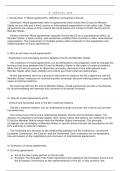
CODING GUIDELINES

Coding Guidelines – Overview

The ICD-10-CM and ICD-10-PCS authoritative sources for coding and reporting are listed
below. These should be reviewed and referenced routinely for specific situations and
circumstances to ensure accurate coding.
1. ICD-10 Coding Classifications
2. Official Guidelines for Coding & Reporting (OCG)
3. AHA Coding Clinic

The instructions and coding conventions in ICD-10 take precedence over the Official Coding
Guidelines (OCG), which in turn take precedence over Coding Clinic advice. Coding Clinic
advice is the official source of advice where ICD-10 and the OCG are ambiguous, conflicting or
silent.
Coding Clinic for ICD-10 began in 2012. In the absence of changes to ICD-10 codes and
guidance, prior Coding Clinics will stand as long as there is nothing new published by Coding
Clinic to replace them.
When there is a discrepancy between the conventions in the classification, the guidelines, and/or
advice published in Coding Clinic, coding professionals should adhere to the hierarchy shown
above. Coding Clinic advises to submit any apparent conflicts with the specific case example(s)
and rationale to the AHA Central Office for review.

1. ICD-10 Coding Classifications. An example of an ICD-10-CM instructional rule are the two
Excludes Notes included in the Tabular List:
Excludes1 means “Not Coded Here.” The code excluded should not be used at the same time as
the code above the Excludes1 note. The two conditions cannot be coded together, except when
the two conditions are clearly unrelated to each other.
Excludes2 means “Not Included Here.” The condition excluded is not part of the condition it is
excluded from, but a patient may have both conditions at the same time. It is acceptable to code
both together.
Examples N39.0 Urinary tract infection, site not specified. Excludes1: Cystitis (N30.-). Codes
N39.0 and N30.- cannot be coded together. Cystitis is more specific than UTI.
D63.0 Anemia in neoplastic disease. Excludes2: Anemia due to antineoplastic chemotherapy
(D64.81). Both D63.0 and D64.81 can be coded together.

2. Official Coding Guidelines (OCG). The OCG includes specific guidelines regarding the
definition and selection of the principal diagnosis and secondary diagnoses:
"The definition for "other diagnoses" is interpreted as additional clinically significant conditions
that affect patient care in terms of requiring: clinical evaluation, or therapeutic treatment, or
diagnostic procedures, or extended length of hospital stay, or increased nursing care and/or
monitoring."

3. Coding Clinic. The purpose of Coding Clinic is to provide official coding advice and
clarification on code assignment based on the ICD-10 classification and Official Coding
Guidelines and provider documentation. It is outside the scope of Coding Clinic to determine,

,endorse or approve diagnostic criteria for any condition. Coding Clinic will not respond to any
questions regarding MS-DRGs, reimbursement, payment or coverage issues, or mediating
differences of opinion between providers and auditors or payers—unless it relates to the
application of specific coding guidelines or specific previously published coding advice.,
Coding Clinic advice is specific to the question asked and case scenario included. Do not
consider this general advice to be applied across the board. For example:
Question: A 94-year-old patient presented after being down on the floor for 8 hours. The patient
reported falling down steps after feeling weak. The provider's final diagnostic statement listed
"Rhabdomyolysis, dehydration and acute kidney injury." What is the appropriate code
assignment for rhabdomyolysis for this patient, traumatic or unspecified?
Answer: In this case, assign code M62.82, Rhabdomyolysis. Rhabdomyolysis is caused by the
breakdown of muscle tissue, resulting in the leakage of muscle contents into the blood. Since this
condition may occur secondary to traumatic injury or other non-traumatic causes (e.g.,
conditions that damage skeletal muscle), it is only coded as traumatic when the provider
explicitly documents "traumatic rhabdomyolysis."

Coding Guidelines - Principal Diagnosis

DEFINITION OF THE PRINCIPAL DIAGNOSIS
Official Coding Guidelines (OCG) Section II specifies rules for the selection of the principal
diagnosis, first noting that the definition is:
“That condition established after study to be chiefly responsible for occasioning the admission
of the patient to the hospital for care.”
The words “after study” in the definition are important, since it is not necessarily the admitting
diagnosis, but rather the diagnosis found after diagnostic workup (or surgery) that proved to be
the primary reason for or focus of the admission.
Consider WHY the patient was admitted to the hospital and could not be in observation or go
home. Many patients are admitted with several medical problems, but those that could have been
individually treated as an outpatient or observation are unlikely to be chiefly responsible for the
admission.
The condition (or at least some signs or symptoms referable to the condition) must have been
present on admission. But in some cases, it may be several days before the provider arrives at or
documents a definitive diagnosis. This does not mean that the condition was not present on
admission if the signs and symptoms of it were present on admission (POA).
The OCG POA Guidelines includes an important definition of POA with implications for
assigning the principal diagnosis: Diagnoses subsequently confirmed after admission are
considered POA if at the time of admission they "constitute an underlying cause of a symptom
that is present at the time of admission.”

The circumstances of admission always govern the selection of the principal diagnosis (unless
coding guidance states otherwise), and the selection of the principal diagnosis is based on the
entire medical record: “The entire record should be reviewed to determine the specific reason for
the encounter and the conditions treated.” (OCG p. 1).
Important considerations for determining circumstances of admission:
 Severity of each condition or greatest mortality/complication risk
 Complexity of care, evaluation, management, number/types of consultants

,  Medications required, risks, route of administration (IV vs. po)
 Diagnostic workup: Endoscopy, imaging, MRI/CT, ultrasound, catheterization; non-
routine laboratory tests
 Intensity of monitoring (vital signs, nursing time, etc.)
 Plans for follow-up care.

If treatment was totally or primarily directed toward one condition or only one condition would
have required inpatient care, that condition would be designated as principal diagnosis. In most
circumstances, the diagnosis for which a major or definitive surgical procedure is performed
would be assigned as the principal diagnosis. See topic Unrelated OR Procedure DRGs.

CODING RULES—PRINCIPAL DIAGNOSIS

1. TWO OR MORE DIAGNOSES THAT EQUALLY MEET THE
CRITERIA FOR PRINCIPAL DIAGNOSIS
“In the unusual instance when two or more diagnoses equally meet the criteria for principal
diagnosis as determined by the circumstances of admission, diagnostic workup, and/or therapy
provided and the Alphabetic Index, Tabular List, or another coding guideline does not provide
sequencing direction, any one of the diagnoses may be sequenced first.” (OCG Section II.C).
It is not uncommon for a patient to be admitted with multiple conditions. When management is
equally directed towards more than one condition and each condition would typically require
inpatient care, any one of the diagnoses can be assigned as principal diagnosis.
EXAMPLES
Pt admitted with CHF and pneumonia. Patient given IV Lasix and IV antibiotics.
Pt admitted with acute atrial fibrillation and acute heart failure. Patient is digitalized to reduce
the ventricular rate and given IV Lasix for systolic heart failure.

2. TWO OR MORE INTER
RELATED CONDITIONS, EACH POTENTIALLY MEETING THE DEFINITION OF
PRINCIPAL DIAGNOSIS

“When there are two or more interrelated conditions (such as diseases in the same ICD-10-CM
chapter or manifestations characteristically associated with a certain disease) potentially
meeting the definition of principal diagnosis, either condition may be sequenced first, unless
the circumstances of the admission, the therapy provided, the Tabular List, or the Alphabetic
Index indicate otherwise.” (OCG II.B).
EXAMPLE Patient admitted with SOB, chest pain, 4+ pitting edema, pain and erythema in
both legs. Found to have multiple bilateral pulmonary emboli due to extensive bilateral DVTs in
femoral and popliteal veins. Treated with IV heparin and discharged on Eliquis. Either PE or
DVT may be sequenced as principal diagnosis.

3. UNCERTAIN DIAGNOSIS
“If the diagnosis documented at the time of discharge is qualified as 'probable,' 'suspected,'
'likely,' 'questionable,' 'possible,' 'still to be ruled out,' 'compatible with', 'consistent with', or
other similar terms indicating uncertainty, code the condition as if it existed or was established.

, The bases for these guidelines are the diagnostic workup, arrangements for further workup or
observation, and initial therapeutic approach that correspond most closely with the established
diagnosis.” (OCG Section II.H).
This guideline is applicable only to inpatient admissions, not outpatient visits.
Exceptions: Code only confirmed cases of HIV, COVID-19, Zika, and certain influenza viruses
(J09-J10), e.g., H1N1, avian, etc.
Other terms that indicate uncertainty are "indicative of," "suggestive of," "comparable with,"
"appears to be" and "concern for." "Evidence of" is considered definitive, not uncertain.
"At the time of discharge" may mean in the final discharge note, when a consultant has signed
off, or in the discharge summary.
EXAMPLE RLL pneumonia possibly due to aspiration.” Assign code J69.0 for aspiration
pneumonia.

If an uncertain diagnosis is determined to not be present, not clinically supported, or obviously
ruled out at the time of discharge, it would not be coded. At the time of discharge may mean in
the final discharge note, when a consultant has signed off, or in the discharge summary.
For example, a code for “possible pneumonia” would not be assigned if negative CT scan and
antibiotics were discontinued before discharge or a full course of treatment.
"Borderline" diagnoses documented at discharge are considered confirmed (not uncertain) and
should be coded as such unless ICD-10 has a specific index term, e.g., borderline hypertension
(R03.0).
Impending or Threatened Condition. Any condition described at the time of discharge as
“impending” or “threatened” that actually occurred is coded as a confirmed diagnosis. If it did
not occur and there is a specific “impending” or “threatened” ICD-10 index term, assign the
given code. These are:
 Impending coronary syndrome or myocardial infarction: Assign code I20.0, Unstable
Angina.
 Impending delirium tremens: Assign code F10.239, Alcohol dependence with withdrawal
 Threatened abortion/miscarriage: Assign code O20.0, Threatened abortion
 Threatened labor (without delivery): Assign code O47.9, False labor

For all others, code only the existing underlying condition and not the condition described as
impending or threatened. For example, provider documentation of “impending stroke with
aphasia” and stroke was not confirmed, code only the aphasia.

4. CODES FOR SYMPTOMS, SIGNS, AND ILL-DEFINED CONDITIONS
“Codes for symptoms, signs, and ill-defined conditions from Chapter 18 are not to be used as
principal diagnosis when a related definitive diagnosis has been established.” (OCG Section
II.A).
EXAMPLE Syncope due to cardiac arrhythmia. Cardiac arrhythmia is the principal diagnosis,
syncope is a secondary diagnosis.

Do not assign a separate code at all for signs and symptoms that are routinely associated with a
disease process or when a related definitive diagnosis has been established (confirmed) as the
cause. See OCG Sections I.B.4 and I.C.18.a and b.


Get to know the seller

Seller avatar
Reputation scores are based on the amount of documents a seller has sold for a fee and the reviews they have received for those documents. There are three levels: Bronze, Silver and Gold. The better the reputation, the more your can rely on the quality of the sellers work.
melleystuvia Nightingale College
View profile
Follow You need to be logged in order to follow users or courses
Sold
82
Member since
8 months
Number of followers
4
Documents
1176
Last sold
22 hours ago
Edusolutionguides.

We learn all subject preparation for the final exam. We give the online assignment and homework for all the subjects. That's why you prepare well for all the paperwork.

3.0

18 reviews

5
5
4
4
3
2
2
0
1
7

Recently viewed by you

Why students choose Stuvia

Created by fellow students, verified by reviews

Quality you can trust: written by students who passed their tests and reviewed by others who've used these notes.

Didn't get what you expected? Choose another document

No worries! You can instantly pick a different document that better fits what you're looking for.

Pay as you like, start learning right away

No subscription, no commitments. Pay the way you're used to via credit card and download your PDF document instantly.

Student with book image

“Bought, downloaded, and aced it. It really can be that simple.”

Alisha Student

Frequently asked questions