

CARDIOVASCULAR
Cardiovascular physiology
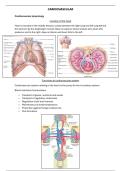
Location of the heart
Heart is located in the middle thoracic cavity between the right lung and left lung behind
the sternum by the diaphragm muscle. Base is superior where vessels exit, heart tilts
posterior and to the right. Apex is inferior and heart tilts to the left
Functions of cardiovascular system
Cardiovascular system relating to the heart is the pump for the circulatory system
Blood maintains homeostasis
o Transport of gases, nutrients and waste
o Transport of regulatory molecules
o Regulation of pH and osmosis
o Maintenance of body temperature
o Protection against foreign substances
o Clot formation
, CARDIOVASCULAR
Pulmonary circulation and systemic circulation
Cardiovascular system is the heart and circulation system of blood vessels and blood
Pulmonary circulation – circulation system of blood vessels between heart and lungs –
pulmonary arteries and pulmonary veins
Systemic circulation – circulation system of blood vessels between heart and other
body systems – systemic arteries & veins and capillaries
In pulmonary circulation the pulmonary veins from the right lung and left lung bring
oxygen rich blood (nutrients) into the left atrium to left ventricle for exit through the
aorta and systemic arteries and coronary arteries to the capillary networks of the upper
and lower body in the systemic circulation. In systemic circulation the systemic veins
and coronary veins bring oxygen poor blood (no nutrients) of the upper and lower body
through superior vena cava and inferior vena cava into the right atrium to right ventricle
for exit into the pulmonary arteries as deoxygenated blood into the capillary network of
the right lung and left lung in the pulmonary circulation in order to become oxygen rich
leaving through the pulmonary vein to be repumped back into systemic circulation to
the body
Oxygenated arteries into arterioles exiting heart into capillary systems removing waste
providing blood and nutrients to other systems where venules combine into
deoxygenated veins entering heart. Deoxygenated pulmonary arteries entering lungs
with oxygenated pulmonary veins exiting lungs with nutrients for back into circulation
, CARDIOVASCULAR
Parallel arrangement i.e. dual pump action of the heart prevents blood flow changes in
one organ significantly affecting blood flow in other organs. Blood enters muscle and
organ systems in parallel arrangement for sufficient supply with no separate pathway to
main target
Blood keeps composition relatively constant where digestive system (nutrient
regulation), kidney (water regulation and extraction of waste) and skin (heat regulation)
organs play a role
Circulatory system overview
1. Heart blood vessels
2. Blood flow
3. Properties and features of: arteries, arterioles, capillaries and veins
4. Blood pressure
Pulmonary veins (oxygenated) exit lungs from pulmonary capillaries and venules in
pulmonary circulation into right atrium and ventricle which leaves via aorta (major
systemic artery) to smaller systemic arteries branching off as arterioles (oxygenated) to
supply tissues through systemic capillaries i.e. with capillary beds within organs in
systemic circulation. Venules (deoxygenated) gather from systemic capillaries within
tissue organs in systemic circulation joining systemic veins through the superior and
inferior vena cava into left atrium and ventricle which leaves via pulmonary arteries
(deoxygenated) to arterioles into pulmonary capillaries in pulmonary circulation for
nutrients
, CARDIOVASCULAR
Heart chambers and blood vessels
Right atrium (superior) and left atrium (superior)
Right ventricle (inferior) and left ventricle (inferior)
Septum separates right ventricle and left ventricle
Superior vena cava returns blood from the head and upper limbs – O2 poor blood
Inferior vena cava returns blood from the trunk and legs – O2 poor blood
Deoxygenated blood via superior vena cava and inferior vena cava enters the right
atrium and right ventricle which exits the right pulmonary artery and left pulmonary
artery to PULMONARY CIRCULATION of LUNGS. Oxygenated blood via right pulmonary
vein and left pulmonary vein enters the left atrium and left ventricle which exits the
aorta to the body system to SYSTEMIC CIRCULATION in the upper and lower body
Cardiovascular physiology
Location of the heart
Heart is located in the middle thoracic cavity between the right lung and left lung behind
the sternum by the diaphragm muscle. Base is superior where vessels exit, heart tilts
posterior and to the right. Apex is inferior and heart tilts to the left
Functions of cardiovascular system
Cardiovascular system relating to the heart is the pump for the circulatory system
Blood maintains homeostasis
o Transport of gases, nutrients and waste
o Transport of regulatory molecules
o Regulation of pH and osmosis
o Maintenance of body temperature
o Protection against foreign substances
o Clot formation
, CARDIOVASCULAR
Pulmonary circulation and systemic circulation
Cardiovascular system is the heart and circulation system of blood vessels and blood
Pulmonary circulation – circulation system of blood vessels between heart and lungs –
pulmonary arteries and pulmonary veins
Systemic circulation – circulation system of blood vessels between heart and other
body systems – systemic arteries & veins and capillaries
In pulmonary circulation the pulmonary veins from the right lung and left lung bring
oxygen rich blood (nutrients) into the left atrium to left ventricle for exit through the
aorta and systemic arteries and coronary arteries to the capillary networks of the upper
and lower body in the systemic circulation. In systemic circulation the systemic veins
and coronary veins bring oxygen poor blood (no nutrients) of the upper and lower body
through superior vena cava and inferior vena cava into the right atrium to right ventricle
for exit into the pulmonary arteries as deoxygenated blood into the capillary network of
the right lung and left lung in the pulmonary circulation in order to become oxygen rich
leaving through the pulmonary vein to be repumped back into systemic circulation to
the body
Oxygenated arteries into arterioles exiting heart into capillary systems removing waste
providing blood and nutrients to other systems where venules combine into
deoxygenated veins entering heart. Deoxygenated pulmonary arteries entering lungs
with oxygenated pulmonary veins exiting lungs with nutrients for back into circulation
, CARDIOVASCULAR
Parallel arrangement i.e. dual pump action of the heart prevents blood flow changes in
one organ significantly affecting blood flow in other organs. Blood enters muscle and
organ systems in parallel arrangement for sufficient supply with no separate pathway to
main target
Blood keeps composition relatively constant where digestive system (nutrient
regulation), kidney (water regulation and extraction of waste) and skin (heat regulation)
organs play a role
Circulatory system overview
1. Heart blood vessels
2. Blood flow
3. Properties and features of: arteries, arterioles, capillaries and veins
4. Blood pressure
Pulmonary veins (oxygenated) exit lungs from pulmonary capillaries and venules in
pulmonary circulation into right atrium and ventricle which leaves via aorta (major
systemic artery) to smaller systemic arteries branching off as arterioles (oxygenated) to
supply tissues through systemic capillaries i.e. with capillary beds within organs in
systemic circulation. Venules (deoxygenated) gather from systemic capillaries within
tissue organs in systemic circulation joining systemic veins through the superior and
inferior vena cava into left atrium and ventricle which leaves via pulmonary arteries
(deoxygenated) to arterioles into pulmonary capillaries in pulmonary circulation for
nutrients
, CARDIOVASCULAR
Heart chambers and blood vessels
Right atrium (superior) and left atrium (superior)
Right ventricle (inferior) and left ventricle (inferior)
Septum separates right ventricle and left ventricle
Superior vena cava returns blood from the head and upper limbs – O2 poor blood
Inferior vena cava returns blood from the trunk and legs – O2 poor blood
Deoxygenated blood via superior vena cava and inferior vena cava enters the right
atrium and right ventricle which exits the right pulmonary artery and left pulmonary
artery to PULMONARY CIRCULATION of LUNGS. Oxygenated blood via right pulmonary
vein and left pulmonary vein enters the left atrium and left ventricle which exits the
aorta to the body system to SYSTEMIC CIRCULATION in the upper and lower body


