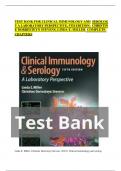
TEST BANK FOR CLINICAL IMMUNOLOGY AND SEROLOG
mi mi mi mi mi
Y A LABORATORY PERSPECTIVE, 5TH EDITION, CHRISTIN
mi mi mi mi mi
E DORRESTEYN STEVENS, LINDA E. MILLER COMPLETE
mi mi mi mi mi mi
CHAPTERS
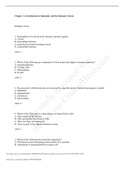
,Chapter 1. Introduction to Immunity and the Immune System
Multiple Choice
1. Eosinophils are involved in the immune response against:
A. viruses.
B. intracellular bacteria.
C. parasites that cannot be phagocytized.
D. extracellular bacteria.
ANS: C
2. Which of the following are components of both innate and adaptive
immune responses? A. Immunoglobulins
B. T helper cells
,C. Macrophages
D. B cells
ANS: C
3. The process by which leukocytes are attracted to a specific area by
chemical messengers is called: A. diapedesis.
B. degranulation.
C. chemotaxis.
D. opsonization.
ANS: C
4. Which of the following is a characteristic of natural killer cells? A.
They mature in the thymus.
B. They are smaller than B and T cells.
C. They are a type of lymphocyte.
D. They are part of the adaptive immune system.
ANS: C
5. Which of the following best describes diapedesis?
, A. Movement toward increasing concentrations of a cytokine
B. Attachment of immunoglobulin to target cells
C. Movement through blood vessel walls as cells exit the circulation
D. Engulfment of target cells
ANS: C
6. The most effective phagocytic and antigen-
presenting cell is the: A. neutrophil.
B. monocyte.
C. dendritic cell.
D. macrophage.
ANS: C
7. Which of the following is characteristic of natural immunity? A. It
involves memory.
B. T lymphocytes play a major role.
C. It involves specificity.
D. Mechanisms are always present and fully functional.
ANS: D
mi mi mi mi mi
Y A LABORATORY PERSPECTIVE, 5TH EDITION, CHRISTIN
mi mi mi mi mi
E DORRESTEYN STEVENS, LINDA E. MILLER COMPLETE
mi mi mi mi mi mi
CHAPTERS
,Chapter 1. Introduction to Immunity and the Immune System
Multiple Choice
1. Eosinophils are involved in the immune response against:
A. viruses.
B. intracellular bacteria.
C. parasites that cannot be phagocytized.
D. extracellular bacteria.
ANS: C
2. Which of the following are components of both innate and adaptive
immune responses? A. Immunoglobulins
B. T helper cells
,C. Macrophages
D. B cells
ANS: C
3. The process by which leukocytes are attracted to a specific area by
chemical messengers is called: A. diapedesis.
B. degranulation.
C. chemotaxis.
D. opsonization.
ANS: C
4. Which of the following is a characteristic of natural killer cells? A.
They mature in the thymus.
B. They are smaller than B and T cells.
C. They are a type of lymphocyte.
D. They are part of the adaptive immune system.
ANS: C
5. Which of the following best describes diapedesis?
, A. Movement toward increasing concentrations of a cytokine
B. Attachment of immunoglobulin to target cells
C. Movement through blood vessel walls as cells exit the circulation
D. Engulfment of target cells
ANS: C
6. The most effective phagocytic and antigen-
presenting cell is the: A. neutrophil.
B. monocyte.
C. dendritic cell.
D. macrophage.
ANS: C
7. Which of the following is characteristic of natural immunity? A. It
involves memory.
B. T lymphocytes play a major role.
C. It involves specificity.
D. Mechanisms are always present and fully functional.
ANS: D