

exam 4
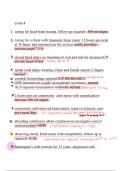
1 . caring for head brain trauma. follow up required- 300 ml output
2 .
caring for a client with traumatic brain injury 12 hours ago peak
at 36 hours and unconscious for an hour notify provider-
increase pupil 7-10
3 .
closed head injury on mechanical vent and risk for increase ICP-
elevate head of bed Elevate HOB 30-450
4 .
spinal cord injury wearing a halo and family reports 2 finger-
normal
good call doc
5 . cerebral hemorrhage agitated ICP INCREASE!! Not .
6 .
GBS intermittent coughs up moderate secretions- normal
7 .
ALS requests resuscitation withheld- normal They don't live long
8 .
2 hours post op craniotomy. alert nurse with complication-
increase 200 ml output
9 .
craniotomy and removed brain tumor. report to primary care-
post nasal drip S/P craniotomy removed brain tumor post nasal drip !
:
Report to primary care
10 .
attending conference about cryptococcus meningitis correct
understanding- AIDS Cryptococcus Meningitis AIDS =
II .
observing newly hired nurse with encephalitis, follow up is
required- tv on Limit Visitors turn lights off keep dim No TV
,
or
,
on
,
↓ICP
12 .
huntington’s with tremors for 12 years. diagnosed with
, 13 .
pneumonia w crackles, non productive cough, O2 92%,
inconvenient of bowel and bladder, G tube, confused, foot drop.
action take first- humidify or reorient
14 .
caring for a client having a newly prescribed pyridostigmine-
muscle strength pyridostigmine muscle med strength
=
15 . emergency department myasthenia gravis difficult speaking-
forgot to take meds-nurse should-neuro respiratory failure
SIS= Neuromuscular respiratory failure
Slow, shallow respirations, dysphagia, difficulty speaking
10 .
diagnosed with fibromyalgia. which finding is expected to
assess- muscular skeletal pain feels like pins/needles
17 .
diagnosed with MS. lifestyle modification control symptoms.
include- feet apart for better balance M S Feet apart maintain balance . .
=
to
18 .
aware of follow client. assess client who- hasn’t had bowel
movement
19 . neuro unit with SCI at C4. goals for this patient- lack of head
control
20 .
health care information to . C6 SCI. autonomic dysrefelxia- blood
severe, pounding headache with paroxysmal hypertension, profuse diaphoresis above the spinal level of the lesion
pressure (most often of the forehead), nausea, nasal congestion, and bradycardia. It occurs among patients with cord
lesions above T6 (the sympathetic visceral outflow level) after spinal shock has subsided. The sudden increase in
blood pressure may cause retinal hemorrhage, hemorrhagic stroke, myocardial infarction, or seizures
21 -
protein increased- Guillain Barre
22 .
hospitalized client extensive burn- 72
23 . working in ED sever burns to face, neck, bilateral upper
extremities- fluids We giveFluids burn pt to .
24 .
reviewing client emergent phase- potassium 5.8
1 . caring for head brain trauma. follow up required- 300 ml output
2 .
caring for a client with traumatic brain injury 12 hours ago peak
at 36 hours and unconscious for an hour notify provider-
increase pupil 7-10
3 .
closed head injury on mechanical vent and risk for increase ICP-
elevate head of bed Elevate HOB 30-450
4 .
spinal cord injury wearing a halo and family reports 2 finger-
normal
good call doc
5 . cerebral hemorrhage agitated ICP INCREASE!! Not .
6 .
GBS intermittent coughs up moderate secretions- normal
7 .
ALS requests resuscitation withheld- normal They don't live long
8 .
2 hours post op craniotomy. alert nurse with complication-
increase 200 ml output
9 .
craniotomy and removed brain tumor. report to primary care-
post nasal drip S/P craniotomy removed brain tumor post nasal drip !
:
Report to primary care
10 .
attending conference about cryptococcus meningitis correct
understanding- AIDS Cryptococcus Meningitis AIDS =
II .
observing newly hired nurse with encephalitis, follow up is
required- tv on Limit Visitors turn lights off keep dim No TV
,
or
,
on
,
↓ICP
12 .
huntington’s with tremors for 12 years. diagnosed with
, 13 .
pneumonia w crackles, non productive cough, O2 92%,
inconvenient of bowel and bladder, G tube, confused, foot drop.
action take first- humidify or reorient
14 .
caring for a client having a newly prescribed pyridostigmine-
muscle strength pyridostigmine muscle med strength
=
15 . emergency department myasthenia gravis difficult speaking-
forgot to take meds-nurse should-neuro respiratory failure
SIS= Neuromuscular respiratory failure
Slow, shallow respirations, dysphagia, difficulty speaking
10 .
diagnosed with fibromyalgia. which finding is expected to
assess- muscular skeletal pain feels like pins/needles
17 .
diagnosed with MS. lifestyle modification control symptoms.
include- feet apart for better balance M S Feet apart maintain balance . .
=
to
18 .
aware of follow client. assess client who- hasn’t had bowel
movement
19 . neuro unit with SCI at C4. goals for this patient- lack of head
control
20 .
health care information to . C6 SCI. autonomic dysrefelxia- blood
severe, pounding headache with paroxysmal hypertension, profuse diaphoresis above the spinal level of the lesion
pressure (most often of the forehead), nausea, nasal congestion, and bradycardia. It occurs among patients with cord
lesions above T6 (the sympathetic visceral outflow level) after spinal shock has subsided. The sudden increase in
blood pressure may cause retinal hemorrhage, hemorrhagic stroke, myocardial infarction, or seizures
21 -
protein increased- Guillain Barre
22 .
hospitalized client extensive burn- 72
23 . working in ED sever burns to face, neck, bilateral upper
extremities- fluids We giveFluids burn pt to .
24 .
reviewing client emergent phase- potassium 5.8



