Politics, Ethics & Practice
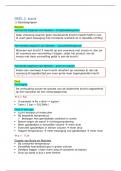
Class 1: Introductory lecture (08.03.25)
This class is important because really everyone ends up advising, checking etc. But facts are easily
producible by anyone.
The 3 pillars:
1. Ethics (ideally in part reflected in…)
2. Politics (translated into bits of…)
3. Practice (partly reflected in the assignments)
Mondays: diving into problems that researchers etc dabble with, challenges we can face irl. Tuesday is
moving from political (schmitt’s notion, captures what politics is, the struggle between me and the other)
to politics via case studies of various policy areas: how to contribute to consensus & change. Tuesdays
afternoon we do voluntary assignments: 5 assignments + 1 special one. No need to come to the open court
to have the waiver count. The exam is open book, all presentations and literature will be on the computer.
Exam is 6pm - 9 pm on 13.06.25.
“Ethics and public policy” Jonathan Wolff – top-down advice is a big no-no. Why? Karl popper: utopian
engineering; john wolf: philosophy is extremism
Why does ideal theory not work?
Its ideal bc thats how the world should work in a perfect controlled environment. But u also have the non
ideal ones bc we also need to have some ideas that take into account that the world we engage in is not
ideal. How should we move forward? But is there then no moral to ideal theory? Yes there is bc it can be
an inspiration of where u would like to be. It might give us direction, a mirror to reflect on our motives, or
we discover the unwanted implications of this. Example: black mirror - helped us to reflect what we
should’ve done with the technologies but sadly the technologies from there are now in use.
● Wolff: philosophy is about outrageous ideas.
- Grahame Lock: strong positions
- Amartya Sen and Ingrid Robeyns: ideal theory (vs non-ideal theory)
● Works not as road plan but as lab experiment under ideal conditions
- Inspiration, direction (Marius de Geus on utopianism)
- Mirror (cf mirror of princes) of both motives and behaviour
- ‘dark universe’ in SciFi: discover unwanted implications.
1
, ● Wolff: ideal theory doesn’t work because in the real world:
1. There is no room or time to agree to disagree: compromise/solution needed
a. So let's agree to disagree doesnt work bc in the real world there is no room to say that,
there is no time to go back n forth to reach consensus.
2. bias for status quo
a. Moral theory would require us to do it but u need the support and its hard in the real
world
3. support trumps morality (legitimation trump's legitimacy) [Burdens of Reason]
a. How do we deal with that and move forward to a reasonable consensus?
What you think may work (but doesn’t really)
Traditional ‘simple’ solutions:
- Find the lowest common denominator
- We disagree about everything but we have to live together so let's agree to do this.
Usually. Seems to work
- Split the difference
- Rule of thumb for working together when u disagree
- Make trade-offs
U end up in a compromise which is superficial and is based on accidents and none of those compromises,
deals ever take seriously your preferences, dreams, desires. Compromise is based on simple rules that
basically work for those who are emotionally dead inside. Most of us are not. Were committed to sth.
Compromises will last only as long as u make them.
Problem: superficial thus unstable, if acceptable at all.
- compromises ignore ideals, dreams, values, morals, faith, fears, hopes, desires, needs
- they only work for the morally and emotionally dead…
- They will last only as long a su tolerate them so not very long in practice
What works: mix compromise with substance -
● Take the others’ ideals and values seriously. But do not respect them. Humans deserve respect but
ideas do not. Ideas are there to criticise and questions to take too seriously. Accept that belief and
your belief in them but be willing to question them. That's the way forward that addresses
substantive issues. Abortion - 40 yrs ago there was the compromise abt abortion. The answers
didn't answer the question. The compromise when the fetus is sustainable on its own, well after 3
months there is a child bc u could keep it alive so well say its an individual. Since then abortion is
2
, murder bc they wanted to please the religious ppl. The actual compromise doesn't ask from
neither side. But now with all the new technology u could keep the embryo alive even earlier so
that is an argument against the compromise. Bc u built the compromise on tactical not substantive
reasons. Compromise is based on being reasonable but its more stable.
● And do the same with your own ideals and values
● Then and only then can substantive common ground be found
→ A.K.A. being reasonable
The Burdens of Judgment
The idea of the reasonable, pt. I
John rawls - at nauseaum; wrote “political liberalism” new testament; south park is a good indicator (?);
argues that in the real world we disagree the whole thing is imperfect, everything is imperfect because
our arguments are weak, we can't prove it with absolute certainty. Also involved in political
arguments. They force us to be flexible in our ideas. The burdens of judgment are the many “hazards
involved in the correct (and conscientious) exercise of our powers of reason and judgment in the
ordinary course of political life,” This is a way of explaining why reasonable people can disagree even
when they are informed, sincere and do the right thing. In a pluralistic society its normal that people
won't agree on everything - not bc they're stupid but because it's hard. Burdens of judgment r thus
the reasons why even smart, well-intentioned people can come to different conclusions. Rawls’s
point is that because of these “burdens of judgment,” a just society can’t demand full agreement
from everyone on deep moral truths. Instead, it should focus on political principles that all
reasonable people can accept, despite their deeper disagreements — this is what he calls an
“overlapping consensus.”
1. empirical and scientific evidence is often complex and conflicting. Confusing and
contradictory evidence. Global warming - so much uncertainty. Everything that we think is a
fact is a construction. Everything can be constructed. Legitimacy in empirical sense is support
- does absence of resistance say this is legitimate? – example: communism. romanian president
addressing his audience but against his expectations are booing him, cheering against him. The
video ive seen. So what is legitimacy is open to debate bc we created it as everyhting is science.
There are some thing more certain that others, btu a lot of what we know is based on complex
models getting better. Based on interconnected ideas, facts, theories. Its uncertain
1.1. Do mussels feel pain? Peter Singer wonders abt this - prolly not an animal welfare
philosopher. Tried to delete animals from his diet but didnt know if mussels could be
3
, eaten. Didn't know where the line was based on feeling pain. Do they feel pain? 30 yrs
ago they thought that fish cannot feal pain which turned out to be false. Indicators of pain
do apply to fish. They don't have the same nervous system, but react in the same way -
doesn't mean they feel the same things. We can also disagree if we can eat them
2. we may reasonably disagree about the relative weight of different considerations. What is
worse? Tundras r heating up or that ice caps are melting? U prolly dont have an opinion so we
can't agree or disagree on everything. U could argue
2.1. responsibility for pain vs certainty of death - let's assume mussels can feel pain. If i am
pro eating them i'll say that they will die anyways so it's better if i eat them if they die of
old age.
3. concepts are vague and subject to hard cases. In social science especially. Or philosophy -
what the fuck is human dignity? We don't know
3.1. What is pain and when is it bad? - we don't know how their nervous system works so we
can't make a judgement
4. the way we assess evidence and weigh values can be shaped by our total life experience:
vegan city hipsters vs famine survivors - everybody in the fishing industry hates vegan hipsters,
first world problems; the points of the hipsters will be completely different from those who
survived a famine.
4.1. Gaza genocide has different support bc they have different background. If you ask ppl
from the 90s have different ideas than us. We assess things thru our lives experiences.
5. different normative considerations on different sides can make overall assessment difficult:
Difficult if u look at what happened (the biting) at uni yesterday its impossible.
5.1. naturalism vs deontology - naturalism is a tradition saying we should try to live in
accordance with nature as in with the essence of things, we shouldnt deviate from how
we are structures - only 2 sexes made for each other, natural made to live anything else is
wrong - if that's the case, we climbed from the trees as monkeys we began with mussels
5.2. Deontology - what is intrinsically wrong or bad? Focus on the right or wrongness of an
action rather than the outcome. Life of the muscles is beautiful and should be protected
at all costs, u should never kill
6. the number of values any social institution can incorporate is limited: in this case, it’s allow
killing or not - simple issues; cant have it both ways, we cant tolerate and not tolerate eating
mussels
U cant expect the gov to be liberal, a bank to be liberal with its money, there's only so many values an
institution can incorporate at the same time.
4
Class 1: Introductory lecture (08.03.25)
This class is important because really everyone ends up advising, checking etc. But facts are easily
producible by anyone.
The 3 pillars:
1. Ethics (ideally in part reflected in…)
2. Politics (translated into bits of…)
3. Practice (partly reflected in the assignments)
Mondays: diving into problems that researchers etc dabble with, challenges we can face irl. Tuesday is
moving from political (schmitt’s notion, captures what politics is, the struggle between me and the other)
to politics via case studies of various policy areas: how to contribute to consensus & change. Tuesdays
afternoon we do voluntary assignments: 5 assignments + 1 special one. No need to come to the open court
to have the waiver count. The exam is open book, all presentations and literature will be on the computer.
Exam is 6pm - 9 pm on 13.06.25.
“Ethics and public policy” Jonathan Wolff – top-down advice is a big no-no. Why? Karl popper: utopian
engineering; john wolf: philosophy is extremism
Why does ideal theory not work?
Its ideal bc thats how the world should work in a perfect controlled environment. But u also have the non
ideal ones bc we also need to have some ideas that take into account that the world we engage in is not
ideal. How should we move forward? But is there then no moral to ideal theory? Yes there is bc it can be
an inspiration of where u would like to be. It might give us direction, a mirror to reflect on our motives, or
we discover the unwanted implications of this. Example: black mirror - helped us to reflect what we
should’ve done with the technologies but sadly the technologies from there are now in use.
● Wolff: philosophy is about outrageous ideas.
- Grahame Lock: strong positions
- Amartya Sen and Ingrid Robeyns: ideal theory (vs non-ideal theory)
● Works not as road plan but as lab experiment under ideal conditions
- Inspiration, direction (Marius de Geus on utopianism)
- Mirror (cf mirror of princes) of both motives and behaviour
- ‘dark universe’ in SciFi: discover unwanted implications.
1
, ● Wolff: ideal theory doesn’t work because in the real world:
1. There is no room or time to agree to disagree: compromise/solution needed
a. So let's agree to disagree doesnt work bc in the real world there is no room to say that,
there is no time to go back n forth to reach consensus.
2. bias for status quo
a. Moral theory would require us to do it but u need the support and its hard in the real
world
3. support trumps morality (legitimation trump's legitimacy) [Burdens of Reason]
a. How do we deal with that and move forward to a reasonable consensus?
What you think may work (but doesn’t really)
Traditional ‘simple’ solutions:
- Find the lowest common denominator
- We disagree about everything but we have to live together so let's agree to do this.
Usually. Seems to work
- Split the difference
- Rule of thumb for working together when u disagree
- Make trade-offs
U end up in a compromise which is superficial and is based on accidents and none of those compromises,
deals ever take seriously your preferences, dreams, desires. Compromise is based on simple rules that
basically work for those who are emotionally dead inside. Most of us are not. Were committed to sth.
Compromises will last only as long as u make them.
Problem: superficial thus unstable, if acceptable at all.
- compromises ignore ideals, dreams, values, morals, faith, fears, hopes, desires, needs
- they only work for the morally and emotionally dead…
- They will last only as long a su tolerate them so not very long in practice
What works: mix compromise with substance -
● Take the others’ ideals and values seriously. But do not respect them. Humans deserve respect but
ideas do not. Ideas are there to criticise and questions to take too seriously. Accept that belief and
your belief in them but be willing to question them. That's the way forward that addresses
substantive issues. Abortion - 40 yrs ago there was the compromise abt abortion. The answers
didn't answer the question. The compromise when the fetus is sustainable on its own, well after 3
months there is a child bc u could keep it alive so well say its an individual. Since then abortion is
2
, murder bc they wanted to please the religious ppl. The actual compromise doesn't ask from
neither side. But now with all the new technology u could keep the embryo alive even earlier so
that is an argument against the compromise. Bc u built the compromise on tactical not substantive
reasons. Compromise is based on being reasonable but its more stable.
● And do the same with your own ideals and values
● Then and only then can substantive common ground be found
→ A.K.A. being reasonable
The Burdens of Judgment
The idea of the reasonable, pt. I
John rawls - at nauseaum; wrote “political liberalism” new testament; south park is a good indicator (?);
argues that in the real world we disagree the whole thing is imperfect, everything is imperfect because
our arguments are weak, we can't prove it with absolute certainty. Also involved in political
arguments. They force us to be flexible in our ideas. The burdens of judgment are the many “hazards
involved in the correct (and conscientious) exercise of our powers of reason and judgment in the
ordinary course of political life,” This is a way of explaining why reasonable people can disagree even
when they are informed, sincere and do the right thing. In a pluralistic society its normal that people
won't agree on everything - not bc they're stupid but because it's hard. Burdens of judgment r thus
the reasons why even smart, well-intentioned people can come to different conclusions. Rawls’s
point is that because of these “burdens of judgment,” a just society can’t demand full agreement
from everyone on deep moral truths. Instead, it should focus on political principles that all
reasonable people can accept, despite their deeper disagreements — this is what he calls an
“overlapping consensus.”
1. empirical and scientific evidence is often complex and conflicting. Confusing and
contradictory evidence. Global warming - so much uncertainty. Everything that we think is a
fact is a construction. Everything can be constructed. Legitimacy in empirical sense is support
- does absence of resistance say this is legitimate? – example: communism. romanian president
addressing his audience but against his expectations are booing him, cheering against him. The
video ive seen. So what is legitimacy is open to debate bc we created it as everyhting is science.
There are some thing more certain that others, btu a lot of what we know is based on complex
models getting better. Based on interconnected ideas, facts, theories. Its uncertain
1.1. Do mussels feel pain? Peter Singer wonders abt this - prolly not an animal welfare
philosopher. Tried to delete animals from his diet but didnt know if mussels could be
3
, eaten. Didn't know where the line was based on feeling pain. Do they feel pain? 30 yrs
ago they thought that fish cannot feal pain which turned out to be false. Indicators of pain
do apply to fish. They don't have the same nervous system, but react in the same way -
doesn't mean they feel the same things. We can also disagree if we can eat them
2. we may reasonably disagree about the relative weight of different considerations. What is
worse? Tundras r heating up or that ice caps are melting? U prolly dont have an opinion so we
can't agree or disagree on everything. U could argue
2.1. responsibility for pain vs certainty of death - let's assume mussels can feel pain. If i am
pro eating them i'll say that they will die anyways so it's better if i eat them if they die of
old age.
3. concepts are vague and subject to hard cases. In social science especially. Or philosophy -
what the fuck is human dignity? We don't know
3.1. What is pain and when is it bad? - we don't know how their nervous system works so we
can't make a judgement
4. the way we assess evidence and weigh values can be shaped by our total life experience:
vegan city hipsters vs famine survivors - everybody in the fishing industry hates vegan hipsters,
first world problems; the points of the hipsters will be completely different from those who
survived a famine.
4.1. Gaza genocide has different support bc they have different background. If you ask ppl
from the 90s have different ideas than us. We assess things thru our lives experiences.
5. different normative considerations on different sides can make overall assessment difficult:
Difficult if u look at what happened (the biting) at uni yesterday its impossible.
5.1. naturalism vs deontology - naturalism is a tradition saying we should try to live in
accordance with nature as in with the essence of things, we shouldnt deviate from how
we are structures - only 2 sexes made for each other, natural made to live anything else is
wrong - if that's the case, we climbed from the trees as monkeys we began with mussels
5.2. Deontology - what is intrinsically wrong or bad? Focus on the right or wrongness of an
action rather than the outcome. Life of the muscles is beautiful and should be protected
at all costs, u should never kill
6. the number of values any social institution can incorporate is limited: in this case, it’s allow
killing or not - simple issues; cant have it both ways, we cant tolerate and not tolerate eating
mussels
U cant expect the gov to be liberal, a bank to be liberal with its money, there's only so many values an
institution can incorporate at the same time.
4