4PAHPDFF Psychology and the Individual Week 10
BSc Psychology Year 1 BPS Code of Ethics & Conduct
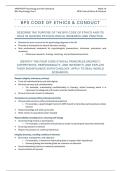
BPS CODE OF ETHICS & CONDUCT
DESCRIBE THE PURPOSE OF THE BPS CODE OF ETHICS AND ITS
ROLE IN GUIDING PSYCHOLOGICAL RESEARCH AND PRACTICE.
• Devises the core curriculum for psychology degrees in the UK
• Provides a framework for ethical decision-making
• Sets professional standards for psychologists (researchers, clinicians, educators, and
students)
o Influences research, therapy, teaching, and professional practice
IDENTIFY THE FOUR CORE ETHICAL PRINCIPLES (RESPECT,
COMPETENCE, RESPONSIBILITY, AND INTEGRITY) AND EXPLAIN
THEIR SIGNIFICANCE IN PSYCHOLOGY. APPLY TO REAL-WORLD
SCENARIOS.
Respect (dignity, autonomy, privacy)
• Treat all individuals fairly and with dignity
• Maintain privacy and confidentiality
o For example, maintaining confidentiality in therapy, whilst knowing when it is
necessary to safeguard and involve another health professional
• Ensure informed consent is obtained
Competence (working within professional limits)
• Only provide services within professional expertise
o For example, a psychologist trained in CBT should not provide psychoanalysis unless
trained
• Keep knowledge and skills up to date
• Refer clients to specialists when needed
Responsibility (avoiding harm, ensuring well-being)
• Avoid harming clients or participants
o For example, a researcher should stop a study if a participant becomes distressed
• Ensuring research is ethical
• Report misconduct or unethical behaviour
Integrity (honesty, avoiding conflicts of interest)
• Be honest, transparent, and objective
o For example, a researcher fabricating data to support their hypothesis
o Honest grading and avoiding bias as a teacher or educator
• Avoid misleading clients or research participants
• Avoid conflicts of interest
BSc Psychology Year 1 BPS Code of Ethics & Conduct
BPS CODE OF ETHICS & CONDUCT
DESCRIBE THE PURPOSE OF THE BPS CODE OF ETHICS AND ITS
ROLE IN GUIDING PSYCHOLOGICAL RESEARCH AND PRACTICE.
• Devises the core curriculum for psychology degrees in the UK
• Provides a framework for ethical decision-making
• Sets professional standards for psychologists (researchers, clinicians, educators, and
students)
o Influences research, therapy, teaching, and professional practice
IDENTIFY THE FOUR CORE ETHICAL PRINCIPLES (RESPECT,
COMPETENCE, RESPONSIBILITY, AND INTEGRITY) AND EXPLAIN
THEIR SIGNIFICANCE IN PSYCHOLOGY. APPLY TO REAL-WORLD
SCENARIOS.
Respect (dignity, autonomy, privacy)
• Treat all individuals fairly and with dignity
• Maintain privacy and confidentiality
o For example, maintaining confidentiality in therapy, whilst knowing when it is
necessary to safeguard and involve another health professional
• Ensure informed consent is obtained
Competence (working within professional limits)
• Only provide services within professional expertise
o For example, a psychologist trained in CBT should not provide psychoanalysis unless
trained
• Keep knowledge and skills up to date
• Refer clients to specialists when needed
Responsibility (avoiding harm, ensuring well-being)
• Avoid harming clients or participants
o For example, a researcher should stop a study if a participant becomes distressed
• Ensuring research is ethical
• Report misconduct or unethical behaviour
Integrity (honesty, avoiding conflicts of interest)
• Be honest, transparent, and objective
o For example, a researcher fabricating data to support their hypothesis
o Honest grading and avoiding bias as a teacher or educator
• Avoid misleading clients or research participants
• Avoid conflicts of interest