How is mercutio presented in Romeo and Juliet?
Overarching statements
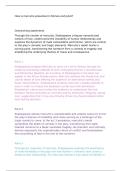
Through the charter of mercutio, Shakespeare critiques romanticised
notions of love, underscored the instability of human relationships and
explores the dynamics of male camaraderie and honour, which are central
to the play’s comedic and tragic elements. Mercutio’s death marks a
turning point, transitioning the narrative from a comedy to tragedy and
amplifying the underlying themes of chaos and consequence.
Point 1
Shakespeare employs Mercutio to serve as a foil to Romeo through his
sceptical and bawdy attitude to love contrasting Romeo’s romanticised
and Petrarchan idealism. An invention of Shakespeare’s (he does not
appear in the Arthur Brooke poem), Mercutio satirises the Petrarchan and
courtly ideals of love offering the audience an alternative earthly and
baser interpretation. Shakespeare employs mercutio’s bawdy attitude to
love in order to critique the idealised courtly love that dominated
Elizabethan culture and invites the audience to understand the love
between Romeo and Juliet as insincere and by extension critiquing ‘young
love’ suggesting that it may be primarily driven by physical desire rather
than lasting devotion.
Point 2
Shakespeare utilises mercutio’s unpredictable and volatile nature to mirror
the play’s themes of instability and chaos serving as a harbinger of the
tragic events to come. In the act 3 peripeteia, mercutio’s death
symbolises the death of comedy in the play, transitioning from light-
hearted romance to a bleak inevitable tragedy. His dramatic and untimely
demise represents the unpredictable nature of conflict and foreshadows
the unravelling of fate in the rest of the narrative.
Point 3
Through his character of mercutio, Shakespeare explores the importance
of male friendship in the play and how Romeo’s ‘romantic love’ poses a
threat to that relationship. For mercutio, Romeo’s true sense of identity is
Overarching statements
Through the charter of mercutio, Shakespeare critiques romanticised
notions of love, underscored the instability of human relationships and
explores the dynamics of male camaraderie and honour, which are central
to the play’s comedic and tragic elements. Mercutio’s death marks a
turning point, transitioning the narrative from a comedy to tragedy and
amplifying the underlying themes of chaos and consequence.
Point 1
Shakespeare employs Mercutio to serve as a foil to Romeo through his
sceptical and bawdy attitude to love contrasting Romeo’s romanticised
and Petrarchan idealism. An invention of Shakespeare’s (he does not
appear in the Arthur Brooke poem), Mercutio satirises the Petrarchan and
courtly ideals of love offering the audience an alternative earthly and
baser interpretation. Shakespeare employs mercutio’s bawdy attitude to
love in order to critique the idealised courtly love that dominated
Elizabethan culture and invites the audience to understand the love
between Romeo and Juliet as insincere and by extension critiquing ‘young
love’ suggesting that it may be primarily driven by physical desire rather
than lasting devotion.
Point 2
Shakespeare utilises mercutio’s unpredictable and volatile nature to mirror
the play’s themes of instability and chaos serving as a harbinger of the
tragic events to come. In the act 3 peripeteia, mercutio’s death
symbolises the death of comedy in the play, transitioning from light-
hearted romance to a bleak inevitable tragedy. His dramatic and untimely
demise represents the unpredictable nature of conflict and foreshadows
the unravelling of fate in the rest of the narrative.
Point 3
Through his character of mercutio, Shakespeare explores the importance
of male friendship in the play and how Romeo’s ‘romantic love’ poses a
threat to that relationship. For mercutio, Romeo’s true sense of identity is