
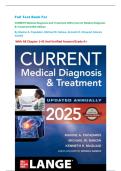
Full Test Bank For
CURRENT Medical Diagnosis And Treatment 2025 (Current Medical Diagnosis
& Treatment) 64th Edition
By Maxine A. Papadakis ,Michael W. Rabow ,Kenneth R. Mcquaid ,Monica
Gandhi
With All Chapter 1-45 And Verified Answer/Grade A+
,Table Of Contents
Chapter 1. Disease Prevention & Health Promotion .......................................................................... 4
Chapter 2. Common Symptoms ........................................................................................................ 23
Chapter 3. Preoperative Evaluation & Perioperative Management ................................................. 27
Chapter 4. Geriatric Disorders .......................................................................................................... 57
Chapter 5. Palliative Care & Pain Management................................................................................ 67
Chapter 6. Dermatologic Disorders .................................................................................................. 88
Chapter 7. Disorders Of The Eyes & Lids........................................................................................... 97
Chapter 8. Ear, Nose, & Throat Disorders ....................................................................................... 117
Chapter 9. Pulmonary Disorders ..................................................................................................... 126
Chapter 10. Heart Disease .............................................................................................................. 145
Chapter 11. Systemic Hypertension................................................................................................ 164
Chapter 12. Blood Vessel & Lymphatic Disorders........................................................................... 173
Chapter 13. Blood Disorders ........................................................................................................... 183
Chapter 14. Disorders Of Hemostasis, Thrombosis, & Antithrombotic Therapy............................ 192
Chapter 15. Gastrointestinal Disorders .......................................................................................... 212
Chapter 16. Liver, Biliary Tract, & Pancreas Disorders ................................................................... 231
Chapter 17. Breast Disorders .......................................................................................................... 241
Chapter 18. Gynecologic Disorders................................................................................................. 251
Chapter 19. Obstetrics & Obstetric Disorders ................................................................................ 261
Chapter 20. Rheumatologic, Immunologic, & Allergic Disorders ................................................... 271
Chapter 21. Electrolyte & Acid-Base Disorders............................................................................... 291
Chapter 22. Kidney Disease ............................................................................................................ 301
Chapter 23. Urologic Disorders ....................................................................................................... 322
Chapter 24. Nervous System Disorders .......................................................................................... 333
Chapter 25. Psychiatric Disorders ................................................................................................... 354
Chapter 26. Endocrine Disorders .................................................................................................... 369
Chapter 27. Diabetes Mellitus & Hypoglycemia ............................................................................. 389
Chapter 28. Lipid Disorders............................................................................................................. 399
Chapter 29. Nutritional Disorders ................................................................................................... 403
Chapter 30. Common Problems In Infectious Diseases & Antimicrobial Therapy.......................... 413
Chapter 31. HIV Infection & AIDS ................................................................................................... 419
Chapter 32. Viral & Rickettsial Infections ....................................................................................... 429
Chapter 33. Bacterial & Chlamydial Infections ............................................................................... 433
Chapter 34. Spirochetal Infections.................................................................................................. 439
Chapter35 Protozoal & Helminthic Infections ................................................................................ 445
,Chapter 36. Mycotic Infections ....................................................................................................... 447
Chapter 37. Disorders Related To Environmental Emergencies ..................................................... 448
Chapter38. Poisoning ...................................................................................................................... 452
Chapter 39. Cancer ......................................................................................................................... 455
Chapter 40. Genetic & Genomic Disorders ..................................................................................... 466
Chapter 42. Lesbian, Gay, Bisexual, & Transgender Health ............................................................ 488
, Chapter 1. Disease Prevention & Health Promotion
1. Which Of The Following Behaviors Indicates The Highest Potential For Spreading
Infections Among Clients? The Nurse:
1) Disinfects Dirty Hands With Antibacterial Soap.
2) Allows Alcohol-Based Rub To Dry For 10 Seconds.
3) Washes Hands Only After Leaving Each Room.
4) Uses Cold Water For Medical Asepsis.
2. What Is The Most Frequent Cause Of The Spread Of Infection Among Institutionalized
Patients?
1) Airborne Microbes From Other Patients
2) Contact With Contaminated Equipment
3) Hands Of Healthcare Workers
4) Exposure From Family Members
3. Which Of The Following Nursing Activities Is Of Highest Priority For Maintaining
Medical Asepsis?
1) Washing Hands
2) Donning Gloves
3) Applying Sterile Drapes
4) Wearing A Gown
4. A Patient Infected With A Virus But Who Does Not Have Any Outward Sign Of The
Disease Is Considered A:
1) Pathogen.
2) Fomite.
3) Vector.
4) Carrier.
5. A Patient Is Admitted To The Hospital With Tuberculosis. Which Precautions Must
The Nurse Institute When Caring For This Patient?
CURRENT Medical Diagnosis And Treatment 2025 (Current Medical Diagnosis
& Treatment) 64th Edition
By Maxine A. Papadakis ,Michael W. Rabow ,Kenneth R. Mcquaid ,Monica
Gandhi
With All Chapter 1-45 And Verified Answer/Grade A+
,Table Of Contents
Chapter 1. Disease Prevention & Health Promotion .......................................................................... 4
Chapter 2. Common Symptoms ........................................................................................................ 23
Chapter 3. Preoperative Evaluation & Perioperative Management ................................................. 27
Chapter 4. Geriatric Disorders .......................................................................................................... 57
Chapter 5. Palliative Care & Pain Management................................................................................ 67
Chapter 6. Dermatologic Disorders .................................................................................................. 88
Chapter 7. Disorders Of The Eyes & Lids........................................................................................... 97
Chapter 8. Ear, Nose, & Throat Disorders ....................................................................................... 117
Chapter 9. Pulmonary Disorders ..................................................................................................... 126
Chapter 10. Heart Disease .............................................................................................................. 145
Chapter 11. Systemic Hypertension................................................................................................ 164
Chapter 12. Blood Vessel & Lymphatic Disorders........................................................................... 173
Chapter 13. Blood Disorders ........................................................................................................... 183
Chapter 14. Disorders Of Hemostasis, Thrombosis, & Antithrombotic Therapy............................ 192
Chapter 15. Gastrointestinal Disorders .......................................................................................... 212
Chapter 16. Liver, Biliary Tract, & Pancreas Disorders ................................................................... 231
Chapter 17. Breast Disorders .......................................................................................................... 241
Chapter 18. Gynecologic Disorders................................................................................................. 251
Chapter 19. Obstetrics & Obstetric Disorders ................................................................................ 261
Chapter 20. Rheumatologic, Immunologic, & Allergic Disorders ................................................... 271
Chapter 21. Electrolyte & Acid-Base Disorders............................................................................... 291
Chapter 22. Kidney Disease ............................................................................................................ 301
Chapter 23. Urologic Disorders ....................................................................................................... 322
Chapter 24. Nervous System Disorders .......................................................................................... 333
Chapter 25. Psychiatric Disorders ................................................................................................... 354
Chapter 26. Endocrine Disorders .................................................................................................... 369
Chapter 27. Diabetes Mellitus & Hypoglycemia ............................................................................. 389
Chapter 28. Lipid Disorders............................................................................................................. 399
Chapter 29. Nutritional Disorders ................................................................................................... 403
Chapter 30. Common Problems In Infectious Diseases & Antimicrobial Therapy.......................... 413
Chapter 31. HIV Infection & AIDS ................................................................................................... 419
Chapter 32. Viral & Rickettsial Infections ....................................................................................... 429
Chapter 33. Bacterial & Chlamydial Infections ............................................................................... 433
Chapter 34. Spirochetal Infections.................................................................................................. 439
Chapter35 Protozoal & Helminthic Infections ................................................................................ 445
,Chapter 36. Mycotic Infections ....................................................................................................... 447
Chapter 37. Disorders Related To Environmental Emergencies ..................................................... 448
Chapter38. Poisoning ...................................................................................................................... 452
Chapter 39. Cancer ......................................................................................................................... 455
Chapter 40. Genetic & Genomic Disorders ..................................................................................... 466
Chapter 42. Lesbian, Gay, Bisexual, & Transgender Health ............................................................ 488
, Chapter 1. Disease Prevention & Health Promotion
1. Which Of The Following Behaviors Indicates The Highest Potential For Spreading
Infections Among Clients? The Nurse:
1) Disinfects Dirty Hands With Antibacterial Soap.
2) Allows Alcohol-Based Rub To Dry For 10 Seconds.
3) Washes Hands Only After Leaving Each Room.
4) Uses Cold Water For Medical Asepsis.
2. What Is The Most Frequent Cause Of The Spread Of Infection Among Institutionalized
Patients?
1) Airborne Microbes From Other Patients
2) Contact With Contaminated Equipment
3) Hands Of Healthcare Workers
4) Exposure From Family Members
3. Which Of The Following Nursing Activities Is Of Highest Priority For Maintaining
Medical Asepsis?
1) Washing Hands
2) Donning Gloves
3) Applying Sterile Drapes
4) Wearing A Gown
4. A Patient Infected With A Virus But Who Does Not Have Any Outward Sign Of The
Disease Is Considered A:
1) Pathogen.
2) Fomite.
3) Vector.
4) Carrier.
5. A Patient Is Admitted To The Hospital With Tuberculosis. Which Precautions Must
The Nurse Institute When Caring For This Patient?


