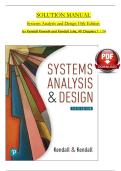
SOLUTION MANUAL
Systems Analysis and Design 10th Edition
by Kendall Kenneth and Kendall Julie, All Chapters 1 - 16
,TABLE OF CONTENTS
I. Systems Analysis Fundamentals
1. Systems, Roles, and Development Methodologies
2. Understanding and Modeling Organization Systems
3. Project Management
II. Information Requirements Analysis
4. Information Gathering: Interactive Methods
5. Information Gathering: Unobtrusive Methods
6. Agile Modeling, Prototyping, and Scrum
III. The Analysis Process
7. Using Data Flow Diagrams
8. Analyzing Systems Using Data Dictionaries
9. Process Specifications and Structured Decisions 10.Object-Oriented
Systems Analysis and Design Using UML
IV. The Essentials of Design
11.Designing Effective Output 12.Designing
Effective Input 13.Designing Databases
14. Human-Computer Interaction and UX Design
V. Quality Assurance and Implementation
15. Designing Accurate Data Entry Procedures
16.Quality Assurance and Implementation
,Chapter 2
Understanding and Modeling Organizational Systems
Key Points and Objectives
1. Organizations are complex systems composed of interrelated and interdependent subsystems.
2. System and subsystem boundaries and environments have an impact on information system
analysis and design.
3. Systems are described as either open, with free flowing information, or closed with
restricted access to information.
4. A virtual organization is one that has parts of the organization in different physical
locations. They use computer networks and communications technology to work on projects.
Advantages of a virtual organization are:
A. Reduced costs of physical facilities
B. More rapid response to customer needs
C. Flexibility for employees to care for children or aging parents
5. Enterprise systems or Enterprise Resource Planning (ERP) describes an integrated
organizational information system. The software helps the flow of information between the
functional areas within the organization.
6. ERP scan saffect severy saspect sof sthe sorganization, ssuch sas:
A. Design sof semployees’ swork
B. Skills srequired sfor sjob scompetency
C. Strategic spositioning sof sthe scompany
7. Many sissues smust sbe sovercome sfor sthe sERP sinstallation sis sto sbe sdeclared sa ssuccess:
A. User sacceptance
B. Integration swith slegacy ssystems sand sthe ssupply schain
C. Upgrading sfunctionality s(and scomplexity) sof sERP smodules
D. Reorganizing swork slife sof susers sand sdecision smakers
E. Expanded sreach sacross sseveral sorganizations
F. Strategic srepositioning sof sthe scompany
8. A scontext-level sdata sflow sdiagram sis san simportant stool sfor sshowing sdata sused sand
sinformation sproduced sby sa s system. sIt sprovides san soverview sof sthe ssetting sor senvironment sthe
ssystem sexists swithin—which sentities ssupply s and sreceive sdata/information.
, 9. The scontext-level sdata sflow sdiagram sis sone sway sto sshow sscope, sor swhat sis sto sbe sincluded
sin sthe ssystem. sThe s project shas sa sbudget sthat shelps sto sdefine sscope.
10. Entity-relationship sdiagrams shelp sthe sanalyst sunderstand sthe sorganizational ssystem sand
sthe sdata sstored sby sthe s organization.
11. There sare sthree stypes sof sentities:
A. Fundamental sentity, sdescribing sa sperson, splace, sor sthing.
B. Associative sentity s(also scalled sa sgerund, sjunction, sintersection, sor sconcatenated
sentity), sjoining stwo s entities. sIt scan sonly sexist sbetween stwo sentities.
C. Attributive sentity, sto sdescribe sattributes sand srepeating sgroups.
12. Relationships sare sshown swith sa szero sor scircle srepresenting snone, sa svertical sline
srepresenting sone, sor scrow’sfoot s representing smany sand scan sbe:
A. One sto sone
B. One sto smany
C. Many sto smany
13. A suse scase sdiagram sreflects sthe sview sof sthe ssystem sfrom sthe sperspective sof sa suser soutside
sof sthe ssystem.
14. A suse scase smodel spartitions sthe sway sthe ssystem sworks sinto sbehaviors, sservices, sand
sresponses sthat sare s significant sto sthe susers sof sthe ssystem.
15. A suse scase sdiagram shas ssymbols sfor:
A. An sactor, sthe srole sof sa suser sof sthe ssystem
B. The suse scase srepresenting sa ssequence sof stransactions sin sa ssystem
16. There sare stwo skinds sof suse scases:
A. Primary, sthe sstandard sflow sof sevents swithin sa ssystem sthat sdescribe sa sstandard
ssystem sbehavior
B. Use scase sscenarios sthat sdescribe svariations sof sthe sprimary suse scase
17. There sare sfour sactive sbehavioral srelationships:
A. Communicates—used s to sconnect s an s actor s to s a s use s case.
B. Includes—describes sthe ssituation s where sa suse scase s contains s a sbehavior sthat s is
s common stomore sthan s one suse scase.
C. Extends—describes sthe ssituation swhere s one suse scase s possesses s the s behavior s that
s allowsthe snew suse s case sto shandle sa svariation sor sexception.
D. Generalizes—implies s that s one sthing s is smore stypical s than sthe s other s thing.
Systems Analysis and Design 10th Edition
by Kendall Kenneth and Kendall Julie, All Chapters 1 - 16
,TABLE OF CONTENTS
I. Systems Analysis Fundamentals
1. Systems, Roles, and Development Methodologies
2. Understanding and Modeling Organization Systems
3. Project Management
II. Information Requirements Analysis
4. Information Gathering: Interactive Methods
5. Information Gathering: Unobtrusive Methods
6. Agile Modeling, Prototyping, and Scrum
III. The Analysis Process
7. Using Data Flow Diagrams
8. Analyzing Systems Using Data Dictionaries
9. Process Specifications and Structured Decisions 10.Object-Oriented
Systems Analysis and Design Using UML
IV. The Essentials of Design
11.Designing Effective Output 12.Designing
Effective Input 13.Designing Databases
14. Human-Computer Interaction and UX Design
V. Quality Assurance and Implementation
15. Designing Accurate Data Entry Procedures
16.Quality Assurance and Implementation
,Chapter 2
Understanding and Modeling Organizational Systems
Key Points and Objectives
1. Organizations are complex systems composed of interrelated and interdependent subsystems.
2. System and subsystem boundaries and environments have an impact on information system
analysis and design.
3. Systems are described as either open, with free flowing information, or closed with
restricted access to information.
4. A virtual organization is one that has parts of the organization in different physical
locations. They use computer networks and communications technology to work on projects.
Advantages of a virtual organization are:
A. Reduced costs of physical facilities
B. More rapid response to customer needs
C. Flexibility for employees to care for children or aging parents
5. Enterprise systems or Enterprise Resource Planning (ERP) describes an integrated
organizational information system. The software helps the flow of information between the
functional areas within the organization.
6. ERP scan saffect severy saspect sof sthe sorganization, ssuch sas:
A. Design sof semployees’ swork
B. Skills srequired sfor sjob scompetency
C. Strategic spositioning sof sthe scompany
7. Many sissues smust sbe sovercome sfor sthe sERP sinstallation sis sto sbe sdeclared sa ssuccess:
A. User sacceptance
B. Integration swith slegacy ssystems sand sthe ssupply schain
C. Upgrading sfunctionality s(and scomplexity) sof sERP smodules
D. Reorganizing swork slife sof susers sand sdecision smakers
E. Expanded sreach sacross sseveral sorganizations
F. Strategic srepositioning sof sthe scompany
8. A scontext-level sdata sflow sdiagram sis san simportant stool sfor sshowing sdata sused sand
sinformation sproduced sby sa s system. sIt sprovides san soverview sof sthe ssetting sor senvironment sthe
ssystem sexists swithin—which sentities ssupply s and sreceive sdata/information.
, 9. The scontext-level sdata sflow sdiagram sis sone sway sto sshow sscope, sor swhat sis sto sbe sincluded
sin sthe ssystem. sThe s project shas sa sbudget sthat shelps sto sdefine sscope.
10. Entity-relationship sdiagrams shelp sthe sanalyst sunderstand sthe sorganizational ssystem sand
sthe sdata sstored sby sthe s organization.
11. There sare sthree stypes sof sentities:
A. Fundamental sentity, sdescribing sa sperson, splace, sor sthing.
B. Associative sentity s(also scalled sa sgerund, sjunction, sintersection, sor sconcatenated
sentity), sjoining stwo s entities. sIt scan sonly sexist sbetween stwo sentities.
C. Attributive sentity, sto sdescribe sattributes sand srepeating sgroups.
12. Relationships sare sshown swith sa szero sor scircle srepresenting snone, sa svertical sline
srepresenting sone, sor scrow’sfoot s representing smany sand scan sbe:
A. One sto sone
B. One sto smany
C. Many sto smany
13. A suse scase sdiagram sreflects sthe sview sof sthe ssystem sfrom sthe sperspective sof sa suser soutside
sof sthe ssystem.
14. A suse scase smodel spartitions sthe sway sthe ssystem sworks sinto sbehaviors, sservices, sand
sresponses sthat sare s significant sto sthe susers sof sthe ssystem.
15. A suse scase sdiagram shas ssymbols sfor:
A. An sactor, sthe srole sof sa suser sof sthe ssystem
B. The suse scase srepresenting sa ssequence sof stransactions sin sa ssystem
16. There sare stwo skinds sof suse scases:
A. Primary, sthe sstandard sflow sof sevents swithin sa ssystem sthat sdescribe sa sstandard
ssystem sbehavior
B. Use scase sscenarios sthat sdescribe svariations sof sthe sprimary suse scase
17. There sare sfour sactive sbehavioral srelationships:
A. Communicates—used s to sconnect s an s actor s to s a s use s case.
B. Includes—describes sthe ssituation s where sa suse scase s contains s a sbehavior sthat s is
s common stomore sthan s one suse scase.
C. Extends—describes sthe ssituation swhere s one suse scase s possesses s the s behavior s that
s allowsthe snew suse s case sto shandle sa svariation sor sexception.
D. Generalizes—implies s that s one sthing s is smore stypical s than sthe s other s thing.