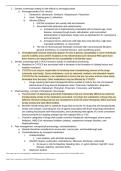
1. Genetic screenings related to side effects in aminoglycosides
a. Aminoglycosides (The -micins)
i. Gentamicin, tobramycin, Amikacin, Streptomycin, Plazomicin
ii. Uses: Treating gram (-) infections
iii. Adverse Effects:
1. GI/CNS symptoms are usually mild and transient
2. Associated with ototoxicity and nephrotoxicity
a. Increased risk of nephrotoxicity associated with increased age, renal
disease, increased trough levels, dehydration, and concomitant
administration of nephrotoxic drugs such as amphotericin B, cyclosporine
and vancomycin
b. Increased risk for ototoxicity with high-dose loop diuretics, high-dose
macrolide antibiotics, or vancomycin
3. The risk of neuromuscular blockade increased with neuromuscular blockers,
general anesthesia, Ca channel blockers, and myasthenia gravis
b. Aminoglycoside-induced ototoxicity appears to have a genetic susceptibility in some individuals,
and the A1555G and C1494T mutations in the mitochondrial 12S ribosomal RNA gene have
been shown to be responsible for this susceptibility in all familial cases.
2. Genetic screenings and CYP2C9 enzyme activity in medication processing
a. Mutations in CYP2C9 are associated with a decrease in the formation of clotting factors and
warfarin resistance
b. CYP2C9 is an enzyme responsible for breaking down (metabolizing) several of the drugs
commonly used today. Some medications, such as celecoxib, warfarin, and phenytoin require
CYP2C9 for the medication to be metabolized to forms that are not active and are more easily
eliminated from the body. Other medications may be affected by CYP2C9.
i. Drugs requiring decreased dosage/should be avoided to reduce the risk of increased
plasma level of drug beyond therapeutic dose: Celecoxib, Flurbiprofen, Ibuprofen,
Lornoxicam, Meloxicam, Phenytoin, Piroxicam, Tenoxicam, and Warfarin
3. Pharmacology, concept of therapeutic interchange
a. The procedure of dispensing prescribed medications that are chemically different but deemed
therapeutically similar to the medication prescribed. It involves the substitution of drugs that are
different chemical compounds but are considered to exert the same therapeutic effect and have
similar toxicity and side-effect profiles.
b. Benefits include being able to substitute drugs that are pricier for drugs that are therapeutically
similar and cheaper, promoting the use of agents associated with fewer drug-drug interactions
(ex subbing fluconazole with ketoconazole), and substituting with agents of a more convenient
dosing schedule (ex subbing enalapril qD with captopril BID or TID)
c. Common categories of drugs that contain common therapeutic interchanges: proton pump
inhibitors, HMG-CoA reductase inhibitors (statins), angiotensin receptor blockers, and
bisphosphonates
4. Pain management, nonopioid pharmacology, contraindications
a. Opioids should be considered in severe pain, cancer pain, and breakthrough pain
b. Contraindications by nonopioid medication
i. Acetaminophen
1. Liver disease, with alcoholic beverages
ii. NSAIDS (Asprin, ketoprofen, indomethocin, diflunisal, diclofenac, celecoxib)
1. GI issues or risk for bleeding, bleeding risks, H. pylori infection, high BP, renal
disease, diabetes, alcoholic drinks
iii. Naproxen Sodium
This study source was downloaded by 100000900706475 from CourseHero.com on 08-27-2025 15:08:26 GMT -05:00
https://www.coursehero.com/file/250225744/Pharmacology-Midterm-docx/
, 1. HF, high BP, conditions associated with fluid retention
iv. Naproxen
1. Pregnancy, bleeding risk, HTN, renal or liver issues
v. Ketorolac
1. Long-term use, chronic/minor pains, surgery, ob-gyn, renal impairment, GI risk
for bleeding, bleeding risk
vi. Ibuprofen
1. GI issues, HTN, heart disease, renal or hepatic impairment, geriatrics, diuretics,
NSAIDs, anticoagulants
5. Nociceptive pain and other conditions that contribute to pain
a.
6. Pain, goals of treatment in pain management
a.
7. Musculoskeletal pain, stages of management
a.
8. Neuropathic pain, pharmacologic management, nonopioids
a.
9. Chronic pain, conditions that contribute to development
a.
10. Pain in Opioid use disorder, developing a treatment plan
a.
11. Pain, opioids, side effects
a.
12. Cannabinoids, approved uses
a.
13. Contact dermatitis in pediatric patients, pharmacologic treatment, first-line
a. Contact dermatitis is any skin disorder caused by exposure to a substance that elicits an allergic
or irritant response
b. Pediatric patients have a larger body surface area-weight ratio– they absorb more TCS (topical
corticosteroids) than adults, so less potent TCS should be used to minimize adverse effects
i. Tacrolimus 0.03%
1. Approved for use in patients 2 years and older
2. Can be considered for younger patient populations
ii. Pimecrolimus 1%
1. Approved for use in patients 2 years and older
2. Can be considered for younger patient populations
iii. Tacrolimus 1%
1. Approved for use in patients 15 years and older
c. TCS should only be used for 7 days in children younger than 6 and at the lowest potency
d. Pharmacological treatment
i. The most effective form of treatment is to remove the allergen or the irritant and use of
proper skin protection such as gloves, goggles or uniforms
ii. Cool compresses can be used to relieve itching, colloidal oatmeal baths, calamine lotion
and burrow solution work for drying vesicles and bullae but can be associated with CD
iii. Goals of drug therapy
1. Restoration of a normal epidermal barrier
2. Treatment of inflammation of skin
3. Control of itching
iv. Topical corticosteroids
This study source was downloaded by 100000900706475 from CourseHero.com on 08-27-2025 15:08:26 GMT -05:00
https://www.coursehero.com/file/250225744/Pharmacology-Midterm-docx/
a. Aminoglycosides (The -micins)
i. Gentamicin, tobramycin, Amikacin, Streptomycin, Plazomicin
ii. Uses: Treating gram (-) infections
iii. Adverse Effects:
1. GI/CNS symptoms are usually mild and transient
2. Associated with ototoxicity and nephrotoxicity
a. Increased risk of nephrotoxicity associated with increased age, renal
disease, increased trough levels, dehydration, and concomitant
administration of nephrotoxic drugs such as amphotericin B, cyclosporine
and vancomycin
b. Increased risk for ototoxicity with high-dose loop diuretics, high-dose
macrolide antibiotics, or vancomycin
3. The risk of neuromuscular blockade increased with neuromuscular blockers,
general anesthesia, Ca channel blockers, and myasthenia gravis
b. Aminoglycoside-induced ototoxicity appears to have a genetic susceptibility in some individuals,
and the A1555G and C1494T mutations in the mitochondrial 12S ribosomal RNA gene have
been shown to be responsible for this susceptibility in all familial cases.
2. Genetic screenings and CYP2C9 enzyme activity in medication processing
a. Mutations in CYP2C9 are associated with a decrease in the formation of clotting factors and
warfarin resistance
b. CYP2C9 is an enzyme responsible for breaking down (metabolizing) several of the drugs
commonly used today. Some medications, such as celecoxib, warfarin, and phenytoin require
CYP2C9 for the medication to be metabolized to forms that are not active and are more easily
eliminated from the body. Other medications may be affected by CYP2C9.
i. Drugs requiring decreased dosage/should be avoided to reduce the risk of increased
plasma level of drug beyond therapeutic dose: Celecoxib, Flurbiprofen, Ibuprofen,
Lornoxicam, Meloxicam, Phenytoin, Piroxicam, Tenoxicam, and Warfarin
3. Pharmacology, concept of therapeutic interchange
a. The procedure of dispensing prescribed medications that are chemically different but deemed
therapeutically similar to the medication prescribed. It involves the substitution of drugs that are
different chemical compounds but are considered to exert the same therapeutic effect and have
similar toxicity and side-effect profiles.
b. Benefits include being able to substitute drugs that are pricier for drugs that are therapeutically
similar and cheaper, promoting the use of agents associated with fewer drug-drug interactions
(ex subbing fluconazole with ketoconazole), and substituting with agents of a more convenient
dosing schedule (ex subbing enalapril qD with captopril BID or TID)
c. Common categories of drugs that contain common therapeutic interchanges: proton pump
inhibitors, HMG-CoA reductase inhibitors (statins), angiotensin receptor blockers, and
bisphosphonates
4. Pain management, nonopioid pharmacology, contraindications
a. Opioids should be considered in severe pain, cancer pain, and breakthrough pain
b. Contraindications by nonopioid medication
i. Acetaminophen
1. Liver disease, with alcoholic beverages
ii. NSAIDS (Asprin, ketoprofen, indomethocin, diflunisal, diclofenac, celecoxib)
1. GI issues or risk for bleeding, bleeding risks, H. pylori infection, high BP, renal
disease, diabetes, alcoholic drinks
iii. Naproxen Sodium
This study source was downloaded by 100000900706475 from CourseHero.com on 08-27-2025 15:08:26 GMT -05:00
https://www.coursehero.com/file/250225744/Pharmacology-Midterm-docx/
, 1. HF, high BP, conditions associated with fluid retention
iv. Naproxen
1. Pregnancy, bleeding risk, HTN, renal or liver issues
v. Ketorolac
1. Long-term use, chronic/minor pains, surgery, ob-gyn, renal impairment, GI risk
for bleeding, bleeding risk
vi. Ibuprofen
1. GI issues, HTN, heart disease, renal or hepatic impairment, geriatrics, diuretics,
NSAIDs, anticoagulants
5. Nociceptive pain and other conditions that contribute to pain
a.
6. Pain, goals of treatment in pain management
a.
7. Musculoskeletal pain, stages of management
a.
8. Neuropathic pain, pharmacologic management, nonopioids
a.
9. Chronic pain, conditions that contribute to development
a.
10. Pain in Opioid use disorder, developing a treatment plan
a.
11. Pain, opioids, side effects
a.
12. Cannabinoids, approved uses
a.
13. Contact dermatitis in pediatric patients, pharmacologic treatment, first-line
a. Contact dermatitis is any skin disorder caused by exposure to a substance that elicits an allergic
or irritant response
b. Pediatric patients have a larger body surface area-weight ratio– they absorb more TCS (topical
corticosteroids) than adults, so less potent TCS should be used to minimize adverse effects
i. Tacrolimus 0.03%
1. Approved for use in patients 2 years and older
2. Can be considered for younger patient populations
ii. Pimecrolimus 1%
1. Approved for use in patients 2 years and older
2. Can be considered for younger patient populations
iii. Tacrolimus 1%
1. Approved for use in patients 15 years and older
c. TCS should only be used for 7 days in children younger than 6 and at the lowest potency
d. Pharmacological treatment
i. The most effective form of treatment is to remove the allergen or the irritant and use of
proper skin protection such as gloves, goggles or uniforms
ii. Cool compresses can be used to relieve itching, colloidal oatmeal baths, calamine lotion
and burrow solution work for drying vesicles and bullae but can be associated with CD
iii. Goals of drug therapy
1. Restoration of a normal epidermal barrier
2. Treatment of inflammation of skin
3. Control of itching
iv. Topical corticosteroids
This study source was downloaded by 100000900706475 from CourseHero.com on 08-27-2025 15:08:26 GMT -05:00
https://www.coursehero.com/file/250225744/Pharmacology-Midterm-docx/