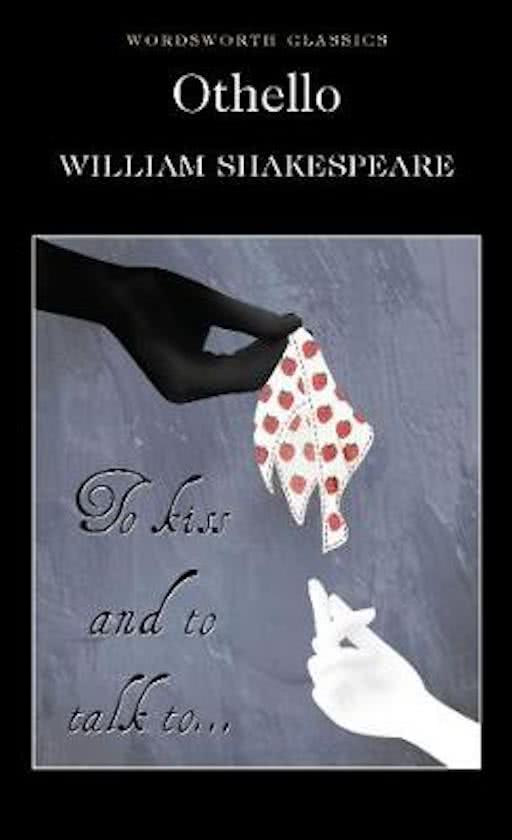
Othello
by William Shakespeare
A complete analysis according to the grade 12 IEB
syllabus.
by Daniel Kapeluschnik. All Rights Reserved.
, Othello | William Shakespeare
Character List:
• Othello à The ‘moor’. A black African prince living in Venice. He holds a high rank in
the Venetian military and faces racial prejudice. He has little experience with women
as he is a soldier.
• Iago à Othello’s ensign. A venetian professional soldier. He conceals his intentions
through a mask of ‘honesty’.
• Desdemona à Othello’s wife and the daughter of Brabantio. She marries Othello
secretly, unbeknownst to her father.
• Emilia à Desdemona’s lady in waiting and Iago’s wife. She is loyal to both Iago and
her mistress. She has an attitude to men which is completely different to
Desdemona’s.
• Cassio à Othello’s lieutenant. An honorable Florentine man with a weakness for
women and a drink.
• Brabantio à Desdemona’s father. A member of the Venetian senate. Outraged
when his daughter marries a black man.
• Bianca à Cassio’s mistress.
• Roderigo à A venetian gentleman who is very gullible. In love with Desdemona.
Daniel Kapeluschnik Notes 2024 1
, Act 3
Act 2
Act 4
Act 1 Act 5
The Tragic Hero | Othello
A noble/upper-class man with righteous feelings and thoughts. A ‘good’ person. However,
because of a tragic flaw in his character something leads to this person to disregard their
morals. This will eventually lead to his downfall and normally the downfall of his loved
ones/those around him.
Setting:
Venice:
Venice is a worldly, sophisticated city, with a cultured and civilised people. Venice was the
epitome of power, order, and wealth during the 17th century. Reason and logic ruled
supreme due to the enlightenment that was sweeping across Europe at the time.
However, Venice was in constant conflict with the ottoman empire over control of the
Adriatic Sea. The conflict in Cyprus represents the Turks (Muslim/infidel) vs the Italians
(catholic).
Cyprus:
Cyprus is a small island off the coast of Greece and a profitable location for trade. During
the play, Cyprus was under the influence of Venice. It was used as a strategic place to launch
attacks on the Turks. This highlights the chaos and conflict dominating the Adriatic at the
time.
• Passion and emotion leading to destruction.
• The political battle mirrors the battle that we see within Othello.
• The war between the infidels and Christians helps establish the tension and
opposition that occurs within Othello’s marriage.
Daniel Kapeluschnik Notes 2024 2
, Features of Drama:
• Revenge.
• Violence and justice (domestic violence/gender-based violence).
• A Machiavellian villain who is a complex and fascinating (Iago).
• Theme of appearance vs reality.
• Othello is the first black hero to be represented on the stage.
• The portrayal of women (Desdemona, Emilia).
• Extensive us of dramatic irony.
The Moor | Othello
The title of Othello used to be ‘Othello, the moor of Venice’, which further highlights the
importance of Othello’s skin colour. In the Shakespearean era, the word moor was
equivalent to a north African person., where it literally meant ‘native of Mauritania’ – a
country in north Africa. The term became generalised in the 17th century.
Shakespeare ‘borrowed’ the plot of Othello from the 1566 short story by Cinthio
Giambattista Giraldi, also about a Moor.
17th centaury attitudes toward Moors were mostly distrusting – they were often called
‘devils’ or ‘villains’. This was most likely due to them straying from the average Italian pale
look. They were also mostly Muslim which was opposite to the Catholic majority in Venice.
Daniel Kapeluschnik Notes 2024 3
by William Shakespeare
A complete analysis according to the grade 12 IEB
syllabus.
by Daniel Kapeluschnik. All Rights Reserved.
, Othello | William Shakespeare
Character List:
• Othello à The ‘moor’. A black African prince living in Venice. He holds a high rank in
the Venetian military and faces racial prejudice. He has little experience with women
as he is a soldier.
• Iago à Othello’s ensign. A venetian professional soldier. He conceals his intentions
through a mask of ‘honesty’.
• Desdemona à Othello’s wife and the daughter of Brabantio. She marries Othello
secretly, unbeknownst to her father.
• Emilia à Desdemona’s lady in waiting and Iago’s wife. She is loyal to both Iago and
her mistress. She has an attitude to men which is completely different to
Desdemona’s.
• Cassio à Othello’s lieutenant. An honorable Florentine man with a weakness for
women and a drink.
• Brabantio à Desdemona’s father. A member of the Venetian senate. Outraged
when his daughter marries a black man.
• Bianca à Cassio’s mistress.
• Roderigo à A venetian gentleman who is very gullible. In love with Desdemona.
Daniel Kapeluschnik Notes 2024 1
, Act 3
Act 2
Act 4
Act 1 Act 5
The Tragic Hero | Othello
A noble/upper-class man with righteous feelings and thoughts. A ‘good’ person. However,
because of a tragic flaw in his character something leads to this person to disregard their
morals. This will eventually lead to his downfall and normally the downfall of his loved
ones/those around him.
Setting:
Venice:
Venice is a worldly, sophisticated city, with a cultured and civilised people. Venice was the
epitome of power, order, and wealth during the 17th century. Reason and logic ruled
supreme due to the enlightenment that was sweeping across Europe at the time.
However, Venice was in constant conflict with the ottoman empire over control of the
Adriatic Sea. The conflict in Cyprus represents the Turks (Muslim/infidel) vs the Italians
(catholic).
Cyprus:
Cyprus is a small island off the coast of Greece and a profitable location for trade. During
the play, Cyprus was under the influence of Venice. It was used as a strategic place to launch
attacks on the Turks. This highlights the chaos and conflict dominating the Adriatic at the
time.
• Passion and emotion leading to destruction.
• The political battle mirrors the battle that we see within Othello.
• The war between the infidels and Christians helps establish the tension and
opposition that occurs within Othello’s marriage.
Daniel Kapeluschnik Notes 2024 2
, Features of Drama:
• Revenge.
• Violence and justice (domestic violence/gender-based violence).
• A Machiavellian villain who is a complex and fascinating (Iago).
• Theme of appearance vs reality.
• Othello is the first black hero to be represented on the stage.
• The portrayal of women (Desdemona, Emilia).
• Extensive us of dramatic irony.
The Moor | Othello
The title of Othello used to be ‘Othello, the moor of Venice’, which further highlights the
importance of Othello’s skin colour. In the Shakespearean era, the word moor was
equivalent to a north African person., where it literally meant ‘native of Mauritania’ – a
country in north Africa. The term became generalised in the 17th century.
Shakespeare ‘borrowed’ the plot of Othello from the 1566 short story by Cinthio
Giambattista Giraldi, also about a Moor.
17th centaury attitudes toward Moors were mostly distrusting – they were often called
‘devils’ or ‘villains’. This was most likely due to them straying from the average Italian pale
look. They were also mostly Muslim which was opposite to the Catholic majority in Venice.
Daniel Kapeluschnik Notes 2024 3