ATI mental health proctored,
ATI CMS Exam Comprehensive
Questions (Frequently Tested)
with Verified Answers Graded
A+
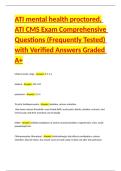
Lithium levels range - Answer: 0.5-1.4
Sodium - Answer: 135-145
potassium - Answer: 3.5-5
Tricyclic Antidepressants - Answer: Sedation, urinary retention,
they lower seizure threshold, uses include BAD, acute panic attacks, phobias, enuresis, and
chronic pain and their overdose can be deadly
MAOI - Answer: inhibits breakdown of amine neurotransmitters, hypertensive crisis. avoid
pseudonephrine.
Chlorpromazine (thorazine) - Answer: Anticholinergic side effects constipation, urinary
retention, blurred vision, dry mouth. Suck on hard candy. It does not alter skin perfusion.
,Lithium - Answer: maintain sodium levels watch for vomiting, diarrhea, sweating
Alcohol withdrawal - Answer: Naltroxone. 2-3 days after can be a seizure risk, hand tremors will
occur, monitor bp
Difference between alzheimers and dementia - Answer: Alzheimers is progressive forgetfullness
and dementia is rapid
Confabulation - Answer: Filling in gaps in memory bu fabrication
Delusion - Answer: false fixed belief seen in schizos
Child abuse pattern - Answer: inconsistency between history and child's injury
Maslow's hierarcy of needs - Answer: 1. sleep, food 2. safety 3. love and belonging 4. self
actualization
First priority for alcohol withdrawal - Answer: rest and nutrition
donepezil (aricept) - Answer: for alzheimers prolong time and functioning of individual in early
stages of disease
Cocaine signs - Answer: dilated pupils
marijuana signs - Answer: bloodshot eyes
heroin signs - Answer: pinpoint eyes
,pcp signs - Answer: rapid eye movement
agoraphobia - Answer: fear of places or situations that might cause panic such as going outside
Conversion - Answer: physical complaints not true
grandiosity - Answer: "I am grand" narcissistic behavior
PTSD - Answer: nightmares, indecisive, lack of emotion during a event
Kubler ross stages of grief - Answer: 1. denial 2. anger 3. bargaining 4. depression 5. acceptance
Alprazolam (xanax) - Answer: panic disorder med. anticholingeric
Benzo side effect - Answer: dizziness, sedation, drowsiness
OCD - Answer: set time limits , cannot have a pleasant moment
Borderline personality disorder - Answer: a personality disorder characterized by lack of stability
in interpersonal relationships, self-image, and emotion; impulsivity; angry outbursts; intense
fear of abandonment; recurring suicidal gestures, self mutilation
How often should provider renew restraints perscription - Answer: q4 hrs and follow up withing
1st hour of prescribing
Bupropion - Answer: for quitting nicotine
, Buprenorphine - Answer: think phine for opioids withdrawal treatment
anorexia - Answer: An eating disorder characterized by an obstinate and willful refusal to eat, a
distorted body image, and an intense fear of being fat. Appearance of lanugo, amenorrhea,
intolerance to cold, bradycardia, dry skin, hypotension, occupied thoughts of food
Bulimia - Answer: An eating disorder characterized by episodes of overeating, usually of high-
calorie foods, followed by vomiting, laxative use, fasting, or excessive exercise. tooth erosion,
hand calluses, hypokalemia monitor patient 1 hour after eating
Lithium blood testing rules - Answer: 8 hrs after last dose, 5 days after beginning dose, dosage
changes, then testing for 6 months monthly
methylphenidate - Answer: improved attention
opioid use disorder - Answer: impaired coordination, euphoria, decreased respirations,
drowsiness. think clumsy sleepy person
For schizos what increases hallucinations? - Answer: anxiety
quetiapine - Answer: schizo med, monitor glucose
buspirone - Answer: antianxiety, GAD, does not cause sedation, does not cause dependence, do
not take as PRN, and this med will become effective in 2-4 weeks
avolition - Answer: lack of emotion
ATI CMS Exam Comprehensive
Questions (Frequently Tested)
with Verified Answers Graded
A+
Lithium levels range - Answer: 0.5-1.4
Sodium - Answer: 135-145
potassium - Answer: 3.5-5
Tricyclic Antidepressants - Answer: Sedation, urinary retention,
they lower seizure threshold, uses include BAD, acute panic attacks, phobias, enuresis, and
chronic pain and their overdose can be deadly
MAOI - Answer: inhibits breakdown of amine neurotransmitters, hypertensive crisis. avoid
pseudonephrine.
Chlorpromazine (thorazine) - Answer: Anticholinergic side effects constipation, urinary
retention, blurred vision, dry mouth. Suck on hard candy. It does not alter skin perfusion.
,Lithium - Answer: maintain sodium levels watch for vomiting, diarrhea, sweating
Alcohol withdrawal - Answer: Naltroxone. 2-3 days after can be a seizure risk, hand tremors will
occur, monitor bp
Difference between alzheimers and dementia - Answer: Alzheimers is progressive forgetfullness
and dementia is rapid
Confabulation - Answer: Filling in gaps in memory bu fabrication
Delusion - Answer: false fixed belief seen in schizos
Child abuse pattern - Answer: inconsistency between history and child's injury
Maslow's hierarcy of needs - Answer: 1. sleep, food 2. safety 3. love and belonging 4. self
actualization
First priority for alcohol withdrawal - Answer: rest and nutrition
donepezil (aricept) - Answer: for alzheimers prolong time and functioning of individual in early
stages of disease
Cocaine signs - Answer: dilated pupils
marijuana signs - Answer: bloodshot eyes
heroin signs - Answer: pinpoint eyes
,pcp signs - Answer: rapid eye movement
agoraphobia - Answer: fear of places or situations that might cause panic such as going outside
Conversion - Answer: physical complaints not true
grandiosity - Answer: "I am grand" narcissistic behavior
PTSD - Answer: nightmares, indecisive, lack of emotion during a event
Kubler ross stages of grief - Answer: 1. denial 2. anger 3. bargaining 4. depression 5. acceptance
Alprazolam (xanax) - Answer: panic disorder med. anticholingeric
Benzo side effect - Answer: dizziness, sedation, drowsiness
OCD - Answer: set time limits , cannot have a pleasant moment
Borderline personality disorder - Answer: a personality disorder characterized by lack of stability
in interpersonal relationships, self-image, and emotion; impulsivity; angry outbursts; intense
fear of abandonment; recurring suicidal gestures, self mutilation
How often should provider renew restraints perscription - Answer: q4 hrs and follow up withing
1st hour of prescribing
Bupropion - Answer: for quitting nicotine
, Buprenorphine - Answer: think phine for opioids withdrawal treatment
anorexia - Answer: An eating disorder characterized by an obstinate and willful refusal to eat, a
distorted body image, and an intense fear of being fat. Appearance of lanugo, amenorrhea,
intolerance to cold, bradycardia, dry skin, hypotension, occupied thoughts of food
Bulimia - Answer: An eating disorder characterized by episodes of overeating, usually of high-
calorie foods, followed by vomiting, laxative use, fasting, or excessive exercise. tooth erosion,
hand calluses, hypokalemia monitor patient 1 hour after eating
Lithium blood testing rules - Answer: 8 hrs after last dose, 5 days after beginning dose, dosage
changes, then testing for 6 months monthly
methylphenidate - Answer: improved attention
opioid use disorder - Answer: impaired coordination, euphoria, decreased respirations,
drowsiness. think clumsy sleepy person
For schizos what increases hallucinations? - Answer: anxiety
quetiapine - Answer: schizo med, monitor glucose
buspirone - Answer: antianxiety, GAD, does not cause sedation, does not cause dependence, do
not take as PRN, and this med will become effective in 2-4 weeks
avolition - Answer: lack of emotion