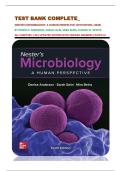
TEST BANK COMPLETE_
NESTER'S MICROBIOLOGY: A HUMAN PERSPECTIVE 10TH EDITION, (2024)
BY DENISE G. ANDERSON, SARAH SALM, MIRA BEINS, EUGENE W. NESTER
ALL CHAPTERS 1-30| UPDATED EDITION WITH VERIFIED ANSWERS| RATED A+
,chapter 01: humans and the microbial world -------------------------------------------------------------------------------------------- 3
chapter 02: the molecules of life ----------------------------------------------------------------------------------------------------------- 41
chapter 03: cells and methods to observe them -------------------------------------------------------------------------------------- 73
chapter 04: dynamics of microbial growth -------------------------------------------------------------------------------------------- 114
chapter 05: control of microbial growth ----------------------------------------------------------------------------------------------- 148
chapter 06: microbial metabolism: fueling cell growth --------------------------------------------------------------------------- 179
chapter 07: the blue print of life, from dna to protein ---------------------------------------------------------------------------- 216
chapter 08: bacterial genetics ------------------------------------------------------------------------------------------------------------- 255
chapter 09: biotechnology ----------------------------------------------------------------------------------------------------------------- 287
chapter 10: identifying and classifying microorganisms -------------------------------------------------------------------------- 319
chapter 11: the diversity of bacteria and archaea ---------------------------------------------------------------------------------- 349
chapter 12: the eukaryotic members of the microbial world -------------------------------------------------------------------- 386
chapter 13: viruses, viroids, and prions ------------------------------------------------------------------------------------------------ 420
chapter 14: the innate immune response --------------------------------------------------------------------------------------------- 499
chapter 15: the adaptive immune response ------------------------------------------------------------------------------------------ 536
chapter 16: host-microbe interactions ------------------------------------------------------------------------------------------------- 577
chapter 17: applications of immune responses ------------------------------------------------------------------------------------- 616
chapter 18: immunologic disorders ----------------------------------------------------------------------------------------------------- 650
chapter 19: epidemiology ------------------------------------------------------------------------------------------------------------------ 690
chapter 20: antimicrobial medications ------------------------------------------------------------------------------------------------ 724
chapter 21: respiratory system infections --------------------------------------------------------------------------------------------- 756
chapter 22: skin infections ----------------------------------------------------------------------------------------------------------------- 798
chapter 23: wound infections ------------------------------------------------------------------------------------------------------------- 837
chapter 24: digestive system infections ------------------------------------------------------------------------------------------------ 871
chapter 25: blood and lymphatic infections ------------------------------------------------------------------------------------------ 906
chapter 26: nervous system infections ------------------------------------------------------------------------------------------------- 938
chapter 27: genitourinary tract infections --------------------------------------------------------------------------------------------- 971
chapter 28: microbial ecology ------------------------------------------------------------------------------------------------------------1009
chapter 39: environmental microbiology: treatment of water, wastes, and polluted habitats ---------------------1028
chapter 30: food microbiology -----------------------------------------------------------------------------------------------------------1056
,Chapter 01: humans and the microbial world
denise g. Anderson: nester's microbiology: a human perspective 10th edition, (2024) test bank
True/false –
Write 't' if the statement is true and 'f' if the statement is false.
1) spontaneous generation refers to the idea that organisms came from other organisms.
⊚ true
⊚ false
Ans>> f
Spontaneous generation is the outdated belief that life can arise from non-living matter (e.g.,
maggots from rotting meat). It does not refer to organisms coming from other organisms. The
idea that organisms arise from other organisms is biogenesis, not spontaneous generation.
2) the human body only contains bacteria during illness.
⊚ true
⊚ false
Ans>> f
The human body is home to a normal microbiota—a collection of beneficial and harmless
microbes that live on and inside the body, especially in the gut, skin, and mouth—even when a
person is healthy. Bacteria are not only present during illness.
3) bacteria and eukarya both contain membrane-bound organelles.
⊚ true
⊚ false
Ans>> f
, Eukarya (eukaryotic cells) have membrane-bound organelles like the nucleus, mitochondria, and
endoplasmic reticulum. Bacteria (prokaryotes) do not have membrane-bound organelles; their
genetic material is free-floating in the cytoplasm.
4) the scientific name of an organism indicates its domain.
⊚ true
⊚ false
Ans>> f
The scientific name (binomial nomenclature) consists of the genus and species of an organism,
not its domain. Domains (bacteria, archaea, eukarya) are higher-level taxonomic categories that
are not indicated by the scientific name alone.
5) viroids are naked (lacking a protein shell) pieces of rna that infect plants.
⊚ true
⊚ false
Ans>> t
Viroids are small, circular rna molecules without a protein coat. They infect plants and rely on
host enzymes for replication. Unlike viruses, they lack a protective capsid or envelope.
6) viruses simultaneously contain dna, rna, and protein.
⊚ true
⊚ false
Ans>> f
NESTER'S MICROBIOLOGY: A HUMAN PERSPECTIVE 10TH EDITION, (2024)
BY DENISE G. ANDERSON, SARAH SALM, MIRA BEINS, EUGENE W. NESTER
ALL CHAPTERS 1-30| UPDATED EDITION WITH VERIFIED ANSWERS| RATED A+
,chapter 01: humans and the microbial world -------------------------------------------------------------------------------------------- 3
chapter 02: the molecules of life ----------------------------------------------------------------------------------------------------------- 41
chapter 03: cells and methods to observe them -------------------------------------------------------------------------------------- 73
chapter 04: dynamics of microbial growth -------------------------------------------------------------------------------------------- 114
chapter 05: control of microbial growth ----------------------------------------------------------------------------------------------- 148
chapter 06: microbial metabolism: fueling cell growth --------------------------------------------------------------------------- 179
chapter 07: the blue print of life, from dna to protein ---------------------------------------------------------------------------- 216
chapter 08: bacterial genetics ------------------------------------------------------------------------------------------------------------- 255
chapter 09: biotechnology ----------------------------------------------------------------------------------------------------------------- 287
chapter 10: identifying and classifying microorganisms -------------------------------------------------------------------------- 319
chapter 11: the diversity of bacteria and archaea ---------------------------------------------------------------------------------- 349
chapter 12: the eukaryotic members of the microbial world -------------------------------------------------------------------- 386
chapter 13: viruses, viroids, and prions ------------------------------------------------------------------------------------------------ 420
chapter 14: the innate immune response --------------------------------------------------------------------------------------------- 499
chapter 15: the adaptive immune response ------------------------------------------------------------------------------------------ 536
chapter 16: host-microbe interactions ------------------------------------------------------------------------------------------------- 577
chapter 17: applications of immune responses ------------------------------------------------------------------------------------- 616
chapter 18: immunologic disorders ----------------------------------------------------------------------------------------------------- 650
chapter 19: epidemiology ------------------------------------------------------------------------------------------------------------------ 690
chapter 20: antimicrobial medications ------------------------------------------------------------------------------------------------ 724
chapter 21: respiratory system infections --------------------------------------------------------------------------------------------- 756
chapter 22: skin infections ----------------------------------------------------------------------------------------------------------------- 798
chapter 23: wound infections ------------------------------------------------------------------------------------------------------------- 837
chapter 24: digestive system infections ------------------------------------------------------------------------------------------------ 871
chapter 25: blood and lymphatic infections ------------------------------------------------------------------------------------------ 906
chapter 26: nervous system infections ------------------------------------------------------------------------------------------------- 938
chapter 27: genitourinary tract infections --------------------------------------------------------------------------------------------- 971
chapter 28: microbial ecology ------------------------------------------------------------------------------------------------------------1009
chapter 39: environmental microbiology: treatment of water, wastes, and polluted habitats ---------------------1028
chapter 30: food microbiology -----------------------------------------------------------------------------------------------------------1056
,Chapter 01: humans and the microbial world
denise g. Anderson: nester's microbiology: a human perspective 10th edition, (2024) test bank
True/false –
Write 't' if the statement is true and 'f' if the statement is false.
1) spontaneous generation refers to the idea that organisms came from other organisms.
⊚ true
⊚ false
Ans>> f
Spontaneous generation is the outdated belief that life can arise from non-living matter (e.g.,
maggots from rotting meat). It does not refer to organisms coming from other organisms. The
idea that organisms arise from other organisms is biogenesis, not spontaneous generation.
2) the human body only contains bacteria during illness.
⊚ true
⊚ false
Ans>> f
The human body is home to a normal microbiota—a collection of beneficial and harmless
microbes that live on and inside the body, especially in the gut, skin, and mouth—even when a
person is healthy. Bacteria are not only present during illness.
3) bacteria and eukarya both contain membrane-bound organelles.
⊚ true
⊚ false
Ans>> f
, Eukarya (eukaryotic cells) have membrane-bound organelles like the nucleus, mitochondria, and
endoplasmic reticulum. Bacteria (prokaryotes) do not have membrane-bound organelles; their
genetic material is free-floating in the cytoplasm.
4) the scientific name of an organism indicates its domain.
⊚ true
⊚ false
Ans>> f
The scientific name (binomial nomenclature) consists of the genus and species of an organism,
not its domain. Domains (bacteria, archaea, eukarya) are higher-level taxonomic categories that
are not indicated by the scientific name alone.
5) viroids are naked (lacking a protein shell) pieces of rna that infect plants.
⊚ true
⊚ false
Ans>> t
Viroids are small, circular rna molecules without a protein coat. They infect plants and rely on
host enzymes for replication. Unlike viruses, they lack a protective capsid or envelope.
6) viruses simultaneously contain dna, rna, and protein.
⊚ true
⊚ false
Ans>> f