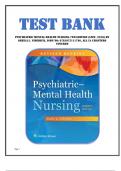
Complete Test Bank For
Psychiatric Mental Health Nursing 7th Edition
By Sheilla L.|All Chapters 1-24
,chapter 1
1. the nurse is assessing the factors contributing to the well-being
of a newly admitted client. which of the following would the nurse
identify as having a positive impact on the individual's mental health?
a) not needing others for companionship
b) the ability to effectively manage stress
c) a family history of mental illness
d) striving for total self-reliance
ans: b
feedback:
individual factors influencing mental health include biologic makeup,
autonomy, independence, self-esteem, capacity for growth, vitality,
ability to find meaning in life, emotional resilience or hardiness, sense
of belonging, reality orientation, and coping or stress management
abilities. interpersonal factors such as intimacy and a balance of
separateness and connectedness are both needed for good mental
health, and therefore a healthy person would need others for
companionship. a family history of mental illness could relate to the
biologic makeup of an individual, which may have a negative impact
on an individual's mental health, as well as a negative impact on an
individual's interpersonal and social cultural factors of health. total
self-reliance is not possible, and a positive social/cultural factor is
access to adequate resources.
2. which of the following statements about mental illness are true?
select all that apply.
,a) mental illness can cause significant distress, impaired
functioning, or both.
b) mental illness is only due to social/cultural factors.
c) social/cultural factors that relate to mental illness include
excessive dependency on or withdrawal from relationships.
d) individuals suffering from mental illness are usually able to cope
effectively with daily life.
e) individuals suffering from mental illness may experience
dissatisfaction with relationships and self.
ans: a, d, e
feedback:
mental illness can cause significant distress, impaired functioning, or
both. mental illness may be related to individual, interpersonal, or
social/cultural factors. excessive dependency on or withdrawal from
relationships are interpersonal factors that relate to mental illness.
individuals suffering from mental illness can feel overwhelmed with
daily life. individuals suffering from mental illness may experience
dissatisfaction with relationships and self.
3. which of the following are true regarding mental health and
mental illness?
a) behavior that may be viewed as acceptable in one culture is
always unacceptable in other cultures.
b) it is easy to determine if a person is mentally healthy or mentally
ill.
c) in most cases, mental health is a state of emotional,
psychological, and social wellness evidenced by satisfying
, interpersonal relationships, effective behavior and coping, positive
self-concept, and emotional stability.
d) persons who engage in fantasies are mentally ill.
ans: c
feedback:
what one society may view as acceptable and appropriate behavior,
another society may see that as maladaptive, and inappropriate.
mental health and mental illness are difficult to define precisely. in
most cases, mental health is a state of emotional, psychological, and
social wellness evidenced by satisfying interpersonal relationships,
effective behavior and coping, positive self-concept, and emotional
stability. persons who engage in fantasiesmay be mentally healthy,
but the inability to distinguish reality from fantasy is an individual
factor that may contribute to mental illness.
4. a client grieving the recent loss of her husband asks if she is
becoming mentally ill because she is so sad. the nurse's best response
would be,
a) you may have a temporary mental illness because you are
experiencing so much pain.
b) you are not mentally ill. this is an expected reaction to the loss
you have experienced.
c) were you generally dissatisfied with your relationship before
your husband's death?
d) try not to worry about that right now. you never know what the
future brings.
Psychiatric Mental Health Nursing 7th Edition
By Sheilla L.|All Chapters 1-24
,chapter 1
1. the nurse is assessing the factors contributing to the well-being
of a newly admitted client. which of the following would the nurse
identify as having a positive impact on the individual's mental health?
a) not needing others for companionship
b) the ability to effectively manage stress
c) a family history of mental illness
d) striving for total self-reliance
ans: b
feedback:
individual factors influencing mental health include biologic makeup,
autonomy, independence, self-esteem, capacity for growth, vitality,
ability to find meaning in life, emotional resilience or hardiness, sense
of belonging, reality orientation, and coping or stress management
abilities. interpersonal factors such as intimacy and a balance of
separateness and connectedness are both needed for good mental
health, and therefore a healthy person would need others for
companionship. a family history of mental illness could relate to the
biologic makeup of an individual, which may have a negative impact
on an individual's mental health, as well as a negative impact on an
individual's interpersonal and social cultural factors of health. total
self-reliance is not possible, and a positive social/cultural factor is
access to adequate resources.
2. which of the following statements about mental illness are true?
select all that apply.
,a) mental illness can cause significant distress, impaired
functioning, or both.
b) mental illness is only due to social/cultural factors.
c) social/cultural factors that relate to mental illness include
excessive dependency on or withdrawal from relationships.
d) individuals suffering from mental illness are usually able to cope
effectively with daily life.
e) individuals suffering from mental illness may experience
dissatisfaction with relationships and self.
ans: a, d, e
feedback:
mental illness can cause significant distress, impaired functioning, or
both. mental illness may be related to individual, interpersonal, or
social/cultural factors. excessive dependency on or withdrawal from
relationships are interpersonal factors that relate to mental illness.
individuals suffering from mental illness can feel overwhelmed with
daily life. individuals suffering from mental illness may experience
dissatisfaction with relationships and self.
3. which of the following are true regarding mental health and
mental illness?
a) behavior that may be viewed as acceptable in one culture is
always unacceptable in other cultures.
b) it is easy to determine if a person is mentally healthy or mentally
ill.
c) in most cases, mental health is a state of emotional,
psychological, and social wellness evidenced by satisfying
, interpersonal relationships, effective behavior and coping, positive
self-concept, and emotional stability.
d) persons who engage in fantasies are mentally ill.
ans: c
feedback:
what one society may view as acceptable and appropriate behavior,
another society may see that as maladaptive, and inappropriate.
mental health and mental illness are difficult to define precisely. in
most cases, mental health is a state of emotional, psychological, and
social wellness evidenced by satisfying interpersonal relationships,
effective behavior and coping, positive self-concept, and emotional
stability. persons who engage in fantasiesmay be mentally healthy,
but the inability to distinguish reality from fantasy is an individual
factor that may contribute to mental illness.
4. a client grieving the recent loss of her husband asks if she is
becoming mentally ill because she is so sad. the nurse's best response
would be,
a) you may have a temporary mental illness because you are
experiencing so much pain.
b) you are not mentally ill. this is an expected reaction to the loss
you have experienced.
c) were you generally dissatisfied with your relationship before
your husband's death?
d) try not to worry about that right now. you never know what the
future brings.