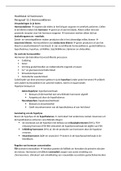
Summary of Perspec/ves on people, management and
organiza/ons (PPMO)
Subject Paper Key take-away
1. Leadership, Pygmalion and Employee Learning:The High leader expectaGons → goals & learning
Innovation and Role of Leader Behaviors (Bezuijen et opportuniGes → more employee learning
Learning al., 2009)
How to get Radical Creative Ideas into Mastery goals → adopt ideas; performance goals
a Leader’s Mind? (Sijbom et al., 2015) → oppose; considerate voice helps
2. Entrepreneur- Social Entrepreneurship: The Case for Unjust equilibrium → creaGve soluGon → new
ship Definition (Martin & Osberg, 2007) sustainable equilibrium
Social Entrepreneurship Revisited Mindset + organizaGons built to tackle systemic
(Light, 2009) problems
3. Organizational 3 levels of culture (Schein, 2010) Three layers: arGfacts, espoused values, underlying
Culture & Change assumpGons
Management Personality, Context, and Resistance Tri-dimensional resistance: affecGve, behavioral,
to Organizational Change (Oreg, 2006) cogniGve
Successful Organizational Change Evidence-based 10-step change roadmap
(Stouten et al., 2018)
4. Organizational Firm Resources and Sustained DisGnct posiGon, trade-offs, reinforcing acGvity
Strategy Competitive Advantage (Barney, 1991) system
What is Strategy? (Porter, 1996) RBV: Valuable, Rare, Inimitable, Non-subsGtutable
resources
What is Strategic Management, Strategy = internal + external logics for
Really? (Nag et al., 2007) performance
5. Equality, Why Diversity Programs Fail (Dobbin & Make diversity everyone’s responsibility; avoid
Diversity and Kalev, 2016) coercive controls
Inclusion Inclusive Workplaces: A Review and Inclusion needs mulGlevel pracGces
Model (Shore et al., 2018)
6. Management Consulting as General Philosophy of Expert / Doctor / Process consultaGon (process
Consulting Helping (Schein, 1989) dominates)
Popular Critiques of Consultancy CriGques: fashion, power, novelty, accountability
(Sturdy, 2009)
, 1. Leadership, innova/on and learning
Development through the years. A lot has changed, also the skills needed.
Why are leaders relevant for both innova<on and learning?
- Mo<va<ng by se@ng goals, s<mula<ng.
- Support to be encouraged
- Feedback
- Inspiring
- Role model
Innova&on
Some leaders are open, and some leaders are like gatekeepers and hold off.
Achievement goal theory: why people are mo<vated
Individuals who pursue...:
• Mastery-approach (MAp) goals focus on task- referenced or self- referenced
improvement and accomplishments.
• Performance-approach (PAp) goals focus on performing beHer than others.
• Mastery-avoidance (MAv) goals aim to avoid incompetence based on task-
referenced or self-referenced standards,
• Performance-avoidance (PAv) goals focus on avoiding failure rela<ve to others.
Performance goal approach
- Focused on other-referenced competence issue.
- Feeling threatened
Mastery goal approach
- Develop and gain competence by acquiring new skills and mastering new situa<ons
- More open and react less nega<ve
, Study 1:
Performance goal is significant related to ‘oppose crea<ve ideas’.
Mastery goal is significant related to ‘adopt crea<ve ideas’.
Study 2:
Performance goal is more likely to oppose, and mastery is more likely to adopt.
Study 3:
Are there condi<ons where the performance approach leaders are more likely to adopt and
less likely to oppose. Tone of voice: aggressive or considerate
- For mastery: it doesn’t have any effect.
- For performance: if you use the considerate tone of voice there is a difference in
opposing or adop<ng ideas.
Conclusion
• Performance-goal leaders more likely to oppose radical ideas (threat to status).
• Mastery-goal leaders more likely to adopt radical ideas (opportunity to learn).
• Considerate voice reduces defensiveness among performance-goal leaders.
Learning
Key mechanisms of the Pygmalion effect (Bezuijen et al., 2009): leaders’ high expecta<ons
shape behavior via specific goal se@ng, goal difficulty, and providing learning
opportuni<es—driving employee learning engagement. LMX supports these, but works
indirectly.
Leader expectaHon research
Leader expecta<on has mul<ple (5) explana<ons to effect employee engagement:
- Leader-member exchange rela<onship
- Goal specificity
organiza/ons (PPMO)
Subject Paper Key take-away
1. Leadership, Pygmalion and Employee Learning:The High leader expectaGons → goals & learning
Innovation and Role of Leader Behaviors (Bezuijen et opportuniGes → more employee learning
Learning al., 2009)
How to get Radical Creative Ideas into Mastery goals → adopt ideas; performance goals
a Leader’s Mind? (Sijbom et al., 2015) → oppose; considerate voice helps
2. Entrepreneur- Social Entrepreneurship: The Case for Unjust equilibrium → creaGve soluGon → new
ship Definition (Martin & Osberg, 2007) sustainable equilibrium
Social Entrepreneurship Revisited Mindset + organizaGons built to tackle systemic
(Light, 2009) problems
3. Organizational 3 levels of culture (Schein, 2010) Three layers: arGfacts, espoused values, underlying
Culture & Change assumpGons
Management Personality, Context, and Resistance Tri-dimensional resistance: affecGve, behavioral,
to Organizational Change (Oreg, 2006) cogniGve
Successful Organizational Change Evidence-based 10-step change roadmap
(Stouten et al., 2018)
4. Organizational Firm Resources and Sustained DisGnct posiGon, trade-offs, reinforcing acGvity
Strategy Competitive Advantage (Barney, 1991) system
What is Strategy? (Porter, 1996) RBV: Valuable, Rare, Inimitable, Non-subsGtutable
resources
What is Strategic Management, Strategy = internal + external logics for
Really? (Nag et al., 2007) performance
5. Equality, Why Diversity Programs Fail (Dobbin & Make diversity everyone’s responsibility; avoid
Diversity and Kalev, 2016) coercive controls
Inclusion Inclusive Workplaces: A Review and Inclusion needs mulGlevel pracGces
Model (Shore et al., 2018)
6. Management Consulting as General Philosophy of Expert / Doctor / Process consultaGon (process
Consulting Helping (Schein, 1989) dominates)
Popular Critiques of Consultancy CriGques: fashion, power, novelty, accountability
(Sturdy, 2009)
, 1. Leadership, innova/on and learning
Development through the years. A lot has changed, also the skills needed.
Why are leaders relevant for both innova<on and learning?
- Mo<va<ng by se@ng goals, s<mula<ng.
- Support to be encouraged
- Feedback
- Inspiring
- Role model
Innova&on
Some leaders are open, and some leaders are like gatekeepers and hold off.
Achievement goal theory: why people are mo<vated
Individuals who pursue...:
• Mastery-approach (MAp) goals focus on task- referenced or self- referenced
improvement and accomplishments.
• Performance-approach (PAp) goals focus on performing beHer than others.
• Mastery-avoidance (MAv) goals aim to avoid incompetence based on task-
referenced or self-referenced standards,
• Performance-avoidance (PAv) goals focus on avoiding failure rela<ve to others.
Performance goal approach
- Focused on other-referenced competence issue.
- Feeling threatened
Mastery goal approach
- Develop and gain competence by acquiring new skills and mastering new situa<ons
- More open and react less nega<ve
, Study 1:
Performance goal is significant related to ‘oppose crea<ve ideas’.
Mastery goal is significant related to ‘adopt crea<ve ideas’.
Study 2:
Performance goal is more likely to oppose, and mastery is more likely to adopt.
Study 3:
Are there condi<ons where the performance approach leaders are more likely to adopt and
less likely to oppose. Tone of voice: aggressive or considerate
- For mastery: it doesn’t have any effect.
- For performance: if you use the considerate tone of voice there is a difference in
opposing or adop<ng ideas.
Conclusion
• Performance-goal leaders more likely to oppose radical ideas (threat to status).
• Mastery-goal leaders more likely to adopt radical ideas (opportunity to learn).
• Considerate voice reduces defensiveness among performance-goal leaders.
Learning
Key mechanisms of the Pygmalion effect (Bezuijen et al., 2009): leaders’ high expecta<ons
shape behavior via specific goal se@ng, goal difficulty, and providing learning
opportuni<es—driving employee learning engagement. LMX supports these, but works
indirectly.
Leader expectaHon research
Leader expecta<on has mul<ple (5) explana<ons to effect employee engagement:
- Leader-member exchange rela<onship
- Goal specificity