Brain and Cognition PSYC131 Lecture 1
25.9.18
Introduction to Cognitive Psychology
The Information-processing Approach- (NEWELL + SIMON 1950)
Humans and computers both manipulate symbols and conduct the same information
processing.
Sensory – perceptual processing – conscious representation
Control system
Perception – working memory – motor actions
Long term memory
Declarative + procedural knowledge
Levels of explanation:
- Behavioural indicators (shaking hands, waving etc)
- Functional explanation (input output)
- Biological explanation (neural, genetic)
Cognitive Neuroscience:
Establishes a link between psychological functions and their biological underpinnings.
Some application of: perception, memory distortion, pathology, profiling etc.
Is conscious experience a reflection of reality?:
- Antiquity View PTOLEMY
Suggested rays left our eyes and they were responsive to objects and came back to
the eye and size of object is defined by apparent angle and distance. HOWEVER his
theory could not be tested therefore couldn’t increase the data to challenge the
theories he created.
- Mind and reality
The mind makes sense of the world through specific senses which capture parts of
reality. It is based on this sample of data that we interpret reality. Visual info is
forwarded to visual areas at the back of the brain. This is where the information is
processed. The destruction of these neurons (e.g. in boxing) can lead to blindness.
Neurons in specific parts of the cortex are responsive to lines. Some regions are
specifically responsive to objects (e.g. buildings,
faces) These neurons store the visual shape of
objects.
This is what is responsible for automatic
interpretations e.g.:
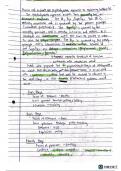
25.9.18
Introduction to Cognitive Psychology
The Information-processing Approach- (NEWELL + SIMON 1950)
Humans and computers both manipulate symbols and conduct the same information
processing.
Sensory – perceptual processing – conscious representation
Control system
Perception – working memory – motor actions
Long term memory
Declarative + procedural knowledge
Levels of explanation:
- Behavioural indicators (shaking hands, waving etc)
- Functional explanation (input output)
- Biological explanation (neural, genetic)
Cognitive Neuroscience:
Establishes a link between psychological functions and their biological underpinnings.
Some application of: perception, memory distortion, pathology, profiling etc.
Is conscious experience a reflection of reality?:
- Antiquity View PTOLEMY
Suggested rays left our eyes and they were responsive to objects and came back to
the eye and size of object is defined by apparent angle and distance. HOWEVER his
theory could not be tested therefore couldn’t increase the data to challenge the
theories he created.
- Mind and reality
The mind makes sense of the world through specific senses which capture parts of
reality. It is based on this sample of data that we interpret reality. Visual info is
forwarded to visual areas at the back of the brain. This is where the information is
processed. The destruction of these neurons (e.g. in boxing) can lead to blindness.
Neurons in specific parts of the cortex are responsive to lines. Some regions are
specifically responsive to objects (e.g. buildings,
faces) These neurons store the visual shape of
objects.
This is what is responsible for automatic
interpretations e.g.: