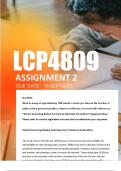
, PLEASE USE THIS DOCUMENT AS A GUIDE TO ANSWER YOUR ASSIGNMENT
The Role of Co-operative Government in the South African Education System
Introduction
The South African education system is shaped by the Constitution of the Republic of South Africa,
1996, which enshrines the principles of co-operative government. Chapter 3 of the Constitution
outlines the roles and responsibilities of the three spheres of government: national, provincial, and
local. It emphasizes the need for these spheres to co-operate in the exercise of their powers and the
performance of their functions. This essay explores the role of co-operative government in the South
African education system, highlighting the intergovernmental relationships between the national,
provincial, and local levels of government. It will examine relevant legislation, case law, and the
practical implementation of co-operative government in education to assess its effectiveness in
ensuring equitable access to quality education for all South Africans.
The Constitutional Framework for Co-operative Government
The Constitution of South Africa establishes a framework for co-operative government under
Chapter 3, which recognizes the importance of collaboration between the three spheres of
government. Section 41 of the Constitution outlines the principles governing intergovernmental
relations, emphasizing that all spheres of government are required to cooperate with one another in
good faith. The section mandates the spheres to respect each other’s powers and functions, and to
resolve disputes through negotiation, mediation, or other means provided for in the Constitution.¹
In the context of education, this framework ensures that national, provincial, and local governments
work together to meet the educational needs of the country’s diverse population. While the national
government is responsible for formulating education policies, the provincial governments are tasked
with implementing these policies at the local level. Local governments, on the other hand, are often
involved in the administration of schools and educational infrastructure. The principles of
co-operative government ensure that these spheres collaborate and support one another in fulfilling
their constitutional obligations to provide education to all learners.
The National Department of Education’s Role
The national government plays a central role in shaping the educational landscape of South Africa.
The Department of Basic Education (DBE), as the national authority responsible for primary and
secondary education, sets the policies and standards for the education system. Through the South
African Schools Act 84 of 1996, the DBE regulates matters such as school governance, curricula,
funding, and the rights of learners and teachers.²
The national government’s responsibility extends to the provision of educational resources and
funding. The national budget, which is determined by the Treasury, allocates resources to the
provinces for the provision of education. The national government also plays a key role in ensuring
that the education system aligns with the Constitution’s vision of equity, access, and inclusivity. This
is particularly evident in the implementation of the National Curriculum Statement, which guides c
curriculum development in schools.
1: South African Constitution, 1996, Section 41.
2: South African Schools Act, No. 84 of 1996.
The Role of Co-operative Government in the South African Education System
Introduction
The South African education system is shaped by the Constitution of the Republic of South Africa,
1996, which enshrines the principles of co-operative government. Chapter 3 of the Constitution
outlines the roles and responsibilities of the three spheres of government: national, provincial, and
local. It emphasizes the need for these spheres to co-operate in the exercise of their powers and the
performance of their functions. This essay explores the role of co-operative government in the South
African education system, highlighting the intergovernmental relationships between the national,
provincial, and local levels of government. It will examine relevant legislation, case law, and the
practical implementation of co-operative government in education to assess its effectiveness in
ensuring equitable access to quality education for all South Africans.
The Constitutional Framework for Co-operative Government
The Constitution of South Africa establishes a framework for co-operative government under
Chapter 3, which recognizes the importance of collaboration between the three spheres of
government. Section 41 of the Constitution outlines the principles governing intergovernmental
relations, emphasizing that all spheres of government are required to cooperate with one another in
good faith. The section mandates the spheres to respect each other’s powers and functions, and to
resolve disputes through negotiation, mediation, or other means provided for in the Constitution.¹
In the context of education, this framework ensures that national, provincial, and local governments
work together to meet the educational needs of the country’s diverse population. While the national
government is responsible for formulating education policies, the provincial governments are tasked
with implementing these policies at the local level. Local governments, on the other hand, are often
involved in the administration of schools and educational infrastructure. The principles of
co-operative government ensure that these spheres collaborate and support one another in fulfilling
their constitutional obligations to provide education to all learners.
The National Department of Education’s Role
The national government plays a central role in shaping the educational landscape of South Africa.
The Department of Basic Education (DBE), as the national authority responsible for primary and
secondary education, sets the policies and standards for the education system. Through the South
African Schools Act 84 of 1996, the DBE regulates matters such as school governance, curricula,
funding, and the rights of learners and teachers.²
The national government’s responsibility extends to the provision of educational resources and
funding. The national budget, which is determined by the Treasury, allocates resources to the
provinces for the provision of education. The national government also plays a key role in ensuring
that the education system aligns with the Constitution’s vision of equity, access, and inclusivity. This
is particularly evident in the implementation of the National Curriculum Statement, which guides c
curriculum development in schools.
1: South African Constitution, 1996, Section 41.
2: South African Schools Act, No. 84 of 1996.