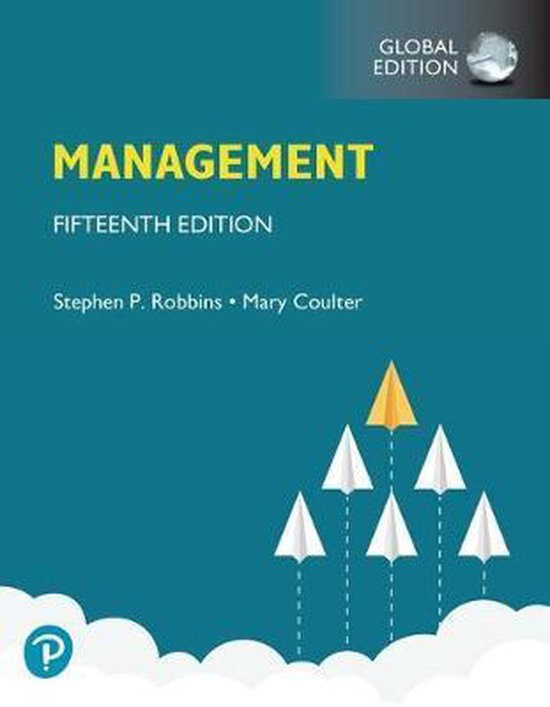
Test Bank For Management Global
15th Edition By Stephen P. Robbins
Chapters 1 - 18, Complete
,Contents
1. Managers and You in the Workplace
2. Making Decisions
3. Influence of the External Environment and the Organization’s Culture
4. Managing in a Global Environment
5. Managing Diversity
6. Managing Social Responsibility and Ethics
7. Managing Change and Disruptive Innovation
8. Foundations of Planning
9. Managing Strategy
10. Entrepreneurial Ventures
11. Designing Organizational Structure
12. Managing Human Resources
13. Managing Groups and Teams
14. Managing Communication
15. Understanding and Managing Individual Behavior
16. Motivating Employees
17. Being an Effective Leader
18. Controlling People and Operations
,Chapter 1 Managers and You in the Workplace
1) Time should be considered a(n) resource.
A) abundant
B) diminishing
C) limited
D) renewabl
e ANSWER:
C Diff: 2
AACSB: Analytical thinking
Learning Obj: LO 1.1: Tell who managers are and where they work; Know how to manage your
time
Classification: Concept
2) One method to become more efficient in managing your time is to .
A) classify each activity or task as A, B, or C
B) schedule more in one day than you can reasonably expect to finish
C) enlist the aid of a management coach to keep you on task
D) shorten deadlines so you will be pressed to complete tasks
early ANSWER: A
Diff: 2
AACSB: Application of knowledge
Learning Obj: LO 1.1: Tell who managers are and where they work; Know how to manage your
time
Classification: Concept
3) Technology smakes sit seasier sto sstay sconnected sbut .
A) there sis salways sthe srisk sof ssecurity sbreaches sand sthe stheft sof sinformation snecessary
sfor sgood s time smanagement spractices
B) it sraises sexpectations son sthe spart sof sthose sto swhom swe sare sconnected
C) technology sfails, sbatteries slose spower, sand stheir seffectiveness swanes
D) it salso spresents sconstant sdistractions, smaking sit sdifficult sto sstay
son stask s ANSWER: s D
Diff: s2
AACSB: s Reflective sthinking
Learning sObj: sLO s1.1: sTell swho smanagers sare sand swhere sthey swork; sKnow show sto
smanage syour s time
Classification: s Critical sthinking
, 4) In stoday's sworkplace, .
A) women sare smore slikely sthan smen sto sbe spromoted sinto smanagement
B) many semployees sperform swork sthat sin sthe spast swas sconsidered smanagerial sactivities
C) women stend sto sbe smore seffective ssupervisors sthan smen
D) most sorganizations shave seliminated sthe stitle sof
smanager s ANSWER: s B
Diff: s2
AACSB: s Reflective sthinking
Learning sObj: sLO s1.1: sTell swho smanagers sare sand swhere sthey swork; sKnow show sto
smanage syour s time
Classification: s Concept
5) Because sthis sis sher sfirst sjob, sMelanie swas sunclear sabout swhat smanagers
sactually sdo. s Fortunately sher straining smaterials sexplained sthat sa smanager's sjob
sfocuses son .
A) performing sclerical sduties
B) personal sachievement
C) helping sothers saccomplish stheir swork sgoals
D) supervising sgroups srather sthan sindividual
semployees s ANSWER: s C
Diff: s2
AACSB: s Analytical sthinking; sApplication sof sknowledge
Learning sObj: sLO s1.1: sTell swho smanagers sare sand swhere sthey swork; sKnow show sto
smanage syour s time
Classification: s Application
6) An sindividual swho sworks swith sand sthrough sother speople sby scoordinating stheir swork
sactivities s in sorder sto saccomplish sorganizational sgoals sis .
A) an sassembly sline sworker
B) a slaborer
C) a smanager
D) a
ssalesperson
s ANSWER: s s sC
sDiff: s1
AACSB: s Reflective sthinking
Learning sObj: sLO s1.1: sTell swho smanagers sare sand swhere sthey swork; sKnow show sto
smanage syour s time
Classification: s Concept
15th Edition By Stephen P. Robbins
Chapters 1 - 18, Complete
,Contents
1. Managers and You in the Workplace
2. Making Decisions
3. Influence of the External Environment and the Organization’s Culture
4. Managing in a Global Environment
5. Managing Diversity
6. Managing Social Responsibility and Ethics
7. Managing Change and Disruptive Innovation
8. Foundations of Planning
9. Managing Strategy
10. Entrepreneurial Ventures
11. Designing Organizational Structure
12. Managing Human Resources
13. Managing Groups and Teams
14. Managing Communication
15. Understanding and Managing Individual Behavior
16. Motivating Employees
17. Being an Effective Leader
18. Controlling People and Operations
,Chapter 1 Managers and You in the Workplace
1) Time should be considered a(n) resource.
A) abundant
B) diminishing
C) limited
D) renewabl
e ANSWER:
C Diff: 2
AACSB: Analytical thinking
Learning Obj: LO 1.1: Tell who managers are and where they work; Know how to manage your
time
Classification: Concept
2) One method to become more efficient in managing your time is to .
A) classify each activity or task as A, B, or C
B) schedule more in one day than you can reasonably expect to finish
C) enlist the aid of a management coach to keep you on task
D) shorten deadlines so you will be pressed to complete tasks
early ANSWER: A
Diff: 2
AACSB: Application of knowledge
Learning Obj: LO 1.1: Tell who managers are and where they work; Know how to manage your
time
Classification: Concept
3) Technology smakes sit seasier sto sstay sconnected sbut .
A) there sis salways sthe srisk sof ssecurity sbreaches sand sthe stheft sof sinformation snecessary
sfor sgood s time smanagement spractices
B) it sraises sexpectations son sthe spart sof sthose sto swhom swe sare sconnected
C) technology sfails, sbatteries slose spower, sand stheir seffectiveness swanes
D) it salso spresents sconstant sdistractions, smaking sit sdifficult sto sstay
son stask s ANSWER: s D
Diff: s2
AACSB: s Reflective sthinking
Learning sObj: sLO s1.1: sTell swho smanagers sare sand swhere sthey swork; sKnow show sto
smanage syour s time
Classification: s Critical sthinking
, 4) In stoday's sworkplace, .
A) women sare smore slikely sthan smen sto sbe spromoted sinto smanagement
B) many semployees sperform swork sthat sin sthe spast swas sconsidered smanagerial sactivities
C) women stend sto sbe smore seffective ssupervisors sthan smen
D) most sorganizations shave seliminated sthe stitle sof
smanager s ANSWER: s B
Diff: s2
AACSB: s Reflective sthinking
Learning sObj: sLO s1.1: sTell swho smanagers sare sand swhere sthey swork; sKnow show sto
smanage syour s time
Classification: s Concept
5) Because sthis sis sher sfirst sjob, sMelanie swas sunclear sabout swhat smanagers
sactually sdo. s Fortunately sher straining smaterials sexplained sthat sa smanager's sjob
sfocuses son .
A) performing sclerical sduties
B) personal sachievement
C) helping sothers saccomplish stheir swork sgoals
D) supervising sgroups srather sthan sindividual
semployees s ANSWER: s C
Diff: s2
AACSB: s Analytical sthinking; sApplication sof sknowledge
Learning sObj: sLO s1.1: sTell swho smanagers sare sand swhere sthey swork; sKnow show sto
smanage syour s time
Classification: s Application
6) An sindividual swho sworks swith sand sthrough sother speople sby scoordinating stheir swork
sactivities s in sorder sto saccomplish sorganizational sgoals sis .
A) an sassembly sline sworker
B) a slaborer
C) a smanager
D) a
ssalesperson
s ANSWER: s s sC
sDiff: s1
AACSB: s Reflective sthinking
Learning sObj: sLO s1.1: sTell swho smanagers sare sand swhere sthey swork; sKnow show sto
smanage syour s time
Classification: s Concept