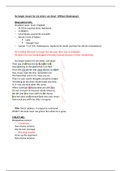
No longer mourn for me when I am dead –William Shakespeare
Biographical Info:
Stratford-upon- Avon, England
- At 18 he married Anne Hathaway
- 3 children
- Uncertainty around his sexuality
- Wrote 2 sets of letters
Lady
Younger man
- Sonnet 71 of 154: Shakespeare. Explored his death and how he will be remembered
He is telling the lover to forget him because their love is forbidden
He dears his lover being judged/criticized/mocked because of their relationship.
No longer mourn for me when I am dead
Than you shall hear the surly sullen bell
Give warning to the world that I am fled
From this vile world with vilest worms to dwell;
Nay, if you read this line, remember not
The hand that writ it; for I love you so,
That I in your sweet thoughts would be forgot,
If thinking on me then should make you woe.
O, if I say you look upon this verse,
When I perhaps compounded am with clay,
Do not so much as my poor name rehearse,
But let your love even with my life decay,
Lest the wise world should look into your moan,
And mock you with me after I am gone.
Title: Direct address. A request/a command.
WHAT? His lover must not grieve him when he is gone.
STRUCTURE:
Elizabethan/sonnet
- 3 quatrains
Own rhyme scheme
Has its own message
- Rhyming couplet.
Sums up the argument
Own rhyme scheme.
Biographical Info:
Stratford-upon- Avon, England
- At 18 he married Anne Hathaway
- 3 children
- Uncertainty around his sexuality
- Wrote 2 sets of letters
Lady
Younger man
- Sonnet 71 of 154: Shakespeare. Explored his death and how he will be remembered
He is telling the lover to forget him because their love is forbidden
He dears his lover being judged/criticized/mocked because of their relationship.
No longer mourn for me when I am dead
Than you shall hear the surly sullen bell
Give warning to the world that I am fled
From this vile world with vilest worms to dwell;
Nay, if you read this line, remember not
The hand that writ it; for I love you so,
That I in your sweet thoughts would be forgot,
If thinking on me then should make you woe.
O, if I say you look upon this verse,
When I perhaps compounded am with clay,
Do not so much as my poor name rehearse,
But let your love even with my life decay,
Lest the wise world should look into your moan,
And mock you with me after I am gone.
Title: Direct address. A request/a command.
WHAT? His lover must not grieve him when he is gone.
STRUCTURE:
Elizabethan/sonnet
- 3 quatrains
Own rhyme scheme
Has its own message
- Rhyming couplet.
Sums up the argument
Own rhyme scheme.