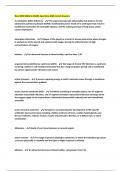
NURS 2003 Midterm Exam Questions and Answers Fully Solved Latest Version 2025-2026
Ankylosing spondylitis - AnswersA chronic inflammatory disease that primarily affects the axial skeleton,
including the sacroiliac joints, intervertebral disc spaces, and costovertebral articulations
arthritis - AnswersInflammation of a joint
chronic fatigue syndrome - AnswersA disorder characterized by debilitating fatigue and a variety of
associated physical complaints
CREST - AnswersAcronym used to describe the clinical manifestations of systemic sclerosis (c alcinosis, R
aynaud's phenomenon, e sophageal dysfunction, s clerodactyly, and t elangiectasia)
Dermatomyositis - AnswersDiffuse, idiopathic, inflammatory myopathy (see polymyositis) that produces
bilateral weakness that is usually most severe in the proximal or limb-girdle muscles; characterized by
pruritic or eczematous inflammation of the skin and tenderness of the muscles
Fibromyalgia syndrome - AnswersA chronic disorder characterized by widespread, nonarticular
musculoskeletal pain and fatigue with multiple tender points
Gout - AnswersCondition caused by an increase in uric acid production, underexcretion of uric acid by
the kidneys, or increased intake of foods containing purines; joint involvement includes recurrent
attacks of acute arthritis
Myofascial pain syndrome - AnswersMusculoskeletal pain and tenderness in one anatomical region of
the body originating in anterior and posterior trigger points that have developed as a result of muscle
trauma, chronic muscle strain, or both
osteoarthritis - AnswersA slowly progressive noninflammatory disorder of the diarthrodial (synovial)
joints
Polymyositis - AnswersDiffuse, idiopathic, inflammatory myopathy of striated muscle (see
dermatomyositis); produces bilateral weakness that is usually most severe in the proximal or the limb-
girdle muscles; some forms are associated with malignancy
Raynaud's phenomenon - AnswersAn episodic vasospastic disorder of small cutaneous arteries, most
frequently involving the fingers and toes; a manifestation of systemic sclerosis
rheumatoid arthritis - AnswersA chronic, systemic autoimmune disease characterized by inflammation
of connective tissue in the diarthrodial (synovial) joints, typically with periods of remission and
exacerbation
Septic arthritis - AnswersAn invasion of the joint cavity with microorganisms (also called infectious or
bacterial arthritis)
Sjögren's syndrome - AnswersAn autoimmune disease that targets moisture-producing glands, leading
to the common symptoms of xerostomia (dry mouth) and keratoconjunctivitis sicca (dry eyes)
, systemic lupus erythematosus (SLE) - AnswersA chronic multisystem inflammatory disease of
autoimmune origin
systemic sclerosis (SS) - AnswersA disorder of connective tissue characterized by fibrotic, degenerative,
and occasionally inflammatory changes in the skin, blood vessels, synovium, skeletal muscle, and
internal organs
diastolic heart failure - AnswersOften referred to as heart failure with preserved systolic function, it is an
impaired ability of the ventricles to fill during diastole
heart failure (HF) - AnswersAn abnormal clinical condition that describes impaired cardiac pumping
resulting in the characteristic pathophysiological changes of vasoconstriction and fluid retention
paroxysmal nocturnal dyspnea - AnswersA disorder characterized by sudden attacks of respiratory
distress that occur when the patient is asleep, usually after several hours of being in a recumbent
position
pulmonary edema - AnswersAn acute, life-threatening situation in which the lung alveoli become filled
with serous or serosanguineous fluid; caused most commonly by acute left ventricular failure secondary
to acute myocardial ischemia
systolic heart failure - AnswersThe most common type of heart failure, it is caused by a defect in the
ability of the ventricles to contract (pump), increased afterload, or mechanical abnormalities
Baroreceptors - AnswersSpecialized nerve cells located in the carotid sinus and in the arch of the aorta
that are sensitive to stretching and, when stimulated by an increase in blood pressure, send inhibitory
impulses to the sympathetic vasomotor centre in the brainstem
cardiac output - AnswersThe total blood flow through the systemic or pulmonary circulation per minute;
can be described as the stroke volume (amount of blood pumped out of the left ventricle per beat [~70!
mL]) multiplied by the heart rate (HR) over 1 minute
hypertensive crisis - AnswersA severe and abrupt elevation in blood pressure, arbitrarily defined as a
diastolic blood pressure above 120 to 130mmHg
isolated systolic hypertension (ISH) - AnswersDefined as a sustained elevation in systolic blood pressure
equal to or greater than 160mmHg with a diastolic blood pressure less than 90mmHg
orthostatic hypotension - AnswersA decrease of 20!mm!Hg (or more) in systolic pressure or a decrease
of 10mmHg (or more) in the diastolic pressure that occurs when an individual assumes a standing
position
primary (essential) hypertension - AnswersElevated blood pressure without an identified cause;
accounts for about 90 to 95% of all cases of hypertension
Ankylosing spondylitis - AnswersA chronic inflammatory disease that primarily affects the axial skeleton,
including the sacroiliac joints, intervertebral disc spaces, and costovertebral articulations
arthritis - AnswersInflammation of a joint
chronic fatigue syndrome - AnswersA disorder characterized by debilitating fatigue and a variety of
associated physical complaints
CREST - AnswersAcronym used to describe the clinical manifestations of systemic sclerosis (c alcinosis, R
aynaud's phenomenon, e sophageal dysfunction, s clerodactyly, and t elangiectasia)
Dermatomyositis - AnswersDiffuse, idiopathic, inflammatory myopathy (see polymyositis) that produces
bilateral weakness that is usually most severe in the proximal or limb-girdle muscles; characterized by
pruritic or eczematous inflammation of the skin and tenderness of the muscles
Fibromyalgia syndrome - AnswersA chronic disorder characterized by widespread, nonarticular
musculoskeletal pain and fatigue with multiple tender points
Gout - AnswersCondition caused by an increase in uric acid production, underexcretion of uric acid by
the kidneys, or increased intake of foods containing purines; joint involvement includes recurrent
attacks of acute arthritis
Myofascial pain syndrome - AnswersMusculoskeletal pain and tenderness in one anatomical region of
the body originating in anterior and posterior trigger points that have developed as a result of muscle
trauma, chronic muscle strain, or both
osteoarthritis - AnswersA slowly progressive noninflammatory disorder of the diarthrodial (synovial)
joints
Polymyositis - AnswersDiffuse, idiopathic, inflammatory myopathy of striated muscle (see
dermatomyositis); produces bilateral weakness that is usually most severe in the proximal or the limb-
girdle muscles; some forms are associated with malignancy
Raynaud's phenomenon - AnswersAn episodic vasospastic disorder of small cutaneous arteries, most
frequently involving the fingers and toes; a manifestation of systemic sclerosis
rheumatoid arthritis - AnswersA chronic, systemic autoimmune disease characterized by inflammation
of connective tissue in the diarthrodial (synovial) joints, typically with periods of remission and
exacerbation
Septic arthritis - AnswersAn invasion of the joint cavity with microorganisms (also called infectious or
bacterial arthritis)
Sjögren's syndrome - AnswersAn autoimmune disease that targets moisture-producing glands, leading
to the common symptoms of xerostomia (dry mouth) and keratoconjunctivitis sicca (dry eyes)
, systemic lupus erythematosus (SLE) - AnswersA chronic multisystem inflammatory disease of
autoimmune origin
systemic sclerosis (SS) - AnswersA disorder of connective tissue characterized by fibrotic, degenerative,
and occasionally inflammatory changes in the skin, blood vessels, synovium, skeletal muscle, and
internal organs
diastolic heart failure - AnswersOften referred to as heart failure with preserved systolic function, it is an
impaired ability of the ventricles to fill during diastole
heart failure (HF) - AnswersAn abnormal clinical condition that describes impaired cardiac pumping
resulting in the characteristic pathophysiological changes of vasoconstriction and fluid retention
paroxysmal nocturnal dyspnea - AnswersA disorder characterized by sudden attacks of respiratory
distress that occur when the patient is asleep, usually after several hours of being in a recumbent
position
pulmonary edema - AnswersAn acute, life-threatening situation in which the lung alveoli become filled
with serous or serosanguineous fluid; caused most commonly by acute left ventricular failure secondary
to acute myocardial ischemia
systolic heart failure - AnswersThe most common type of heart failure, it is caused by a defect in the
ability of the ventricles to contract (pump), increased afterload, or mechanical abnormalities
Baroreceptors - AnswersSpecialized nerve cells located in the carotid sinus and in the arch of the aorta
that are sensitive to stretching and, when stimulated by an increase in blood pressure, send inhibitory
impulses to the sympathetic vasomotor centre in the brainstem
cardiac output - AnswersThe total blood flow through the systemic or pulmonary circulation per minute;
can be described as the stroke volume (amount of blood pumped out of the left ventricle per beat [~70!
mL]) multiplied by the heart rate (HR) over 1 minute
hypertensive crisis - AnswersA severe and abrupt elevation in blood pressure, arbitrarily defined as a
diastolic blood pressure above 120 to 130mmHg
isolated systolic hypertension (ISH) - AnswersDefined as a sustained elevation in systolic blood pressure
equal to or greater than 160mmHg with a diastolic blood pressure less than 90mmHg
orthostatic hypotension - AnswersA decrease of 20!mm!Hg (or more) in systolic pressure or a decrease
of 10mmHg (or more) in the diastolic pressure that occurs when an individual assumes a standing
position
primary (essential) hypertension - AnswersElevated blood pressure without an identified cause;
accounts for about 90 to 95% of all cases of hypertension