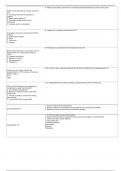
D. Water consumption prevents UTI as it keeps bacteria flushed out of the urinary tract.
Which of the following can help to prevent a
UTI?
A. Douching to prevent the growth of
bacteria
B. Taking more Vitamin D
C. Use spermicides during sexual
intercourse
D. Increase water consumption
D. Urgency is a symptom of lower tract UTI.
A symptom of a lower urinary tract infection
includes:
A. Decreased Urination
B. Fever
C. Flank pain
D. Urgency
D. Pregnancy is a risk factor the development of a UTI.
Which of the following is a risk factor for the
development of a urinary tract infection
(UTI)?
A. Frequent showering
B. Marathon running
C. Perimenopause
D. Pregnancy
True. Women have a shorter urethra that puts them at higher risk for developing a UTI.
Women are at a higher risk for the
development of a UTI because of having a
shorter urethra.
True
False
C. A complicated UTI can be caused by a structural issue in the urinary tract.
Which of the following is true regarding a
complicated urinary tract infection?
A. It is usually asymptomatic
B. Bacteria is located mostly in the lower
urinary tract
C. Can be caused by a structural urinary
tract disorder
D. Is associated with young adults
1. Occurs in the normal urinary tract
2. Simple cystitis in non-pregnant women without any urologic abnormalities
Uncomplicated UTI 3. Responds well to a short course of antibiotic therapy
1. A UTI that extends beyond the bladder
2. Caused by structural or functional urinary tract abnormalities or untreated UTI
3. Infants and older adults affected
4. Associated with:
indwelling catheters
Complicated UTI renal calculi
Diabetes
Pregnancy
, C. The patient presents with a simple cystitis and treated appropriately. In addition,
although the patient has a new sexual partner with risk for a STI, the patient reports no
itching and/or vaginal discharge with odor. The NP would determine if a pelvic exam is
indicated at that visit to rule out an STI.
Question
A 25 year- old female presents to the
primary care office with urinary burning and
frequency for the last 3 days. She denies
any fever, chills, back pain. Her
gynecological history is negative and reports
no vaginal discharge. The only new
information reported is that she recently had
sexual intercourse with a new male partner.
The NP obtains a urinalysis and determines
that the urine contains leukocytes, RBCs,
nitrites, and WBCs. No casts are identified.
Based on symptom presentation and UA
results, the patient can be diagnosed with:
A. Pyelonephritis
B. Complicated UTI
C. Cystitis
D. Upper UTI
Which of the following can help to prevent a
UTI?
A. Douching to prevent the growth of
bacteria
B. Taking more Vitamin D
C. Use spermicides during sexual
intercourse
D. Increase water consumption
D. Urgency is a symptom of lower tract UTI.
A symptom of a lower urinary tract infection
includes:
A. Decreased Urination
B. Fever
C. Flank pain
D. Urgency
D. Pregnancy is a risk factor the development of a UTI.
Which of the following is a risk factor for the
development of a urinary tract infection
(UTI)?
A. Frequent showering
B. Marathon running
C. Perimenopause
D. Pregnancy
True. Women have a shorter urethra that puts them at higher risk for developing a UTI.
Women are at a higher risk for the
development of a UTI because of having a
shorter urethra.
True
False
C. A complicated UTI can be caused by a structural issue in the urinary tract.
Which of the following is true regarding a
complicated urinary tract infection?
A. It is usually asymptomatic
B. Bacteria is located mostly in the lower
urinary tract
C. Can be caused by a structural urinary
tract disorder
D. Is associated with young adults
1. Occurs in the normal urinary tract
2. Simple cystitis in non-pregnant women without any urologic abnormalities
Uncomplicated UTI 3. Responds well to a short course of antibiotic therapy
1. A UTI that extends beyond the bladder
2. Caused by structural or functional urinary tract abnormalities or untreated UTI
3. Infants and older adults affected
4. Associated with:
indwelling catheters
Complicated UTI renal calculi
Diabetes
Pregnancy
, C. The patient presents with a simple cystitis and treated appropriately. In addition,
although the patient has a new sexual partner with risk for a STI, the patient reports no
itching and/or vaginal discharge with odor. The NP would determine if a pelvic exam is
indicated at that visit to rule out an STI.
Question
A 25 year- old female presents to the
primary care office with urinary burning and
frequency for the last 3 days. She denies
any fever, chills, back pain. Her
gynecological history is negative and reports
no vaginal discharge. The only new
information reported is that she recently had
sexual intercourse with a new male partner.
The NP obtains a urinalysis and determines
that the urine contains leukocytes, RBCs,
nitrites, and WBCs. No casts are identified.
Based on symptom presentation and UA
results, the patient can be diagnosed with:
A. Pyelonephritis
B. Complicated UTI
C. Cystitis
D. Upper UTI