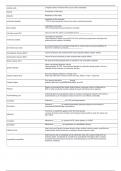
cardiac cycle complete series of events which occurs with a heartbeat
Systole Contraction of the heart
Diastole Relaxation of the heart
relaxation of the ventricles.
ventricular diastole - 70% of blood passively moves from atria to ventricles (gravity).
contraction of the atria
atrial systole -30% (remaining blood) pumped into ventricles
1st heart sound (S1) Closure of the AV valves is auscultated as the _______________.
contraction of ventricles
-when Ejection Fraction occurs (EF): 55-70% of blood is pumped from ventricles into
ventricular systole pulmonary and systemic circulation.
As pressure drops and ventricles empty the SL valves close (to prevent backflow of
2nd heart sound (S2) blood into ventricles): producing ______________.
End Diastolic Volume (EDV) volume of blood in the ventricle at the end of diastole (before systole 120ml)
End Systolic Volume (ESV) volume of blood remaining in each ventricle after systole (50ml)
Stroke Volume (SV) the amount of blood ejected from a ventricle in one contraction (systole)
stroke volume/end diastolic volume
-Approximately 55-70%. Amount blood ejected by ventricles during systole. This is a
ejection fraction valuable clinical indicator of ventricular function.
Amount of blood pumped in 1 minute (~5 L)
Cardiac Output (CO) heart rate (HR; bpm) X stroke volume (SV) eg. 75bpm x 70ml = 5.25L/min
Four factors that affect ________ directly:
Cardiac Output preload, after load, myocardial contractility, and HR.
Degree of myocardial fiber length stretch before contraction which is influenced by
Preload EDV, in other words this means loading the heart with blood prior to ejection.
stretching fibers during diastole results in stronger contractions however if the heart is
Frank-Starling Law overstretched by an increased in blood volume it in turn affects contractility.
increased Preload is _____________ by CHF and Hypervolemia
Preload is _________ by cardiac tamponade (external pressure on the heart) or
decreased hypovolemia (hemorrhage, dehydration).
The force or resistance against which the heart pumps.
-amount of tension each ventricle must develop during systole to open SL valves and
Afterload eject blood.
increased Afterload is ________ by systemic HTN, valve disease, or COPD
decreased Afterload is _________ by hypotension or vasodilation (shock).
heart must work harder (increase tension) when cardiac muscle is weak, ventricles are
Laplace's Law hypertrophied and/or pulmonary or systemic blood pressure is high.
determined by Ca+2 availability and its interaction with actin-myosin (referred to as
Inotropic state). Contractility is increased by sympathetic stimulation (fever, anxiety,
myocardial contractility increased thryroxine/thyroid hormone), and decreased by low ATP levels (ischemia,
hypoxia or acidosis).
Systole Contraction of the heart
Diastole Relaxation of the heart
relaxation of the ventricles.
ventricular diastole - 70% of blood passively moves from atria to ventricles (gravity).
contraction of the atria
atrial systole -30% (remaining blood) pumped into ventricles
1st heart sound (S1) Closure of the AV valves is auscultated as the _______________.
contraction of ventricles
-when Ejection Fraction occurs (EF): 55-70% of blood is pumped from ventricles into
ventricular systole pulmonary and systemic circulation.
As pressure drops and ventricles empty the SL valves close (to prevent backflow of
2nd heart sound (S2) blood into ventricles): producing ______________.
End Diastolic Volume (EDV) volume of blood in the ventricle at the end of diastole (before systole 120ml)
End Systolic Volume (ESV) volume of blood remaining in each ventricle after systole (50ml)
Stroke Volume (SV) the amount of blood ejected from a ventricle in one contraction (systole)
stroke volume/end diastolic volume
-Approximately 55-70%. Amount blood ejected by ventricles during systole. This is a
ejection fraction valuable clinical indicator of ventricular function.
Amount of blood pumped in 1 minute (~5 L)
Cardiac Output (CO) heart rate (HR; bpm) X stroke volume (SV) eg. 75bpm x 70ml = 5.25L/min
Four factors that affect ________ directly:
Cardiac Output preload, after load, myocardial contractility, and HR.
Degree of myocardial fiber length stretch before contraction which is influenced by
Preload EDV, in other words this means loading the heart with blood prior to ejection.
stretching fibers during diastole results in stronger contractions however if the heart is
Frank-Starling Law overstretched by an increased in blood volume it in turn affects contractility.
increased Preload is _____________ by CHF and Hypervolemia
Preload is _________ by cardiac tamponade (external pressure on the heart) or
decreased hypovolemia (hemorrhage, dehydration).
The force or resistance against which the heart pumps.
-amount of tension each ventricle must develop during systole to open SL valves and
Afterload eject blood.
increased Afterload is ________ by systemic HTN, valve disease, or COPD
decreased Afterload is _________ by hypotension or vasodilation (shock).
heart must work harder (increase tension) when cardiac muscle is weak, ventricles are
Laplace's Law hypertrophied and/or pulmonary or systemic blood pressure is high.
determined by Ca+2 availability and its interaction with actin-myosin (referred to as
Inotropic state). Contractility is increased by sympathetic stimulation (fever, anxiety,
myocardial contractility increased thryroxine/thyroid hormone), and decreased by low ATP levels (ischemia,
hypoxia or acidosis).