Historical interpretations- What explains the fall of the USSR?
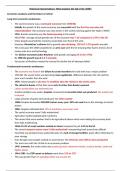
Economic weakness and the failure of reform
Long term economic weaknesses
- The soviet economy was a command economy from 1928-80s
- Initially the growth of the soviet economy was successful with the first five year plan and
industrialisation- this economy was a key factor in the soviets winning against the Nazis in WW2
- 1945- Russian economy was the fastest growing in the world
- Mid 1950s- average annual growth rate of the economy was 7.1% compares to 2.9% in the US
- Many people assumed this economy would take over that of the west
- However, Khrushchev’s reforms led to growth rates declining- 1953-63- 5.3% growth annually
- This is because the USSR competed in an arms race with the US meaning they had to invest a lot of
money into arms and technology
- The decline worsened under Brezhnev with growth averaging 2% in the 1970s
- By 1980 the growth was at 0.6 % annually
- Successors of Brezhnev wanted to reverse the decline but all attempts failed
Fundamental economic weaknesses
- The economy was flawed- the failure to create incentives for hard work was a major problem
- 1945-80- the soviet union was becoming more egalitarian- difference between the rich and the
poor much smaller than the west
- 1970- richest people in US were 7x wealthier than the richest in the soviet union
- The richest in Russia at that time were only 3x richer than Russia’s poorest
- Labour productivity was extremely low
- Another problem was waste- Gosplan measured and recorded what was produced- the quality was
irrelevant
- Large amounts of goods were produced- but often wasted
- 1980s Gosplan demanded 400,000 tractors every year- 20% not used due to the shortage in tractor
drivers
- 1986- Gosplan estimated that 12% of machinery was never used
- The soviet economy wasn’t fully modernised
- Agriculture lacked sophisticated machinery
- This meant that more workers had to do agricultural labour which was holding the economy back
from fully modernising
- 1960s 25.4% of soviet workers worked on farms compared to just 4.6% in the US
- The soviet transport system wasn’t fully modernised- transporting food around was difficult
- Food that was produced was wasted because of a lack of storage facilities- grain often rotted due to
poor storage
- Even though more people worked on soviet farms- the US farms were still 6x more productive
- The arms race with the US led to an economic problem
- 1945- onwards, the soviet union was producing more advanced missiles, nuclear bombs, tanks and
fighter planes
- 1964-1985- the GDP spent on defence went from 12% to 17%
- This was greater than US spending which was around 6%
, - Another problem was the centralisation of the economy- it was controlled by government
administrators
- In farming- gov set timetable for planting and harvesting
- Farmers weren’t allowed to adjust it according to their expertise and take into account weather
- Fertilizers arrived at wrong times- and often the wrong type
- Soviet sugar beet increased by 28% from 1956-1980 but the sugar beet in North Dakota increased
by 191%
Gorbachev and Perestroika
- Economic policy changed radically from 1985-91
- He tried to help the economy within the old system which failed so he abandoned central planning
in order to generate a free market
- The economic and political reforms were called Perestroika
- Perestroika means restructuring
- Richard Sawka argued that perestroika had 3 stages
o Rationalisation- 1985-86- period of uskorenie initial economic reforms- designed to simulate
economic modernisation, and higher production and economic growth
o Reform- 1987- March 1990- introduce market forces into the economy- political reforms to
build support for economic change
o Transformation- March 1990- August 1991- began to abandon the first stages of the system-
command economy- single party rule- party lost control of the process
- His reforms failed to increase economic growth- under Gorbachev the economy stopped growing
and began to shrink
- 1985- the economy was stagnating- he embraced economic reform
Alcohol production
- Continued Andropov’s anti alcohol campaign
- Gorbachev reduced alcohol production at state run factories by 50% in 1985
- 55,000 party members assigned to new task force to stop the illegal production of alcohol
- The policy failed- alcohol consumption was double what it was in 1960 in 1987
- Soviet citizens over the age of 15 were on average consuming 15-16 litres of alcohol every year
- Still 4.5 m registered alcoholics
- The citizens were drinking ‘samogon’ which was illegally manufactured alcohol
- The gov made less money on vodka sales
- Gov vodka rev dropped by 67billion roubles- worsening economic problems
- Campaign abandoned in 1988
Acceleration
- Acceleration= uskorenie
- Economic initiative designed to end the economic stagnation- get the soviet economy moving again
- It was the heart of the twelfth and final five year plan
- Huge increase in investment
- Designed to modernise the soviet economy- make it more efficient
- Gorb predicted that the industrial production would rise by 20% in the next 15 years due to the
investment
- The investment failed- because of global decline in price of oil
Economic weakness and the failure of reform
Long term economic weaknesses
- The soviet economy was a command economy from 1928-80s
- Initially the growth of the soviet economy was successful with the first five year plan and
industrialisation- this economy was a key factor in the soviets winning against the Nazis in WW2
- 1945- Russian economy was the fastest growing in the world
- Mid 1950s- average annual growth rate of the economy was 7.1% compares to 2.9% in the US
- Many people assumed this economy would take over that of the west
- However, Khrushchev’s reforms led to growth rates declining- 1953-63- 5.3% growth annually
- This is because the USSR competed in an arms race with the US meaning they had to invest a lot of
money into arms and technology
- The decline worsened under Brezhnev with growth averaging 2% in the 1970s
- By 1980 the growth was at 0.6 % annually
- Successors of Brezhnev wanted to reverse the decline but all attempts failed
Fundamental economic weaknesses
- The economy was flawed- the failure to create incentives for hard work was a major problem
- 1945-80- the soviet union was becoming more egalitarian- difference between the rich and the
poor much smaller than the west
- 1970- richest people in US were 7x wealthier than the richest in the soviet union
- The richest in Russia at that time were only 3x richer than Russia’s poorest
- Labour productivity was extremely low
- Another problem was waste- Gosplan measured and recorded what was produced- the quality was
irrelevant
- Large amounts of goods were produced- but often wasted
- 1980s Gosplan demanded 400,000 tractors every year- 20% not used due to the shortage in tractor
drivers
- 1986- Gosplan estimated that 12% of machinery was never used
- The soviet economy wasn’t fully modernised
- Agriculture lacked sophisticated machinery
- This meant that more workers had to do agricultural labour which was holding the economy back
from fully modernising
- 1960s 25.4% of soviet workers worked on farms compared to just 4.6% in the US
- The soviet transport system wasn’t fully modernised- transporting food around was difficult
- Food that was produced was wasted because of a lack of storage facilities- grain often rotted due to
poor storage
- Even though more people worked on soviet farms- the US farms were still 6x more productive
- The arms race with the US led to an economic problem
- 1945- onwards, the soviet union was producing more advanced missiles, nuclear bombs, tanks and
fighter planes
- 1964-1985- the GDP spent on defence went from 12% to 17%
- This was greater than US spending which was around 6%
, - Another problem was the centralisation of the economy- it was controlled by government
administrators
- In farming- gov set timetable for planting and harvesting
- Farmers weren’t allowed to adjust it according to their expertise and take into account weather
- Fertilizers arrived at wrong times- and often the wrong type
- Soviet sugar beet increased by 28% from 1956-1980 but the sugar beet in North Dakota increased
by 191%
Gorbachev and Perestroika
- Economic policy changed radically from 1985-91
- He tried to help the economy within the old system which failed so he abandoned central planning
in order to generate a free market
- The economic and political reforms were called Perestroika
- Perestroika means restructuring
- Richard Sawka argued that perestroika had 3 stages
o Rationalisation- 1985-86- period of uskorenie initial economic reforms- designed to simulate
economic modernisation, and higher production and economic growth
o Reform- 1987- March 1990- introduce market forces into the economy- political reforms to
build support for economic change
o Transformation- March 1990- August 1991- began to abandon the first stages of the system-
command economy- single party rule- party lost control of the process
- His reforms failed to increase economic growth- under Gorbachev the economy stopped growing
and began to shrink
- 1985- the economy was stagnating- he embraced economic reform
Alcohol production
- Continued Andropov’s anti alcohol campaign
- Gorbachev reduced alcohol production at state run factories by 50% in 1985
- 55,000 party members assigned to new task force to stop the illegal production of alcohol
- The policy failed- alcohol consumption was double what it was in 1960 in 1987
- Soviet citizens over the age of 15 were on average consuming 15-16 litres of alcohol every year
- Still 4.5 m registered alcoholics
- The citizens were drinking ‘samogon’ which was illegally manufactured alcohol
- The gov made less money on vodka sales
- Gov vodka rev dropped by 67billion roubles- worsening economic problems
- Campaign abandoned in 1988
Acceleration
- Acceleration= uskorenie
- Economic initiative designed to end the economic stagnation- get the soviet economy moving again
- It was the heart of the twelfth and final five year plan
- Huge increase in investment
- Designed to modernise the soviet economy- make it more efficient
- Gorb predicted that the industrial production would rise by 20% in the next 15 years due to the
investment
- The investment failed- because of global decline in price of oil