100% satisfaction guarantee Immediately available after payment Both online and in PDF No strings attached 4.2 TrustPilot
logo-home
Exam (elaborations)

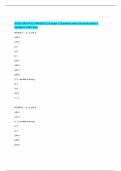
NUR 212|NUR212 Module 2 - Questions and Answers; 100% correct updated 2025/26.

Rating
-
Sold
-
Pages
13
Grade
A+
Uploaded on
26-07-2025
Written in
2024/2025

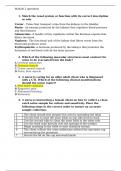
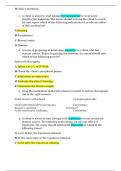
Module 2 questions 1. Match the renal system or function with its correct description or role. Ureter - Tubes that transport urine from the kidneys to the bladder Renin - An enzyme produced by the kidneys that regulates blood pressure and fluid balance Glomerulus -A bundle of tiny capillaries within the Bowman capsule that filters the blood Nephron - The functional unit of the kidney that filters waste from the blood and produces urine Erythropoietin -A hormone produced by the kidneys that promotes the formation of red blood cells by the bone marrow 2. Which of the following muscular structures must contract for urine to be evacuated from the body? A Urethral sphincters B Detrusor muscle C Ureter smooth muscle D Pelvic floor muscle 3. A nurse is caring for an older adult client who is diagnosed with a UTI. Which of the following clinical manifestations should the nurse expect? A New-onset confusion B Epigastric pain C Abdominal bloating D Ketonuria 4. A nurse is instructing a female client on how to collect a clean catch urine sample for culture and sensitivity. Place the following steps in the correct order to ensure an accurate sample collection. 1 The client should first prepare the area by spreading the labia 2 Use the first to wipe the inner folds on one side front to back 3 Use the second wipe to clean the inner folds to the other side 4 Use the third wipe directly over the opening of the urethra 5 Begin urinating in the toilet to start urination stream 6 The client collects the urine midstream without the specimen cup encountering the perineum. 7 Secure the lid on the cup and wash hands.Module 2 questions 5. What should a nurse tell a client when educating them on taking antibiotics for a urinary tract infection? The client should be instructed to complete the entire antibiotic regime even if they are starting to feel better because the bacteria are not yet fully gone and can recur. 6. A nurse is teaching a client who is prescribed trimethoprim/sulfamethoxazole for the treatment of a UTI. Which of the following client statements indicates an understanding? A "I will take this medication with a full glass of water." B "I should expect to have joint pain while taking this medication." C "I will take this medication once each day." D "I will stop taking this medication when I start feeling better." 7. A 92-year-old client who has a history of BPH is reporting urinary incontinence. They state that when they go to the bathroom, they have a hard time getting the urine stream to start. The client also complains that the urine dribbles after toileting. Which of the following types of incontinence is this client most likely exhibiting? A Functional incontinence B Overflow incontinence C Stress incontinence D Urge incontinence 8. A nurse is assessing a client who has chronic urinary retention. Which of the following manifestations should the nurse expect? Select all that apply. A Sudden onset of severe lower abdominal pain B Slow urine stream C A feeling of bladder fullness after voiding D Urine leakage without warning E Painful urinationModule 2 questions 9. A nurse is caring for a client who is unable to urinate after their indwelling urinary catheter was removed earlier in the day. Match the steps the nurse will use to perform a bladder scan with their correct order number. 1 Palpate the symphysis pubis. 2 Place head of scanner on abdomen 3 Point head of scanner toward the bladder 4 Press and release the scan button 5 Observe the screen on the scanner to determine the amount of urine. 10. What are the key nursing interventions for a client experiencing acute urinary retention? Key nursing interventions for a client who has acute urinary retention include assessing for bladder distention, monitoring vital signs, providing pain relief, preparing for catheterization to relieve retention, and educating the client on the importance of reporting manifestations early to prevent complications. 11. A nurse is conducting an initial intake assessment. The nurse begins to suspect the client may have BPH. Which of the following are early manifestations of BPH? Select all that apply. A Constipation B Weak urine stream C Nocturia D Scrotal edema E Urgency 12. A nurse is providing education to a client who has BPH. Which of the following lifestyle modifications should the nurse include in the teaching plan? Select all that apply. A Limit fluid intake in the evening. B Avoid heavy lifting.Module 2 questions C Reduce intake of caffeine. D Decrease consumption of saturated fats. E Perform pelvic floor muscle exercises. 13. Match the following medications with their corresponding role in the management of BPH. Finasteride - Inhibits prostate growth by affecting hormone levels Tamsulosin - Relaxes smooth muscle in the prostate and bladder neck Doxazosin - Dilates arteries and veins to improve urine flow 14. What are the key nursing interventions for a client postTURP to prevent complications? Monitoring for manifestations of bleeding, providing continuous bladder irrigation as prescribed, managing pain, preventing infection, monitoring urinary output, and providing education on activity restrictions and manifestations of complications to report.Module 2 questions Scenario:  Nurses' Notes 0930 The client was admitted with left-sided flank pain reported as a 7 on a scale of 0 to 10 and a burning sensation during urination. Reports feeling feverish and fatigued over the past 2 days. Profuse sweating noted. 1500 Client is restless and agitated. Reports flank pain as 9 on a scale of 0 to 10. Urine yellow, cloudy, with a strong odor.  Vital Signs 0930 Temperature 38.5˚ C (101.3˚ F) Heart rate 92/min Respiratory rate 20/min Blood pressure 130/85 mm Hg 1500  Temperature 39.2˚ C (102.6˚ F) Heart rate 102/min Respiratory rate 22/min Blood pressure 135/90 mm Hg • Laboratory Results 0930 WBC 12,000/mm3 (5,000 to 10,000/mm3) Creatinine 1.1 mg/dL (0.5 to 1.1 mg/dL) Urinalysis: pending 1500 Urinalysis: positive leukocyte esterase (negative) The nurse should first address the client's (pain, skin assessment, energy level), followed by the client’s (temp., urine, restlessness). 15. The nurse is assessing a client with a history of pyelonephritis. The nurse is concerned the client may be developing renal failure based on which of the following symptoms?Module 2 questions Select all that apply. A Hypotension B Edema C Weight gain D Polyuria 16. A nurse is planning care for a client diagnosed with PKD. Which of the following interventions should the nurse include in the plan of care? Select all that apply. A Monitor blood pressure regularly. B Educate on the importance of genetic counseling. C Administer tolvaptan as prescribed. D Encourage a high-protein diet. E Instruct on the importance of fluid restriction. 17. A nurse is teaching a client who has ADPKD and is prescribed tolvaptan. Which of the following instructions should the nurse include? A Restrict fluid intake. B Avoid drinking grapefruit juice. C Increase intake of high-potassium foods. D Expect dark-colored urine. 18. The health care provider just gave a 28-year-old client the diagnosis of polycystic kidney disease. When developing the plan of care, the nurse should focus on which of the following nursing diagnoses? Select all that apply. A Infection related to urinary retention B Impaired skin integrity related to incontinence C Knowledge deficit related to end stage renal disease D Fluid volume excess related to renal failure E Chronic pain related to abdominal distension 19. Match the following types of glomerulonephritis with their correct cause. Berger’s disease- Deposits of IgA in the glomeruli create inflammation; leads to kidney diseaseModule 2 questions Chronic glomerulonephritis - Slow, progressive kidney damage leading to renal failure; can have a genetic link Acute glomerulonephritis - Sudden inflammation of the glomeruli, often post-infectious Wegener’s granulomatosis - Inflammation of the small and medium blood vessels in the kidneys, lungs, and respiratory tract Goodpasture syndrome - An autoimmune disorder in which antibodies attack the kidneys and lungs 20. A 20-year-old client is admitted with dark-colored urine, fever, and pain in the flank area. Which of the following findings in the client’s medical history aligns with a diagnosis of glomerulonephritis? A Family history of acute glomerulonephritis B A history of renal trauma C A history of renal calculi D A history of recent streptococcal infection 21. A nurse is teaching a client who has glomerulonephritis and has been prescribed cyclophosphamide. Which of the following information should the nurse include? A Take aspirin as needed. B Avoid drinking grapefruit juice. C Report joint pain or swelling. D Take the medication at bedtime.Module 2 questions Scenario  Nurses' Notes Day 1, 0800 Client admitted from emergency department. Client reports a history of hypertension and had a sore throat 2 weeks ago that was treated with antibiotics. Periorbital edema noted. Diuretic administered as prescribed. Day 1, 1600 Client's edema has not improved following administration of the diuretic. Reports a headache and fatigue. Cola-colored urine; total output = 150 mL since admission.  Vital Signs Day 1, 0800 Temperature 37˚ C (98.6˚ F) Heart rate 90/min Respiratory rate 18/min Blood pressure 165/88 mm Hg Day 1, 1600 Temperature 37.2˚ C (99˚ F) Heart rate 92/min Respiratory rate 20/min Blood pressure 170/94 mm Hg  Laboratory Results Day 1, 0800  BUN 30 mg/dL (10 to 20 mg/dL) Creatinine 2.8 mg/dL (0.5 to 1.1 mg/dL) eGFR 40 mL/min/1.73 m2 (greater than 60 mL/min/1.73 m2) UrinalysisModule 2 questions RBCs 5 (less than or equal to 2) RBC casts 2 (none) Protein 15 mg/dL (0 to 8 mg/dL) Complete the following sentence by using the list of options. The nurse should first address the client's (blood pressure, urine color, energy level. Periorbital findings), followed by the client's (Urinalysis, BUN level, urine output, GFR). 22. A client presents with complaints of severe flank pain. An x-ray of the kidney, ureters, and bladder (KUB) was completed, and the results show renal calculi present. Which of the following nursing interventions should the nurse anticipate performing? A Encouraging the client to limit fluid intake B Educating the client regarding strict bed rest C Educating the client to strain all urine D Encouraging the client to consume a high-calcium diet 23. The nurse is educating a client who has a history of renal calculi on dietary modifications to prevent recurrence. Which of the following dietary changes should the nurse include? Select all that apply. A Increase fluid intake, especially water. B Consume a diet high in protein and low in carbohydrates. C Limit intake of high-calcium oxalate foods. D Increase intake of sodium. E Restrict high-purine foods. 24. Explain the key nursing considerations when administering nifedipine to a client who has renal calculi. The nurse should monitor the client’s blood pressure and heart rate due to the medication's vasodilatory effects, which can lead to hypotension. The nurse should also assess for persistent headache, shortness of breath, manifestations of peripheral edema, rash, and chest pain, which are all adverse effects of nifedipine. 25. Match the following types of ARF with their corresponding etiology. Pre-renal- Decreased blood flow to the kidneysModule 2 questions Intra-renal- Damage to the kidney’s parenchyma (renal cortex and medulla) Rhabdomyolysis- Myoglobin accumulates in the renal tubules Acute tubular necrosis- Cell death in the renal tubules Post-renal- Obstruction in the urinary tract 26. Acute renal failure affects the client’s overall health and can cause problems with other systems of the body. Which of the following body systems can be affected by renal failure? Select all that apply. A Cardiac B Lungs C Thyroid D Immune E Brain Scenario  Nurses' Notes 0800 Client reports muscle weakness and tenderness after a recent fall. History of diabetes and hypertension. Reports regular use of NSAIDs for back pain. Blood pressure 106/60 mm Hg. Tea-colored urine noted. 1400 Client disoriented to place and time. Dry mucous membranes and skin tenting noted. Blood pressure 78/50 mm Hg. Urine tea-colored; output 15 mL/hr.  Laboratory Results 0800 Serum creatinine 2 mg/dL (0.5 to 1.1 mg/dL) BUN 35 mg/dL (10 to 20 mg/dL) Glucose 180 mg/dL (74 to 106 mg/dL) Potassium 5.8 mEq/L (3.5 to 5 mEq/L) Creatinine kinase 8,000 U/L (20 to 200 U/L)  Medication Administration Record 0800 0.9% sodium chloride IV at 150 mL/hr Insulin glargine 10 units subcutaneous dailyModule 2 questions The nurse should first address the client's ( BUN, level of consciousness, potassium level, creatine kinase levels, urine color), followed by the client’s (NSAID use, urine output, glucose level, blood pressure, muscle characteristics). 27. A nurse is caring for a client who has ARF due to prerenal causes. Which of the following interventions is the nurse’s priority? A Administer furosemide. B Initiate fluid challenge therapy. C Prepare the client for hemodialysis. D Administer sodium polystyrene sulfonate 28. A nurse is reviewing the lab results of a client who has CKD. Which lab result is most indicative of the client progressing to stage 5 CKD? A Serum creatinine 1.8 mg/dL (0.5 to 1.1 mg/dL) B BUN 28 mg/dL (10 to 20 mg/dL) C eGFR 12 mL/min/1.73 m2 (greater than 60 mL/min/1.73 m2) D Urine specific gravity 1.001 (1.005 to 1.030) 29. The provider has ordered a serum BUN level be drawn for a client suspected of having kidney failure. Which of the following information will this diagnostic test provide? A If the kidneys can concentrate urine B Urine osmolarity and electrolyte concentration C The serum level of byproducts of protein metabolism D An inflammatory process by levels of C-reactive proteinModule 2 questions Scenario  Nurses' Notes 0830 The client reports feeling fatigued and short of breath. Bruit and thrill noted at atrioventricular (AV) fistula. Pre-dialysis blood pressure 150/90 mm Hg. Dialysis started. 1230 Client is receiving dialysis and is restless, confused to time and place, reports headache (“5” on scale of 0 to 10) and muscle cramps. The AV fistula site is clean, dressing intact, with no bleeding. Blood pressure is 88/50 mm Hg  Laboratory Results 0830 Potassium 6.2 mEq/L (3.5 to 5 mEq/L) Hemoglobin 9 g/dL (12 to 16 g/dL) Calcium 8.5 mg/dL (9 to 10.5 mg/dL) BUN 40 mg/dL (10 to 20 mg/dL)  Medication Administration Record 0830 Epoetin 4,000 units IV after dialysis Calcium acetate 667 mg PO three times a day with meals Complete the following sentence by using the list of options. During hemodialysis, the nurse should first address the client's (energy level, blood pressure, calcium level), followed by the client's (mental status, HGB, muscle characteristics).Module 2 questions

Show more Read less


Whoops! We can’t load your doc right now. Try again or contact support.

Document information

Uploaded on
July 26, 2025
Number of pages
13
Written in
2024/2025
Type
Exam (elaborations)
Contains
Questions & answers

Subjects

  • nur 212 module 2
  • nur 212 module

Content preview

Module 2 questions


1. Match the renal system or function with its correct description
or role.

Ureter - Tubes that transport urine from the kidneys to the bladder
Renin - An enzyme produced by the kidneys that regulates blood pressure
and fluid balance
Glomerulus -A bundle of tiny capillaries within the Bowman capsule that
filters the blood
Nephron - The functional unit of the kidney that filters waste from the
blood and produces urine
Erythropoietin -A hormone produced by the kidneys that promotes the
formation of red blood cells by the bone marrow

2. Which of the following muscular structures must contract for
urine to be evacuated from the body?
A Urethral sphincters
B Detrusor muscle
C Ureter smooth muscle
D Pelvic floor muscle

3. A nurse is caring for an older adult client who is diagnosed
with a UTI. Which of the following clinical manifestations
should the nurse expect?
A New-onset confusion
B Epigastric pain
C Abdominal bloating
D Ketonuria

4. A nurse is instructing a female client on how to collect a clean
catch urine sample for culture and sensitivity. Place the
following steps in the correct order to ensure an accurate
sample collection.

1 The client should first prepare the area by spreading the labia
2 Use the first to wipe the inner folds on one side front to back
3 Use the second wipe to clean the inner folds to the other side
4 Use the third wipe directly over the opening of the urethra
5 Begin urinating in the toilet to start urination stream
6 The client collects the urine midstream without the specimen cup
encountering the perineum.
7 Secure the lid on the cup and wash hands.

, Module 2 questions


5. What should a nurse tell a client when educating them on
taking antibiotics for a urinary tract infection?

The client should be instructed to complete the entire antibiotic regime
even if they are starting to feel better because the bacteria are not yet fully
gone and can recur.


6. A nurse is teaching a client who is prescribed
trimethoprim/sulfamethoxazole for the treatment of a UTI.
Which of the following client statements indicates an
understanding?

A "I will take this medication with a full glass of water."
B "I should expect to have joint pain while taking this medication."
C "I will take this medication once each day."
D "I will stop taking this medication when I start feeling better."


7. A 92-year-old client who has a history of BPH is
reporting urinary incontinence. They state that when they go to
the bathroom, they have a hard time getting the urine stream
to start. The client also complains that the urine dribbles after
toileting. Which of the following types of incontinence is this
client most likely exhibiting?

A Functional incontinence
B Overflow incontinence
C Stress incontinence
D Urge incontinence


8. A nurse is assessing a client who has chronic urinary retention.
Which of the following manifestations should the nurse expect?

Select all that apply.

A Sudden onset of severe lower abdominal pain
B Slow urine stream
C A feeling of bladder fullness after voiding
D Urine leakage without warning
E Painful urination
$14.89
Get access to the full document:

100% satisfaction guarantee
Immediately available after payment
Both online and in PDF
No strings attached

Get to know the seller
Seller avatar
Empire25

Also available in package deal

Thumbnail
Package deal
NUR 212| NUR212 Module Quizzes, Discussions and Study guides_ Updated 2025.
-
4 2025
$ 65.66 More info

Get to know the seller

Seller avatar
Empire25 Azusa Pacific University
View profile
Follow You need to be logged in order to follow users or courses
Sold
0
Member since
2 year
Number of followers
0
Documents
90
Last sold
-
COLLEGE EDUCATOR

I offer course materials, learning platforms, and resources catered to your subject area.

0.0

0 reviews

5
0
4
0
3
0
2
0
1
0

Recently viewed by you

Why students choose Stuvia

Created by fellow students, verified by reviews

Quality you can trust: written by students who passed their tests and reviewed by others who've used these notes.

Didn't get what you expected? Choose another document

No worries! You can instantly pick a different document that better fits what you're looking for.

Pay as you like, start learning right away

No subscription, no commitments. Pay the way you're used to via credit card and download your PDF document instantly.

Student with book image

“Bought, downloaded, and aced it. It really can be that simple.”

Alisha Student

Frequently asked questions