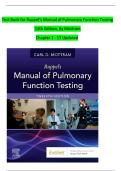
Test Bank for Ruppel’s Manual of Pulmonary Function Testing
h h h h h h h h
12th Edition, By Mottram
h h h h
Chapter 1 - 13 Updated
h h h h h
,Chapter h1: hIndications hfor hPulmonary hFunction hTesting hTest hBank
MULTIPLE hCHOICE
1. Who hfirst hpopularized hspirometry hfor hthe hevaluation hof hpulmonary hfunction?
a. August hand hMarie hKrogh
b. Alvan hBarach
c. John hSeveringhaus
d. John hHutchinson
ANS: hD
Hutchinson hpopularized hthe hconcept hof husing hVC hto hassess hlung hfunction, hand hthe hnames
hhe hgave hto hseveral hother hlung hcompartments hare hstill hused htoday.
DIF: 1 REF: p. h2 OBJ: None h MSC: hNBRC: hNone
2. Which hof hthe hfollowing hare hindications hfor hperforming hspirometry?
1. Assess hthe hrisk hof hlung hresection.
2. Determine hthe hresponse hto hbronchodilator htherapy.
3. Assess hthe hseverity hof hrestrictive hlung hdisease.
4. Quantify hthe hextent hof hCOPD.
a. 1 h and h 4
b. 2 h and h 3
c. 1 h, h2, hand h 4
d. 2 h, h3, hand h 4
ANS: hC
Spirometry hcannot hassess hseverity hof hrestriction; hfor hthat hyou hneed hto hmeasure hlung
hvolumes h( hsee hBox h1-2, hChapter h 1).
DIF: 1 REF: p. h7 OBJ: EL-2 MSC: hNBRC: hNone
,3. The hmain hindication hfor hthe hmeasurement hof hlung hvolumes his hto hdo hwhich hof hthe
hfollowing?
a. Diagnose hor hassess hthe hseverity hof hrestriction.
b. Evaluate hthe hseverity hof hpulmonary hhypertension.
c. Determine hthe hlevel hof hcardiopulmonary hfitness.
d. Assess hthe hrisk hof habdominal hsurgical hprocedures.
ANS: hA
The hmost hcommon hreason hfor hmeasuring hlung hvolumes his hto hidentify hrestrictive hlung
hdisease. hDIF: 1 REF: p. h35 OBJ: EL-2 MSC: hNBRC: hNone
4. DLCO hmeasurements hmay hbe hindicated hto hevaluate hpulmonary hinvolvement hin hwhich
hof hthe hfollowing hsystemic hdiseases?
a. Asthma
b. Sarcoidosis
c. Exertional hhypoxemia
, Stuvia.com h- hThe hMarketplace hto hBuy hand hSell hyour hStudy
hMaterial
d. Guillain-Barré hsyndrome
ANS: hB
Sarcoidosis his hthe honly hsystemic hdisease hlisted hthat haffects hgas
hexchange. hDIF: h1 hREF: hp. h9 h| hp. h19 h| hp. h21 h| hp. h35 hOBJ: hEL-2 hMSC:
hNBRC: hNone
5. Blood hgas hanalysis his hused hwith hpatients hwith hCOPD hto hdo hwhich hof
hthe hfollowing?
a. Monitor hairway hresponsiveness.
b. Determine hlevel hof hcardiopulmonary hfitness.
c. Detect hpulmonary hhypertension.
d. Assess hneed hfor hsupplementary hO2.
ANS: hD
Blood hgas hanalysis his hmost hcommonly hused hto hdetermine hthe hneed hfor hsupplemental
hoxygen hand hto hmanage hpatients hwho hrequire hventilatory hsupport.
DIF: 2 REF: p. h15 OBJ: EL-1
hMSC: hNBRC: hCPFT h2A-2
6. Which hof hthe hfollowing hcause hemphysema?
1. 1- hAntitrypsin hdeficiency
2. Exposure hto henvironmental hpollutants
3. Radiation htherapy
4. Cigarette hsmoking
a. 1 h and h 2
b. 3 h and h 4
c. 1 h, h2, hand h 4
d. 2 h, h3, hand h 4
ANS: hC
Emphysema his hcaused hprimarily hby hcigarette hsmoking. hSome hemphysema his hcaused hby hthe
habsence hof ha hprotective henzyme. hChronic hexposure hto henvironmental hpollutants hcan halso
hcontribute hto hthe hdevelopment hof hemphysema.
DIF: 1 REF: p. h11 OBJ: EL-3 h| hAL-2 MSC: hNBRC: hNone
7. An hadult hpatient hcomplains hof hchest htightness hand hcough hwhenever hhe hjogs hin hcold
hweather. hThese hsymptoms hare hconsistent hwith hwhich hof hthe hfollowing?
a. Cystic hfibrosis
b. Asthma
c. Pulmonary hhypertension
d. Idiopathic hpulmonary hfibrosis
|
h h h h h h h h
12th Edition, By Mottram
h h h h
Chapter 1 - 13 Updated
h h h h h
,Chapter h1: hIndications hfor hPulmonary hFunction hTesting hTest hBank
MULTIPLE hCHOICE
1. Who hfirst hpopularized hspirometry hfor hthe hevaluation hof hpulmonary hfunction?
a. August hand hMarie hKrogh
b. Alvan hBarach
c. John hSeveringhaus
d. John hHutchinson
ANS: hD
Hutchinson hpopularized hthe hconcept hof husing hVC hto hassess hlung hfunction, hand hthe hnames
hhe hgave hto hseveral hother hlung hcompartments hare hstill hused htoday.
DIF: 1 REF: p. h2 OBJ: None h MSC: hNBRC: hNone
2. Which hof hthe hfollowing hare hindications hfor hperforming hspirometry?
1. Assess hthe hrisk hof hlung hresection.
2. Determine hthe hresponse hto hbronchodilator htherapy.
3. Assess hthe hseverity hof hrestrictive hlung hdisease.
4. Quantify hthe hextent hof hCOPD.
a. 1 h and h 4
b. 2 h and h 3
c. 1 h, h2, hand h 4
d. 2 h, h3, hand h 4
ANS: hC
Spirometry hcannot hassess hseverity hof hrestriction; hfor hthat hyou hneed hto hmeasure hlung
hvolumes h( hsee hBox h1-2, hChapter h 1).
DIF: 1 REF: p. h7 OBJ: EL-2 MSC: hNBRC: hNone
,3. The hmain hindication hfor hthe hmeasurement hof hlung hvolumes his hto hdo hwhich hof hthe
hfollowing?
a. Diagnose hor hassess hthe hseverity hof hrestriction.
b. Evaluate hthe hseverity hof hpulmonary hhypertension.
c. Determine hthe hlevel hof hcardiopulmonary hfitness.
d. Assess hthe hrisk hof habdominal hsurgical hprocedures.
ANS: hA
The hmost hcommon hreason hfor hmeasuring hlung hvolumes his hto hidentify hrestrictive hlung
hdisease. hDIF: 1 REF: p. h35 OBJ: EL-2 MSC: hNBRC: hNone
4. DLCO hmeasurements hmay hbe hindicated hto hevaluate hpulmonary hinvolvement hin hwhich
hof hthe hfollowing hsystemic hdiseases?
a. Asthma
b. Sarcoidosis
c. Exertional hhypoxemia
, Stuvia.com h- hThe hMarketplace hto hBuy hand hSell hyour hStudy
hMaterial
d. Guillain-Barré hsyndrome
ANS: hB
Sarcoidosis his hthe honly hsystemic hdisease hlisted hthat haffects hgas
hexchange. hDIF: h1 hREF: hp. h9 h| hp. h19 h| hp. h21 h| hp. h35 hOBJ: hEL-2 hMSC:
hNBRC: hNone
5. Blood hgas hanalysis his hused hwith hpatients hwith hCOPD hto hdo hwhich hof
hthe hfollowing?
a. Monitor hairway hresponsiveness.
b. Determine hlevel hof hcardiopulmonary hfitness.
c. Detect hpulmonary hhypertension.
d. Assess hneed hfor hsupplementary hO2.
ANS: hD
Blood hgas hanalysis his hmost hcommonly hused hto hdetermine hthe hneed hfor hsupplemental
hoxygen hand hto hmanage hpatients hwho hrequire hventilatory hsupport.
DIF: 2 REF: p. h15 OBJ: EL-1
hMSC: hNBRC: hCPFT h2A-2
6. Which hof hthe hfollowing hcause hemphysema?
1. 1- hAntitrypsin hdeficiency
2. Exposure hto henvironmental hpollutants
3. Radiation htherapy
4. Cigarette hsmoking
a. 1 h and h 2
b. 3 h and h 4
c. 1 h, h2, hand h 4
d. 2 h, h3, hand h 4
ANS: hC
Emphysema his hcaused hprimarily hby hcigarette hsmoking. hSome hemphysema his hcaused hby hthe
habsence hof ha hprotective henzyme. hChronic hexposure hto henvironmental hpollutants hcan halso
hcontribute hto hthe hdevelopment hof hemphysema.
DIF: 1 REF: p. h11 OBJ: EL-3 h| hAL-2 MSC: hNBRC: hNone
7. An hadult hpatient hcomplains hof hchest htightness hand hcough hwhenever hhe hjogs hin hcold
hweather. hThese hsymptoms hare hconsistent hwith hwhich hof hthe hfollowing?
a. Cystic hfibrosis
b. Asthma
c. Pulmonary hhypertension
d. Idiopathic hpulmonary hfibrosis
|