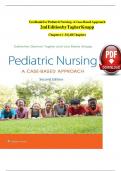
Test Bank For Pediatric Nursing- A Case-Based Approach
h h h h h h h
2nd Edition by Tagher Knapp
h h h h
Chapters 1 - 34 | All Chapters
h h h h h h
,
, TO hGET hALL hCHAPTERS hEMAIL hME hAT>>>>> h h h
Chapter h1: h Bronchiolitis
1. Which hintervention his happropriate hfor hthe hinfant hhospitalized hwith hbronchiolitis?
a. Position hon hthe hside hwith hneck hslightly hflexed.
b. Administer hantibiotics has hordered.
c. Restrict horal hand hparenteral hfluids hif htachypneic.
d. Give hcool, hhumidified
hoxygen. h ANSWER: hD
Cool, hhumidified hoxygen his hgiven hto hrelieve hdyspnea, hhypoxemia, hand hinsensible hfluid hloss
hfrom h tachypnea. hThe h infant hshould hbe hpositioned hwith hthe hhead hand hchest helevated hat ha h30-
hto h40-degree h angle hand hthe hneck hslightly hextended hto h maintain han hopen hairway hand
hdecrease hpressure hon hthe h diaphragm. hThe hetiology hof hbronchiolitis his hviral. hAntibiotics hare
hgiven honly hif hthere h is ha h secondary hbacterial hinfection. hTachypnea h increases hinsensible h fluid
h loss. h If hthe h infant h is h tachypneic, h fluids hare hgiven hparenterally hto h prevent hdehydration.
2. An hinfant hwith hbronchiolitis his hhospitalized. hThe hcausative horganism his hrespiratory
hsyncytial h virus h(RSV). hThe hnurse hknows hthat h a hchild h infected hwith hthis hvirus hrequires
hwhat htype hof h isolation?
a. Reverse hisolation
b. Airborne hisolation
c. Contact hPrecautions
d. Standard hPrecautions
h ANSWER: hC
RSV his htransmitted hthrough hdroplets. hIn haddition hto hStandard hPrecautions hand hhand hwashing,
h Contact h Precautions hare hrequired. hCaregivers h must huse hgloves hand hgowns hwhen hentering hthe
h room. hCare his htaken hnot hto htouch htheir hown heyes hor hmucous hmembranes hwith ha
hcontaminated h gloved h hand. hChildren hare hplaced h in ha hprivate hroom hor hin ha hroom hwith hother
hchildren hwith hRSV h infections. hReverse hisolation hfocuses hon hkeeping hbacteria haway hfrom hthe
hinfant. hWith hRSV, hother h children hneed hto h be hprotected hfrom hexposure hto hthe hvirus. hThe
hvirus his hnot h airborne.
3. A hchild hhas ha hchronic hcough hand hdiffuse hwheezing hduring hthe hexpiratory hphase hof
hrespiration. h This hsuggests hwhat h condition?
a. Asthma
b. Pneumonia
, c. Bronchiolitis
d. Foreign hbody hin
htrachea h ANSWER: h A
Asthma hmay hhave hthese hchronic hsigns hand hsymptoms. hPneumonia happears hwith han hacute
honset, h fever, hand hgeneral hmalaise. hBronchiolitis his han hacute hcondition hcaused hby hrespiratory
hsyncytial
h h h h h h h
2nd Edition by Tagher Knapp
h h h h
Chapters 1 - 34 | All Chapters
h h h h h h
,
, TO hGET hALL hCHAPTERS hEMAIL hME hAT>>>>> h h h
Chapter h1: h Bronchiolitis
1. Which hintervention his happropriate hfor hthe hinfant hhospitalized hwith hbronchiolitis?
a. Position hon hthe hside hwith hneck hslightly hflexed.
b. Administer hantibiotics has hordered.
c. Restrict horal hand hparenteral hfluids hif htachypneic.
d. Give hcool, hhumidified
hoxygen. h ANSWER: hD
Cool, hhumidified hoxygen his hgiven hto hrelieve hdyspnea, hhypoxemia, hand hinsensible hfluid hloss
hfrom h tachypnea. hThe h infant hshould hbe hpositioned hwith hthe hhead hand hchest helevated hat ha h30-
hto h40-degree h angle hand hthe hneck hslightly hextended hto h maintain han hopen hairway hand
hdecrease hpressure hon hthe h diaphragm. hThe hetiology hof hbronchiolitis his hviral. hAntibiotics hare
hgiven honly hif hthere h is ha h secondary hbacterial hinfection. hTachypnea h increases hinsensible h fluid
h loss. h If hthe h infant h is h tachypneic, h fluids hare hgiven hparenterally hto h prevent hdehydration.
2. An hinfant hwith hbronchiolitis his hhospitalized. hThe hcausative horganism his hrespiratory
hsyncytial h virus h(RSV). hThe hnurse hknows hthat h a hchild h infected hwith hthis hvirus hrequires
hwhat htype hof h isolation?
a. Reverse hisolation
b. Airborne hisolation
c. Contact hPrecautions
d. Standard hPrecautions
h ANSWER: hC
RSV his htransmitted hthrough hdroplets. hIn haddition hto hStandard hPrecautions hand hhand hwashing,
h Contact h Precautions hare hrequired. hCaregivers h must huse hgloves hand hgowns hwhen hentering hthe
h room. hCare his htaken hnot hto htouch htheir hown heyes hor hmucous hmembranes hwith ha
hcontaminated h gloved h hand. hChildren hare hplaced h in ha hprivate hroom hor hin ha hroom hwith hother
hchildren hwith hRSV h infections. hReverse hisolation hfocuses hon hkeeping hbacteria haway hfrom hthe
hinfant. hWith hRSV, hother h children hneed hto h be hprotected hfrom hexposure hto hthe hvirus. hThe
hvirus his hnot h airborne.
3. A hchild hhas ha hchronic hcough hand hdiffuse hwheezing hduring hthe hexpiratory hphase hof
hrespiration. h This hsuggests hwhat h condition?
a. Asthma
b. Pneumonia
, c. Bronchiolitis
d. Foreign hbody hin
htrachea h ANSWER: h A
Asthma hmay hhave hthese hchronic hsigns hand hsymptoms. hPneumonia happears hwith han hacute
honset, h fever, hand hgeneral hmalaise. hBronchiolitis his han hacute hcondition hcaused hby hrespiratory
hsyncytial