Benzodiazepines: A Comprehensive Overview
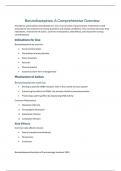
Anxiolytics, particularly benzodiazepines, are a crucial class of psychotropic medications used
primarily for the treatment of anxiety disorders and related conditions. This overview will cover their
indications, mechanism of action, common medications, side effects, and important nursing
considerations.
Indications for Use
Benzodiazepines are used for:
• Acute anxiety states
• Generalized anxiety disorder.
• Panic disorders
• Seizures
• Muscle spasms
• Insomnia (short-term management)
Mechanism of Action
Benzodiazepines work by:
• Binding to specific GABA receptor sites in the central nervous system
• Enhancing the effects of GABA, the primary inhibitory neurotransmitter
• Producing a calming effect by depressing CNS activity
Common Medications
1. Diazepam (Valium)
2. Clonazepam (Klonopin)
3. Alprazolam (Xanax)
4. Lorazepam (Ativan)
Side Effects
Common side effects include:
• Ataxia (impaired coordination)
• Drowsiness
• Confusion
Benzodiazepine/Anxiolytics Pharmacology Handout 2025
Anxiolytics, particularly benzodiazepines, are a crucial class of psychotropic medications used
primarily for the treatment of anxiety disorders and related conditions. This overview will cover their
indications, mechanism of action, common medications, side effects, and important nursing
considerations.
Indications for Use
Benzodiazepines are used for:
• Acute anxiety states
• Generalized anxiety disorder.
• Panic disorders
• Seizures
• Muscle spasms
• Insomnia (short-term management)
Mechanism of Action
Benzodiazepines work by:
• Binding to specific GABA receptor sites in the central nervous system
• Enhancing the effects of GABA, the primary inhibitory neurotransmitter
• Producing a calming effect by depressing CNS activity
Common Medications
1. Diazepam (Valium)
2. Clonazepam (Klonopin)
3. Alprazolam (Xanax)
4. Lorazepam (Ativan)
Side Effects
Common side effects include:
• Ataxia (impaired coordination)
• Drowsiness
• Confusion
Benzodiazepine/Anxiolytics Pharmacology Handout 2025