Science Medicine Nutrition
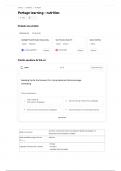
Portage learning - nutrition
Save
Students also studied
Flashcard sets Study guides
EatRight Prep RD Exam Study Cards... CLC Practice Exam #5 Davis Nutrition
Teacher 1,985 terms Teacher 50 terms 15 terms
erinalpaugh86857 Preview njeriemily39 Preview Preview
Practice questions for this set
Learn 1 /7 Study with Learn
breaking the tie that connect 2 or more behaviors that encourage
overeating
Choose matching term
Chain breaking
1 2 Self monitoring (intervention strategies)
(intervention strategies)
3 Stimulus control (intervention strategies) 4 Food manufacturer claims (health claims)
Don't know?
Nutrition is the science that links foods to health and disease, it's
What is nutrition?
important from conception to death
food provides energy in terms calories
of _______
- energy
3 general functions for nutrients - structure
- regulate body processes
, Internal drive to eat, often Hunger
experienced as a negative
sensation (churning, growling, or
painful sensation in the stomach)
External drive to eat, often appetite
experienced as a pleasant
sensation associated w/ food,
can lead to eating even if you're
not hungry
part of the brain that plays a role hypothalamus
in hunger and feeling full
decreased of nutrients in the the feeding center which signals us to eat
blood stimulates:
increase of nutrients in the the satiety center which reduces our desire to eat
blood stimulates:
- mouth
- esophagus
- stomach
GI tract consists of - small intestine
- large intestine
- rectum
- anus
compounds secreted into the bloodstream by one type of cell
Hormones
that acts to control the function of another cell
hormones that increase hunger ghrelin, endorphins, neuropeptide-Y
(stimulatory effect)
hormones that decrease hunger leptin, serotonin, cholecystokinin (CCK)
(inhibition effect)
produced in adipose cells (fat cells)
turns off hunger center, turns on satiety center
Leptin
(where produced and what it fat cells say full and stop eating
does)
when leptin remains elevated for long periods of time, satiety
center can become insensitive to leptin
Produced in stomach
Ghrelin
stimulated hunger center, deactivates satiety center
(where produced and what it
does)
stomach growls and says hungry and start eating
external forces that influence - sensory
our eating habits and patterns - cognitive
(appetite - psychological - environmental
influences) - health status
Sensory - flavor, texture, and appearance
(external forces that influence - taste (sweet sour, bitter, salty, umami), smell, texture, color,
our eating habits and patterns) moisture, temperature
Portage learning - nutrition
Save
Students also studied
Flashcard sets Study guides
EatRight Prep RD Exam Study Cards... CLC Practice Exam #5 Davis Nutrition
Teacher 1,985 terms Teacher 50 terms 15 terms
erinalpaugh86857 Preview njeriemily39 Preview Preview
Practice questions for this set
Learn 1 /7 Study with Learn
breaking the tie that connect 2 or more behaviors that encourage
overeating
Choose matching term
Chain breaking
1 2 Self monitoring (intervention strategies)
(intervention strategies)
3 Stimulus control (intervention strategies) 4 Food manufacturer claims (health claims)
Don't know?
Nutrition is the science that links foods to health and disease, it's
What is nutrition?
important from conception to death
food provides energy in terms calories
of _______
- energy
3 general functions for nutrients - structure
- regulate body processes
, Internal drive to eat, often Hunger
experienced as a negative
sensation (churning, growling, or
painful sensation in the stomach)
External drive to eat, often appetite
experienced as a pleasant
sensation associated w/ food,
can lead to eating even if you're
not hungry
part of the brain that plays a role hypothalamus
in hunger and feeling full
decreased of nutrients in the the feeding center which signals us to eat
blood stimulates:
increase of nutrients in the the satiety center which reduces our desire to eat
blood stimulates:
- mouth
- esophagus
- stomach
GI tract consists of - small intestine
- large intestine
- rectum
- anus
compounds secreted into the bloodstream by one type of cell
Hormones
that acts to control the function of another cell
hormones that increase hunger ghrelin, endorphins, neuropeptide-Y
(stimulatory effect)
hormones that decrease hunger leptin, serotonin, cholecystokinin (CCK)
(inhibition effect)
produced in adipose cells (fat cells)
turns off hunger center, turns on satiety center
Leptin
(where produced and what it fat cells say full and stop eating
does)
when leptin remains elevated for long periods of time, satiety
center can become insensitive to leptin
Produced in stomach
Ghrelin
stimulated hunger center, deactivates satiety center
(where produced and what it
does)
stomach growls and says hungry and start eating
external forces that influence - sensory
our eating habits and patterns - cognitive
(appetite - psychological - environmental
influences) - health status
Sensory - flavor, texture, and appearance
(external forces that influence - taste (sweet sour, bitter, salty, umami), smell, texture, color,
our eating habits and patterns) moisture, temperature