1
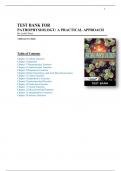
TEST BANK FOR
PATHOPHYSIOLOGY: A PRACTICAL APPROACH
By Lachel Story
Additional Test Bank
Table of Contents
Chapter 1 Cellular Function
Chapter 2 Immunity
Chapter 3 Hematopoietic Function
Chapter 4 Cardiovascular Function
Chapter 5 Respiratory Function
Chapter 6 Fluid, Electrolyte, and Acid-Base Homeostasis
Chapter 7 Urinary Function
Chapter 8 Reproductive Function
Chapter 9 Gastrointestinal Function
Chapter 10 Endocrine Function
Chapter 11 Neural Function
Chapter 12 Musculoskeletal Function
Chapter 13 Integumentary Function
Chapter 14 Sensory Function
, 2
CHAPTER 1
QUESTIONS
1. The movement of water or another solvent across the cellular membrane from
an area of low solute concentration to an area of high solute concentration is referred to
as
A. meiosis.
B. osmosis.
C. lysis.
D. mitosis.
2. Cells become specialized in their structure and function through
A. proliferation.
B. atrophy.
C. differentiation.
D. pinocytosis.
3. Eradicating the disease is the goal of
A. palliative treatment.
B. all cancer treatment.
C. prophylactic treatment.
D. curative treatment.
4. The fetus is most vulnerable to environmental influences during which period of
gestation?
A. 10 to 15 days
B. The first 30 days
C. 15 to 60 days
D. The first trimester
5. Which form of cellular adaptation occurs because of decreased work demands
on the cell?
A. Hypertrophy
B. Hyperplasia
C. Atrophy
D. Metaplasia
6. What are the sex chromosomes that a female has?
A. Paired X chromosomes
B. Autosomes
C. One X and one Y chromosome
D. Two Y chromosomes
, 3
7. Which disorders are passed from an affected parent to an offspring regardless of
sex?
A. Sex-linked disorders
B. Fragile X syndrome
C. Autosomal dominant disorders
D. All of the above
8. Gangrene is a form of
A. caseous necrosis.
B. liquefaction necrosis.
C. coagulative necrosis.
D. fat necrosis.
9. The genetic information for a cell is contained in the
A. nucleus.
B. organelles.
C. lipid bilayer.
D. cytoplasm.
10. The disease state of a neoplasm is
A. apoptosis.
B. atrophy.
C. exocytosis.
D. cancer.
11. A possible teratogen is a(n)
A. lipid bilayer.
B. allele.
C. infection.
D. chromosome.
12. How many chromosomes do we have?
A. 23
B. 46
C. Several thousand
D. About 3 billion
13. Selective permeability allows free passage in and out of cells to
A. enzymes.
B. glucose.
C. electrolytes.
D. all of the above.
14. Which type of cellular adaptation is undergone by the muscles of an extremity
that has been in a cast for a long period of time?
A. Hypertrophy
, 4
B. Metaplasia
C. Dysplasia
D. Hyperplasia
15. Which tumors are usually undifferentiated?
A. Malignant tumors
B. All tumors are undifferentiated.
C. Benign tumors
D. Tumors with less anaplastic cells
16. One cause of cell death is
A. ischemia.
B. apoptosis.
C. necrosis.
D. all of the above.
17. Variations of a gene are known as
A. alleles.
B. autosomes.
C. a karotype.
D. DNA.
18. A form of cell division that occurs only in mature sperm and ova is
A. mitosis.
B. prophase.
C. oncogene.
D. meiosis.
19. Which of the following diseases affects only females?
A. Monosomy X (Turner’s syndrome)
B. Trisomy 21 (Down syndrome)
C. Polysomy X (Klinefelter’s syndrome)
D. Tay-Sachs disease
20. A cancer patient’s likelihood for surviving a cancer is referred to as his or her
A. remission.
B. prognosis.
C. carcinogenesis.
D. grading.
21. Metaplasia refers to which of the following?
A. An increase in the number of cells in an organ or tissue.
B. Cell mutation into cells of a different size, shape, and appearance.
C. An increase in the size of cells in an attempt to meet increased demand.
D. The process of one adult cell being replaced by another cell type
TEST BANK FOR
PATHOPHYSIOLOGY: A PRACTICAL APPROACH
By Lachel Story
Additional Test Bank
Table of Contents
Chapter 1 Cellular Function
Chapter 2 Immunity
Chapter 3 Hematopoietic Function
Chapter 4 Cardiovascular Function
Chapter 5 Respiratory Function
Chapter 6 Fluid, Electrolyte, and Acid-Base Homeostasis
Chapter 7 Urinary Function
Chapter 8 Reproductive Function
Chapter 9 Gastrointestinal Function
Chapter 10 Endocrine Function
Chapter 11 Neural Function
Chapter 12 Musculoskeletal Function
Chapter 13 Integumentary Function
Chapter 14 Sensory Function
, 2
CHAPTER 1
QUESTIONS
1. The movement of water or another solvent across the cellular membrane from
an area of low solute concentration to an area of high solute concentration is referred to
as
A. meiosis.
B. osmosis.
C. lysis.
D. mitosis.
2. Cells become specialized in their structure and function through
A. proliferation.
B. atrophy.
C. differentiation.
D. pinocytosis.
3. Eradicating the disease is the goal of
A. palliative treatment.
B. all cancer treatment.
C. prophylactic treatment.
D. curative treatment.
4. The fetus is most vulnerable to environmental influences during which period of
gestation?
A. 10 to 15 days
B. The first 30 days
C. 15 to 60 days
D. The first trimester
5. Which form of cellular adaptation occurs because of decreased work demands
on the cell?
A. Hypertrophy
B. Hyperplasia
C. Atrophy
D. Metaplasia
6. What are the sex chromosomes that a female has?
A. Paired X chromosomes
B. Autosomes
C. One X and one Y chromosome
D. Two Y chromosomes
, 3
7. Which disorders are passed from an affected parent to an offspring regardless of
sex?
A. Sex-linked disorders
B. Fragile X syndrome
C. Autosomal dominant disorders
D. All of the above
8. Gangrene is a form of
A. caseous necrosis.
B. liquefaction necrosis.
C. coagulative necrosis.
D. fat necrosis.
9. The genetic information for a cell is contained in the
A. nucleus.
B. organelles.
C. lipid bilayer.
D. cytoplasm.
10. The disease state of a neoplasm is
A. apoptosis.
B. atrophy.
C. exocytosis.
D. cancer.
11. A possible teratogen is a(n)
A. lipid bilayer.
B. allele.
C. infection.
D. chromosome.
12. How many chromosomes do we have?
A. 23
B. 46
C. Several thousand
D. About 3 billion
13. Selective permeability allows free passage in and out of cells to
A. enzymes.
B. glucose.
C. electrolytes.
D. all of the above.
14. Which type of cellular adaptation is undergone by the muscles of an extremity
that has been in a cast for a long period of time?
A. Hypertrophy
, 4
B. Metaplasia
C. Dysplasia
D. Hyperplasia
15. Which tumors are usually undifferentiated?
A. Malignant tumors
B. All tumors are undifferentiated.
C. Benign tumors
D. Tumors with less anaplastic cells
16. One cause of cell death is
A. ischemia.
B. apoptosis.
C. necrosis.
D. all of the above.
17. Variations of a gene are known as
A. alleles.
B. autosomes.
C. a karotype.
D. DNA.
18. A form of cell division that occurs only in mature sperm and ova is
A. mitosis.
B. prophase.
C. oncogene.
D. meiosis.
19. Which of the following diseases affects only females?
A. Monosomy X (Turner’s syndrome)
B. Trisomy 21 (Down syndrome)
C. Polysomy X (Klinefelter’s syndrome)
D. Tay-Sachs disease
20. A cancer patient’s likelihood for surviving a cancer is referred to as his or her
A. remission.
B. prognosis.
C. carcinogenesis.
D. grading.
21. Metaplasia refers to which of the following?
A. An increase in the number of cells in an organ or tissue.
B. Cell mutation into cells of a different size, shape, and appearance.
C. An increase in the size of cells in an attempt to meet increased demand.
D. The process of one adult cell being replaced by another cell type