Cold War
Background
Defintion:
Cold War: originates from the title of a book by the political theorist Walter Lippmann. Refers to a
state of hostility between two nations without actually fighting. In the case of the United States of
America and Russia, it involved diplomatic manoeuvring, economic pressure, intimidation,
propaganda, espionage and assassination. This period led to the biggest arms race and brought along
the threat of a nuclear war.
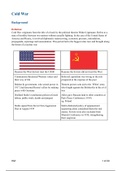
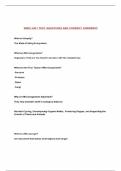
Reasons the West did not trust the USSR Reasons the Soviets did not trust the West
Communism threatened Western values and Believed capitalism was wrong as the rich
their way of life prospered at the expense of the poor
Bolshevik government, who seized power in Western powers sent aid to the ‘White’ army
1917, had deserted Russia’s allies by making who fought against the Bolsheviks in the civil
peace with Germany war
Disliked Stalin’s totalitarian policies (forced Allies gave Russian land to other countries at
labour, public trials, deaths and purges) Paris Peace Conference (1919)
eg. Poland
Stalin signed Nazi-Soviet Non-Aggression Stalin distrusted policy of appeasement
Pact in August 1939 suspecting allies considered them the real
enemy. Soviets were also excluded from
Munich Conference in 1938, strengthening
their suspicion
HM 1 of 20
,Why did a cold war develop?
Understanding the Tension:
- The USA, Britain and the Soviet Union set aside their differences when the Nazi’s invaded the
Soviet Union. Subsequently they formed the Grand Alliance in order to defeat Hitler and Nazi
Germany — also known as the marriage of convenience
- Tensions were still there, just behind closed doors
- Stalin’s suspicions of the West grew due to the following:
• From 1941 the Soviet Union carried the main burden of fighting, claiming more deaths
• The USA took two years to open a second front to invade Normandy, France in 1944
• Stalin viewed the delay as an attempt to weaken the USSR
• USA ended Lend-Lease programmes which supplied the USSR with essential goods
• The Americans had built the atomic bomb but only informed Stalin of its existence when
they felt it was necessary to use against the Japanese, after they had defeated the Nazi’s.
Stalin already knew of its existence and grew suspicious over the secrecy of the bomb
War Time Conferences
Teheran Conference (November 1943):
- ‘Big Three’ agreed that there would be no Anglo-American invasion of Germany through the
Balkans. Subsequently leaving it to the Soviet troops and the Balkan nations to clear Eastern
Europe of Nazi forces.
- This recognised Soviet’s supremacy in Eastern Europe
• Limited West’s participation in the post-war affairs in area
• Stalin believed that he could control Eastern Europe due to the agreements he negotiated
with Churchill
• Led him to the belied that the West would accept Soviet control in this area
- Ultimately caused further mistrust between the West and the USSR
Yalta Conference (February 1945):
- Divided Germany into four zones of
occupation, which had no uniform system of
government in the various zones
• Berlin would also be divided
- Established the United Nations (UN)
- USSR agreed to join the UN as well as the
war against Japan, after the war
- Stalin wanted to create a buffer against
future German aggression due to the
significant losses they suffered
- ‘Big Three’ agreed that Eastern Europe
would be a ‘Soviet sphere of influence’ but
that their previously occupied territories
would hold fair elections
- Stalin wanted a high reparation payment to
be made by the Germans, which the Western allies thought was too large
- Stalin demanded that the Soviet Union border include Poland, this was disagreed upon
HM 2 of 20
, Potsdam Conference (July - August 1945):
- Formal division of Germany and Berlin
- Highlighted the different ideologies between the West and the Soviet Union
- Relationships were more strained
- Truman had replaced Roosevelt as US president
- Attlee had replaced Churchill as the new British leader
- Agreed to the following:
• Each power was to collect reparations from their zone of occupation
• Germans living in Czechoslovakia, Poland and Hungary were to return to Germany
• Poland’s western border was to be along Oder and Neisse rivers
- Did not agree to the following:
• Stalin wanted Germany to be crippled through their various structures. However, Truman
did not want a repeat of the Treaty of Versailles
• Reparations: Stalin wanted to exploit Germany whereas Truman did not want their
economy to collapse like it did at the end of World War One
Creation of the Spheres of Interest
Territorial gains in Eastern Europe:
- After saving much of Europe from Nazi oppression, the Red Army remained in occupation and
communist governments, controlled by Moscow, were established in Poland, Hungary,
Czechoslovakia, Yugoslavia, Albania, Bulgaria and East Germany.
- Became known as satellite states: dependent economically and politically on Soviet Union
Reasons for expanding sphere of influence:
- USSR felt threatened by the West; this feeling was intensified at the knowledge of the USA’s
atomic bomb:
• Used these countries as a defensive barrier
- The war had weakened the Russian economy which was why Stalin was adamant about the
reparation payments from Germany
- Germany became a front line in their defensive system
- Western allies considered their defensive moves as a desire for expansion. The way in which the
communists conducted themselves served as evidence as to why this could stand true
• Coalition governments were established in liberated countries
• Russian dominance was then asserted and communists took full control of key posts
• Non-communists were persecuted and then eliminated
Summary:
- He wanted a buffer between the Soviet Union and Germany, to prevent another invasion
- Wanted to develop the Soviet Economy through expansion
• Source of cheap goods and raw materials
• Forced to trade with Soviet Union
- Hostility from the West forced Stalin to implement his harsh regime of eliminating coalition
governments in these countries
HM 3 of 20
Background
Defintion:
Cold War: originates from the title of a book by the political theorist Walter Lippmann. Refers to a
state of hostility between two nations without actually fighting. In the case of the United States of
America and Russia, it involved diplomatic manoeuvring, economic pressure, intimidation,
propaganda, espionage and assassination. This period led to the biggest arms race and brought along
the threat of a nuclear war.
Reasons the West did not trust the USSR Reasons the Soviets did not trust the West
Communism threatened Western values and Believed capitalism was wrong as the rich
their way of life prospered at the expense of the poor
Bolshevik government, who seized power in Western powers sent aid to the ‘White’ army
1917, had deserted Russia’s allies by making who fought against the Bolsheviks in the civil
peace with Germany war
Disliked Stalin’s totalitarian policies (forced Allies gave Russian land to other countries at
labour, public trials, deaths and purges) Paris Peace Conference (1919)
eg. Poland
Stalin signed Nazi-Soviet Non-Aggression Stalin distrusted policy of appeasement
Pact in August 1939 suspecting allies considered them the real
enemy. Soviets were also excluded from
Munich Conference in 1938, strengthening
their suspicion
HM 1 of 20
,Why did a cold war develop?
Understanding the Tension:
- The USA, Britain and the Soviet Union set aside their differences when the Nazi’s invaded the
Soviet Union. Subsequently they formed the Grand Alliance in order to defeat Hitler and Nazi
Germany — also known as the marriage of convenience
- Tensions were still there, just behind closed doors
- Stalin’s suspicions of the West grew due to the following:
• From 1941 the Soviet Union carried the main burden of fighting, claiming more deaths
• The USA took two years to open a second front to invade Normandy, France in 1944
• Stalin viewed the delay as an attempt to weaken the USSR
• USA ended Lend-Lease programmes which supplied the USSR with essential goods
• The Americans had built the atomic bomb but only informed Stalin of its existence when
they felt it was necessary to use against the Japanese, after they had defeated the Nazi’s.
Stalin already knew of its existence and grew suspicious over the secrecy of the bomb
War Time Conferences
Teheran Conference (November 1943):
- ‘Big Three’ agreed that there would be no Anglo-American invasion of Germany through the
Balkans. Subsequently leaving it to the Soviet troops and the Balkan nations to clear Eastern
Europe of Nazi forces.
- This recognised Soviet’s supremacy in Eastern Europe
• Limited West’s participation in the post-war affairs in area
• Stalin believed that he could control Eastern Europe due to the agreements he negotiated
with Churchill
• Led him to the belied that the West would accept Soviet control in this area
- Ultimately caused further mistrust between the West and the USSR
Yalta Conference (February 1945):
- Divided Germany into four zones of
occupation, which had no uniform system of
government in the various zones
• Berlin would also be divided
- Established the United Nations (UN)
- USSR agreed to join the UN as well as the
war against Japan, after the war
- Stalin wanted to create a buffer against
future German aggression due to the
significant losses they suffered
- ‘Big Three’ agreed that Eastern Europe
would be a ‘Soviet sphere of influence’ but
that their previously occupied territories
would hold fair elections
- Stalin wanted a high reparation payment to
be made by the Germans, which the Western allies thought was too large
- Stalin demanded that the Soviet Union border include Poland, this was disagreed upon
HM 2 of 20
, Potsdam Conference (July - August 1945):
- Formal division of Germany and Berlin
- Highlighted the different ideologies between the West and the Soviet Union
- Relationships were more strained
- Truman had replaced Roosevelt as US president
- Attlee had replaced Churchill as the new British leader
- Agreed to the following:
• Each power was to collect reparations from their zone of occupation
• Germans living in Czechoslovakia, Poland and Hungary were to return to Germany
• Poland’s western border was to be along Oder and Neisse rivers
- Did not agree to the following:
• Stalin wanted Germany to be crippled through their various structures. However, Truman
did not want a repeat of the Treaty of Versailles
• Reparations: Stalin wanted to exploit Germany whereas Truman did not want their
economy to collapse like it did at the end of World War One
Creation of the Spheres of Interest
Territorial gains in Eastern Europe:
- After saving much of Europe from Nazi oppression, the Red Army remained in occupation and
communist governments, controlled by Moscow, were established in Poland, Hungary,
Czechoslovakia, Yugoslavia, Albania, Bulgaria and East Germany.
- Became known as satellite states: dependent economically and politically on Soviet Union
Reasons for expanding sphere of influence:
- USSR felt threatened by the West; this feeling was intensified at the knowledge of the USA’s
atomic bomb:
• Used these countries as a defensive barrier
- The war had weakened the Russian economy which was why Stalin was adamant about the
reparation payments from Germany
- Germany became a front line in their defensive system
- Western allies considered their defensive moves as a desire for expansion. The way in which the
communists conducted themselves served as evidence as to why this could stand true
• Coalition governments were established in liberated countries
• Russian dominance was then asserted and communists took full control of key posts
• Non-communists were persecuted and then eliminated
Summary:
- He wanted a buffer between the Soviet Union and Germany, to prevent another invasion
- Wanted to develop the Soviet Economy through expansion
• Source of cheap goods and raw materials
• Forced to trade with Soviet Union
- Hostility from the West forced Stalin to implement his harsh regime of eliminating coalition
governments in these countries
HM 3 of 20