

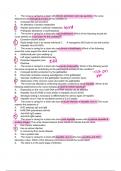
1. The nurse is caring for a client with chronic alcoholism who has jaundice. The nurse
determines the etiological process of this condition is
A. Increased bile salt excretion
B. An alteration of protein metabolism
O
C. Hepatic dysfunction in bilirubin metabolism bleed
D. Prehepatic alterations in erythropoiesis
2. The nurse is caring for a client who has cholelithiasis. Which of the following should the
nurse identify as a risk factor for this condition?
A. Excessive alcohol abuse
0
B. Rapid weight loss in an obese individual C. A nasogastric (NG) tube to low wall suction
D. Hepatitis virus B (HVB)
3. The nurse is caring for a client who has chronic cholelithiasis. Which of the following
would the nurse expect the client to report?
A. Abdominal pain upon waking up
B. Left upper quadrant abdominal pain
O
C. Persistent epigastric pain RUQ
D. Diarrhea
4. The nurse is caring for a client who has acute cholecystitis. Which of the following would
the nurse recognize as contributing to the pathological process of this condition?
A. Increased lecithin production by the gallbladder Not On
B. Enzymatic activation causing autodigestion of the gallbladder
pp .
C. Vascular insufficiency to the gallbladder resulting in ischemic injury
0
D. Obstruction of the common cystic duct within the gallbladder
5. The nurse has attended a continuing education conference about hepatitis. Which of the
following statements by the nurse indicates a need for further teaching?
A. Depending on the virus, both DNA and RNA strands can be affected
B. Hepatitis virus B (HVB) is most similar to hepatitis virus D (HVD)
C. Serologic testing is necessary to differentiate the various types of hepatitis
O
D. Hepatitis virus C has an incubation period of 2 to 5 weeks
6. The nurse is caring for a client who has an acute infection of hepatitis virus A. The nurse
expects the presence of
A. HVE antibody IgG and IgM
B. HVB DNA polymerase activity
C. Anti-HVA IgG marker
O
D. Anti-HVA IgM marker
7. The nurse is caring for a client who has a viral hepatitis screen with a positive hepatitis B
surface antigen. The nurse should interpret these results to indicate that the client
A. Has chronic inflammation
0 Has an active infection
B.
C. Is recovering from acute disease
D. Has a positive titer
8. The nurse is caring for a client with hepatitis virus C who has a positive anti-HCV
laboratory value. Which of the following conclusions should the nurse make?
A. The client is in the early stage of infection
, B. The client has immunity to the virus
C. The infection is resolving
0
D. These are antibodies to the virus present p.
9. The nurse is caring for a client who has hepatitis virus D. The nurse is aware that this is
primarily transmitted by
A. The fecal-oral route and occurs with hepatitis virus E infection
B. Blood contamination and occurs with hepatitis virus A infection
①
C. The parenteral route and occurs with hepatitis virus B infection
D. Intravenous contamination and occurs with hepatitis virus C infection
10. The nurse is discussing the pathogenesis of hepatitis virus A with a client who is at
increased risk. Which of the following statements should the nurse include in discussion
A. This is a chronic illness with no lifelong immunity
B. Do not travel for extended periods overseas
0
C. Lack of safe water and poor sanitation are big risk factors
D. Use a condom when engaging in sexual intercourse
13. The nurse is caring for a client with non-alcoholic steatohepatitis. Which of the following
should the nurse recognize as a contributing etiological factor behind this condition?
A. Acetaminophen toxicity
B. Hereditary hemochromatosis
0
C. Diabetes mellitus
D. Hyperbilirubinemia
14. The nurse is caring for a client who has developed ascites as a complication of advanced
liver disease. The nurse recognizes which of the following as the etiological process behind the
complication?
A. An accumulation of ammonia in the peritoneal cavity
B. An impaired absorption of fat-soluble vitamins
C. A pathological accumulation of fluids in the abdominal cavity
0
D. Portal hypotension and plasma hyperalbuminemia
15. The nurse is caring for an older adult client who has liver disease. Which of the following
should the nurse consider when caring for this client?
A. Sleep disturbances
B. Increased risk for clotting
0
C. Prolonged drug half-life p.
D. Skin integrity
16. The nurse has attended a continuing education conference regarding endocrine pathologic
processes. Which of the following statements by the nurse indicates a correct understanding of
endocrine disease?
A. Modern treatment is generally not effective in treating and controlling endocrine disorders
B. An dysfunction in endocrine glands can be classified as secondary hyperresponsiveness
O
C. Pathology may be due to hypersecretion and hyposecretion or target cell
hyporesponsiveness
D. Endocrine gland diseases rarely occur as most related functional mechanisms are vital for
life
determines the etiological process of this condition is
A. Increased bile salt excretion
B. An alteration of protein metabolism
O
C. Hepatic dysfunction in bilirubin metabolism bleed
D. Prehepatic alterations in erythropoiesis
2. The nurse is caring for a client who has cholelithiasis. Which of the following should the
nurse identify as a risk factor for this condition?
A. Excessive alcohol abuse
0
B. Rapid weight loss in an obese individual C. A nasogastric (NG) tube to low wall suction
D. Hepatitis virus B (HVB)
3. The nurse is caring for a client who has chronic cholelithiasis. Which of the following
would the nurse expect the client to report?
A. Abdominal pain upon waking up
B. Left upper quadrant abdominal pain
O
C. Persistent epigastric pain RUQ
D. Diarrhea
4. The nurse is caring for a client who has acute cholecystitis. Which of the following would
the nurse recognize as contributing to the pathological process of this condition?
A. Increased lecithin production by the gallbladder Not On
B. Enzymatic activation causing autodigestion of the gallbladder
pp .
C. Vascular insufficiency to the gallbladder resulting in ischemic injury
0
D. Obstruction of the common cystic duct within the gallbladder
5. The nurse has attended a continuing education conference about hepatitis. Which of the
following statements by the nurse indicates a need for further teaching?
A. Depending on the virus, both DNA and RNA strands can be affected
B. Hepatitis virus B (HVB) is most similar to hepatitis virus D (HVD)
C. Serologic testing is necessary to differentiate the various types of hepatitis
O
D. Hepatitis virus C has an incubation period of 2 to 5 weeks
6. The nurse is caring for a client who has an acute infection of hepatitis virus A. The nurse
expects the presence of
A. HVE antibody IgG and IgM
B. HVB DNA polymerase activity
C. Anti-HVA IgG marker
O
D. Anti-HVA IgM marker
7. The nurse is caring for a client who has a viral hepatitis screen with a positive hepatitis B
surface antigen. The nurse should interpret these results to indicate that the client
A. Has chronic inflammation
0 Has an active infection
B.
C. Is recovering from acute disease
D. Has a positive titer
8. The nurse is caring for a client with hepatitis virus C who has a positive anti-HCV
laboratory value. Which of the following conclusions should the nurse make?
A. The client is in the early stage of infection
, B. The client has immunity to the virus
C. The infection is resolving
0
D. These are antibodies to the virus present p.
9. The nurse is caring for a client who has hepatitis virus D. The nurse is aware that this is
primarily transmitted by
A. The fecal-oral route and occurs with hepatitis virus E infection
B. Blood contamination and occurs with hepatitis virus A infection
①
C. The parenteral route and occurs with hepatitis virus B infection
D. Intravenous contamination and occurs with hepatitis virus C infection
10. The nurse is discussing the pathogenesis of hepatitis virus A with a client who is at
increased risk. Which of the following statements should the nurse include in discussion
A. This is a chronic illness with no lifelong immunity
B. Do not travel for extended periods overseas
0
C. Lack of safe water and poor sanitation are big risk factors
D. Use a condom when engaging in sexual intercourse
13. The nurse is caring for a client with non-alcoholic steatohepatitis. Which of the following
should the nurse recognize as a contributing etiological factor behind this condition?
A. Acetaminophen toxicity
B. Hereditary hemochromatosis
0
C. Diabetes mellitus
D. Hyperbilirubinemia
14. The nurse is caring for a client who has developed ascites as a complication of advanced
liver disease. The nurse recognizes which of the following as the etiological process behind the
complication?
A. An accumulation of ammonia in the peritoneal cavity
B. An impaired absorption of fat-soluble vitamins
C. A pathological accumulation of fluids in the abdominal cavity
0
D. Portal hypotension and plasma hyperalbuminemia
15. The nurse is caring for an older adult client who has liver disease. Which of the following
should the nurse consider when caring for this client?
A. Sleep disturbances
B. Increased risk for clotting
0
C. Prolonged drug half-life p.
D. Skin integrity
16. The nurse has attended a continuing education conference regarding endocrine pathologic
processes. Which of the following statements by the nurse indicates a correct understanding of
endocrine disease?
A. Modern treatment is generally not effective in treating and controlling endocrine disorders
B. An dysfunction in endocrine glands can be classified as secondary hyperresponsiveness
O
C. Pathology may be due to hypersecretion and hyposecretion or target cell
hyporesponsiveness
D. Endocrine gland diseases rarely occur as most related functional mechanisms are vital for
life


