Elements, Compounds, and Mixtures
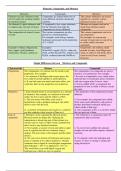
Elements Compounds Mixtures
Elements are pure substances that Compounds are formed when two or The various substances are mixed
can’t be split into anything simpler more different elements chemically together in a mixture, and no
by chemical means. combine. chemical reaction occurs.
An element is a pure substance and A compound is also a pure substance, Mixtures are impure and can be
it contains only one type of atoms but the elements that make the made from elements and/or
compound are always different compounds.
The composition of atoms by mass The various components are also The various components can be in
is fixed present in a fixed proportion. any proportion
For example, water always contain For example, we can put any
hydrogen and oxygen in the proportion amount of sugar into our cup of tea
of 2:1 (H2O) or coffee (until it becomes
saturated).
Examples: Sodium, Magnesium, Examples: Gunpowder, slat solution, chalk
Iron, copper, gold, platinum, Water H2O, sugarC12H22O11, table salt powder in water, iron fillings and
Aluminium, Oxygen, carbon etc. NaCl, carbon dioxide CO2, sulfuric acid sand, ice cubes in soft drink, alloys
H2SO4, sodium hydroxide NaOH etc. (such as steel, brass, bronze)
blood etc.
Simple Differences between Mixtures and Compounds
Characteristic Mixture Compound
Proportions The components of a mixture can be mixed in any The components of a compound are always
proportion. For example, mixed in a fix proportion. For example,
i. In a mixture of hydrogen and oxygen gases, the i. In water (a compound), every single water
two could be mixed together in any proportion. molecule has two hydrogen atoms combined
ii. If you had some iron metal and some sulfur, you with one oxygen atom. It never varies.
could mix them in any proportion you wanted to. ii. In iron sulfide (FeS), a compound, the
proportion of iron to sulfur is always exactly
the same.
Properties i. Each element keeps its own properties in a mixture i. The properties of the compound are quite
of elements. For example, in a mixture of iron and different.
sulfur, the iron is grey and the sulfur is yellow.
ii. The iron reacts with dilute acids such as ii. For example, the compound iron sulfide
hydrochloric acid to produce hydrogen; the sulfur (FeS) reacts quite differently with acids to
doesn’t react with the acid. produce poisonous hydrogen sulfide gas,
which smells of bad eggs.
iii. A mixture of hydrogen and oxygen is a colorless iii. The compound, water, is a colorless liquid
gas that explodes when you put a flame to it that just puts out a flame.
Ease of i. Mixtures can be separated by physical means. i. The elements in a compound cannot be
separation Physical means are things like changing the separated by physical means.
temperature or dissolving part of the mixture in a
solvent such as water; in other words, methods that
don’t involve any chemical reactions.
ii. For example, a mixture of iron and sulfur is quite ii. To convert iron sulfide into separate
easy to separate into the two elements using a samples of iron and sulfur requires chemical
magnet. The iron sticks to the magnet and the sulfur reactions.
doesn’t.
iii. We can cool a mixture of hydrogen and oxygen iii. To separate water into hydrogen and
gases to separate it by a physical process. Oxygen oxygen, we have to change it chemically
condenses into a liquid at a much higher temperature using electrolysis.
than hydrogen (–183 °C as opposed to –253 °C).
This would leave you with liquid oxygen and
hydrogen gas, which are easy to separate
Elements Compounds Mixtures
Elements are pure substances that Compounds are formed when two or The various substances are mixed
can’t be split into anything simpler more different elements chemically together in a mixture, and no
by chemical means. combine. chemical reaction occurs.
An element is a pure substance and A compound is also a pure substance, Mixtures are impure and can be
it contains only one type of atoms but the elements that make the made from elements and/or
compound are always different compounds.
The composition of atoms by mass The various components are also The various components can be in
is fixed present in a fixed proportion. any proportion
For example, water always contain For example, we can put any
hydrogen and oxygen in the proportion amount of sugar into our cup of tea
of 2:1 (H2O) or coffee (until it becomes
saturated).
Examples: Sodium, Magnesium, Examples: Gunpowder, slat solution, chalk
Iron, copper, gold, platinum, Water H2O, sugarC12H22O11, table salt powder in water, iron fillings and
Aluminium, Oxygen, carbon etc. NaCl, carbon dioxide CO2, sulfuric acid sand, ice cubes in soft drink, alloys
H2SO4, sodium hydroxide NaOH etc. (such as steel, brass, bronze)
blood etc.
Simple Differences between Mixtures and Compounds
Characteristic Mixture Compound
Proportions The components of a mixture can be mixed in any The components of a compound are always
proportion. For example, mixed in a fix proportion. For example,
i. In a mixture of hydrogen and oxygen gases, the i. In water (a compound), every single water
two could be mixed together in any proportion. molecule has two hydrogen atoms combined
ii. If you had some iron metal and some sulfur, you with one oxygen atom. It never varies.
could mix them in any proportion you wanted to. ii. In iron sulfide (FeS), a compound, the
proportion of iron to sulfur is always exactly
the same.
Properties i. Each element keeps its own properties in a mixture i. The properties of the compound are quite
of elements. For example, in a mixture of iron and different.
sulfur, the iron is grey and the sulfur is yellow.
ii. The iron reacts with dilute acids such as ii. For example, the compound iron sulfide
hydrochloric acid to produce hydrogen; the sulfur (FeS) reacts quite differently with acids to
doesn’t react with the acid. produce poisonous hydrogen sulfide gas,
which smells of bad eggs.
iii. A mixture of hydrogen and oxygen is a colorless iii. The compound, water, is a colorless liquid
gas that explodes when you put a flame to it that just puts out a flame.
Ease of i. Mixtures can be separated by physical means. i. The elements in a compound cannot be
separation Physical means are things like changing the separated by physical means.
temperature or dissolving part of the mixture in a
solvent such as water; in other words, methods that
don’t involve any chemical reactions.
ii. For example, a mixture of iron and sulfur is quite ii. To convert iron sulfide into separate
easy to separate into the two elements using a samples of iron and sulfur requires chemical
magnet. The iron sticks to the magnet and the sulfur reactions.
doesn’t.
iii. We can cool a mixture of hydrogen and oxygen iii. To separate water into hydrogen and
gases to separate it by a physical process. Oxygen oxygen, we have to change it chemically
condenses into a liquid at a much higher temperature using electrolysis.
than hydrogen (–183 °C as opposed to –253 °C).
This would leave you with liquid oxygen and
hydrogen gas, which are easy to separate