

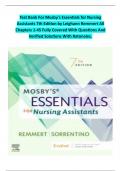
Test Bank For Mosby's Essentials for Nursing
Assistants 7th Edition by Leighann Remmert All
Chapters 1-45 Fully Covered With Questions And
Verified Solutions With Ratonales.
, Table of Contents
Chapter 1: The Nursing Assistant
Chapter 2: The Healthcare Team
Chapter 3: The Resident’s Rights
Chapter 4: Safety and Emergency Procedures
Chapter 5: The Body Structure and Function
Chapter 6: Growth and Development
Chapter 7: Nutrition and Fluids
Chapter 8: Elimination
Chapter 9: Vital Signs
Chapter 10: Personal Care
Chapter 11: Assisting with Mobility
Chapter 12: Care of the Resident with Special Needs
Chapter 13: Infection Prevention and Control
Chapter 14: Medical and Surgical Asepsis
Chapter 15: Assisting with Medical Procedures
Chapter 16: Caring for Residents with Chronic Conditions
Chapter 17: Rest and Sleep
Chapter 18: Communication and Documentation
Chapter 19: Care of the Older Adult
Chapter 20: Caring for Residents with Alzheimer’s Disease and Dementia
Chapter 21: Assisting Residents with Disabilities
,Chapter 22: Assisting with Rehabilitation and Restorative Care
Chapter 23: Caring for Residents with Respiratory Disorders
Chapter 24: Caring for Residents with Cardiovascular Disorders
Chapter 25: Caring for Residents with Diabetes
Chapter 26: Caring for Residents with Gastrointestinal Disorders
Chapter 27: Caring for Residents with Urinary Disorders
Chapter 28: Caring for Residents with Musculoskeletal Disorders
Chapter 29: Caring for Residents with Mental Health Disorders
Chapter 30: Assisting with Pain Management
Chapter 31: Palliative Care and Hospice
Chapter 32: Nutrition Support and Feeding Tubes
Chapter 33: Wound Care and Pressure Ulcers
Chapter 34: Safety in the Workplace
Chapter 35: Body Mechanics and Injury Prevention
Chapter 36: Assisting with Medication Administration (Overview)
Chapter 37: Assisting with Oxygen Therapy
Chapter 38: Assisting with Catheters and Urinary Devices
Chapter 39: Assisting with Feeding and Hydration Techniques
Chapter 40: Mental Health and Emotional Support
Chapter 41: Cultural Competency and Diversity in Care
Chapter 42: End-of-Life Care and Grief Support
Chapter 43: Ethics and Legal Issues in Nursing Assistance
Chapter 44: Emergency Preparedness and Disaster Response
Chapter 45: Career Development and Professionalism
Chapter 46: Technology and Documentation in Healthcare
Chapter 47: Review and Practice for Certification
, Chapter 1 Test Bank: Introduction to Health Care
1. What is the primary role of a nursing assistant in the healthcare team?
A) Diagnose illnesses
B) Provide personal care and assist with daily living activities
C) Prescribe medication
D) Perform surgeries
Correct Answer: B
Rationale: Nursing assistants help patients with daily activities such as bathing, dressing, and eating,
supporting the overall care plan but do not diagnose or prescribe treatments.
2. Which of the following best describes a chronic illness?
A) A sudden illness that resolves quickly
B) An ongoing illness that can be controlled but not cured
C) An illness with immediate recovery
D) An illness with no need for treatment
Correct Answer: B
Rationale: Chronic illnesses last a long time, often for life, and require ongoing management to
control symptoms and prevent complications.
3. Which healthcare setting provides care for persons who are dying?
A) Acute care hospital
B) Hospice care
C) Assisted living facility
D) Rehabilitation center
Correct Answer: B
Rationale: Hospice care focuses on comfort and quality of life for patients who are terminally ill.
4. What is the main focus of functional nursing?
A) Providing total care to each patient
B) Assigning tasks and jobs to different team members
C) Team leader supervising the entire team
D) Patient-centered care
Correct Answer: B
Rationale: Functional nursing breaks down care into tasks, with each team member assigned specific
duties.
5. Which of the following is NOT a member of the healthcare team?
A) Registered Nurse (RN)
B) Licensed Practical Nurse (LPN)
Assistants 7th Edition by Leighann Remmert All
Chapters 1-45 Fully Covered With Questions And
Verified Solutions With Ratonales.
, Table of Contents
Chapter 1: The Nursing Assistant
Chapter 2: The Healthcare Team
Chapter 3: The Resident’s Rights
Chapter 4: Safety and Emergency Procedures
Chapter 5: The Body Structure and Function
Chapter 6: Growth and Development
Chapter 7: Nutrition and Fluids
Chapter 8: Elimination
Chapter 9: Vital Signs
Chapter 10: Personal Care
Chapter 11: Assisting with Mobility
Chapter 12: Care of the Resident with Special Needs
Chapter 13: Infection Prevention and Control
Chapter 14: Medical and Surgical Asepsis
Chapter 15: Assisting with Medical Procedures
Chapter 16: Caring for Residents with Chronic Conditions
Chapter 17: Rest and Sleep
Chapter 18: Communication and Documentation
Chapter 19: Care of the Older Adult
Chapter 20: Caring for Residents with Alzheimer’s Disease and Dementia
Chapter 21: Assisting Residents with Disabilities
,Chapter 22: Assisting with Rehabilitation and Restorative Care
Chapter 23: Caring for Residents with Respiratory Disorders
Chapter 24: Caring for Residents with Cardiovascular Disorders
Chapter 25: Caring for Residents with Diabetes
Chapter 26: Caring for Residents with Gastrointestinal Disorders
Chapter 27: Caring for Residents with Urinary Disorders
Chapter 28: Caring for Residents with Musculoskeletal Disorders
Chapter 29: Caring for Residents with Mental Health Disorders
Chapter 30: Assisting with Pain Management
Chapter 31: Palliative Care and Hospice
Chapter 32: Nutrition Support and Feeding Tubes
Chapter 33: Wound Care and Pressure Ulcers
Chapter 34: Safety in the Workplace
Chapter 35: Body Mechanics and Injury Prevention
Chapter 36: Assisting with Medication Administration (Overview)
Chapter 37: Assisting with Oxygen Therapy
Chapter 38: Assisting with Catheters and Urinary Devices
Chapter 39: Assisting with Feeding and Hydration Techniques
Chapter 40: Mental Health and Emotional Support
Chapter 41: Cultural Competency and Diversity in Care
Chapter 42: End-of-Life Care and Grief Support
Chapter 43: Ethics and Legal Issues in Nursing Assistance
Chapter 44: Emergency Preparedness and Disaster Response
Chapter 45: Career Development and Professionalism
Chapter 46: Technology and Documentation in Healthcare
Chapter 47: Review and Practice for Certification
, Chapter 1 Test Bank: Introduction to Health Care
1. What is the primary role of a nursing assistant in the healthcare team?
A) Diagnose illnesses
B) Provide personal care and assist with daily living activities
C) Prescribe medication
D) Perform surgeries
Correct Answer: B
Rationale: Nursing assistants help patients with daily activities such as bathing, dressing, and eating,
supporting the overall care plan but do not diagnose or prescribe treatments.
2. Which of the following best describes a chronic illness?
A) A sudden illness that resolves quickly
B) An ongoing illness that can be controlled but not cured
C) An illness with immediate recovery
D) An illness with no need for treatment
Correct Answer: B
Rationale: Chronic illnesses last a long time, often for life, and require ongoing management to
control symptoms and prevent complications.
3. Which healthcare setting provides care for persons who are dying?
A) Acute care hospital
B) Hospice care
C) Assisted living facility
D) Rehabilitation center
Correct Answer: B
Rationale: Hospice care focuses on comfort and quality of life for patients who are terminally ill.
4. What is the main focus of functional nursing?
A) Providing total care to each patient
B) Assigning tasks and jobs to different team members
C) Team leader supervising the entire team
D) Patient-centered care
Correct Answer: B
Rationale: Functional nursing breaks down care into tasks, with each team member assigned specific
duties.
5. Which of the following is NOT a member of the healthcare team?
A) Registered Nurse (RN)
B) Licensed Practical Nurse (LPN)


