

MAIN THEMATIC CONCERNS
● Jealousy
It is one of the main themes of the play. From the beginning, we see Iago’s jealousy against Cassio for
getting promoted as Othello’s lieutenant. Iago addresses him as a “florentine” which is a non-native of
Venice. He wants to show that Cassio does not deserve the title as ‘Othello’s lieutenant’. Upon hearing
rumours about the Moor having slept with his wife Emilia, he gets jealous, “He’s done my office. I
know not if't be true”. But since this suspicion is not really supported with any evidence, it might not
really be true. However, it seems that his jealousy is so intense that he does not need proof of this
infidelity. To torment Othello, Iago uses jealousy, by constantly poisoning his mind with doubt about
Desdemona’s infidelity. He makes Othello suffer by making him believe that his wife was having an
affair with Cassio, that Desdemona loves Cassio.
● Deception
In the play, Othello believes he is being deceived by the characters who are honest (ex. Desdemona
and Cassio), while failing to see the deceit and treachery of the ones who are tricking him (ex. Iago).
Countless times, Othello refers to Iago as “honest”, showing that he is totally blind to the way Iago is
manipulating him. While he is naively unable to see that Iago is deceiving him, he is also stubbornly
convinced that Desdemona is deceiving him even when she is being totally honest. He does not
believe anything Desdemona says when she tries to prove her innocence and calls her a “whore”.
Othello’s inability to correctly identify who is and is not deceiving him makes him act rashly and
ultimately lead to tragedy.
● Love
We can see different types of love in the play: Desdemona’s love for Othello, Othello’s love for
Desdemona, Emilia’s love for her mistress, Desdemona’s affections for Cassio, Iago’s love for money,
Roderigo’s love for Desdemona, and others. The marriage of Othello and Desdemona was based on
true love but once the doubt entered Othello’s mind, the trust they had, shattered. He believed Iago’s
lies and thought his wife was unfaithful. It was only due to his wrong judgment and believing Iago
without any confirmation, that their marriage collapsed.
● Appearance versus reality
Othello, blinded, believes in the fake proofs Iago offers him without exploring for the truth himself.
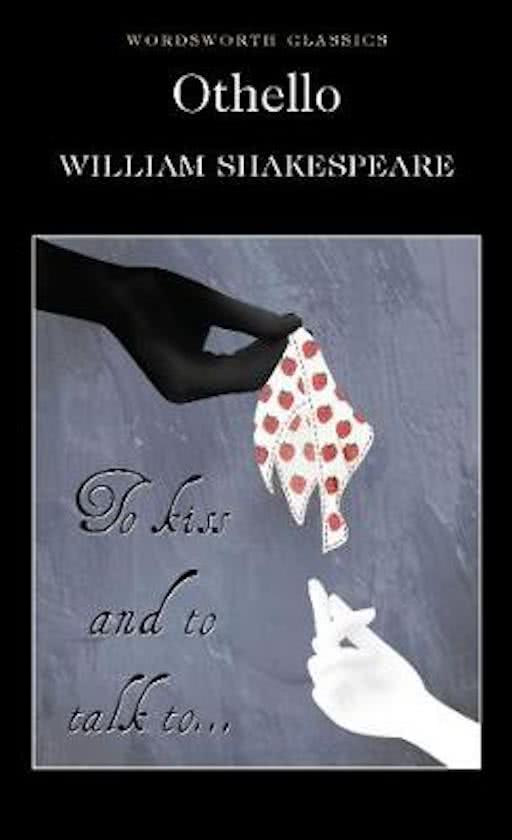
First of all, he believes Iago’s fabricated story on the handkerchief without evidence. He sees Iago as
his true “honest” friend, when in reality, he is the enemy/villain. Furthermore, Othello did not believe
Cassio to be sincere and innocent, when in fact he was. He also failed to see Desdemona’s true love
towards him and how she was someone faithful and loyal. Othello fails to judge reality everywhere
and push himself into an unending jealousy.
● Racism/Racial prejudice
Prejudice is a major theme in the play, mainly because Othello is black and Desdemona is white.
Many times throughout the play, we see the characters using openly racist language to describe
Othello, calling him such names as an “old black ram”, “a Barbary horse” and referencing his “thick
● Jealousy
It is one of the main themes of the play. From the beginning, we see Iago’s jealousy against Cassio for
getting promoted as Othello’s lieutenant. Iago addresses him as a “florentine” which is a non-native of
Venice. He wants to show that Cassio does not deserve the title as ‘Othello’s lieutenant’. Upon hearing
rumours about the Moor having slept with his wife Emilia, he gets jealous, “He’s done my office. I
know not if't be true”. But since this suspicion is not really supported with any evidence, it might not
really be true. However, it seems that his jealousy is so intense that he does not need proof of this
infidelity. To torment Othello, Iago uses jealousy, by constantly poisoning his mind with doubt about
Desdemona’s infidelity. He makes Othello suffer by making him believe that his wife was having an
affair with Cassio, that Desdemona loves Cassio.
● Deception
In the play, Othello believes he is being deceived by the characters who are honest (ex. Desdemona
and Cassio), while failing to see the deceit and treachery of the ones who are tricking him (ex. Iago).
Countless times, Othello refers to Iago as “honest”, showing that he is totally blind to the way Iago is
manipulating him. While he is naively unable to see that Iago is deceiving him, he is also stubbornly
convinced that Desdemona is deceiving him even when she is being totally honest. He does not
believe anything Desdemona says when she tries to prove her innocence and calls her a “whore”.
Othello’s inability to correctly identify who is and is not deceiving him makes him act rashly and
ultimately lead to tragedy.
● Love
We can see different types of love in the play: Desdemona’s love for Othello, Othello’s love for
Desdemona, Emilia’s love for her mistress, Desdemona’s affections for Cassio, Iago’s love for money,
Roderigo’s love for Desdemona, and others. The marriage of Othello and Desdemona was based on
true love but once the doubt entered Othello’s mind, the trust they had, shattered. He believed Iago’s
lies and thought his wife was unfaithful. It was only due to his wrong judgment and believing Iago
without any confirmation, that their marriage collapsed.
● Appearance versus reality
Othello, blinded, believes in the fake proofs Iago offers him without exploring for the truth himself.
First of all, he believes Iago’s fabricated story on the handkerchief without evidence. He sees Iago as
his true “honest” friend, when in reality, he is the enemy/villain. Furthermore, Othello did not believe
Cassio to be sincere and innocent, when in fact he was. He also failed to see Desdemona’s true love
towards him and how she was someone faithful and loyal. Othello fails to judge reality everywhere
and push himself into an unending jealousy.
● Racism/Racial prejudice
Prejudice is a major theme in the play, mainly because Othello is black and Desdemona is white.
Many times throughout the play, we see the characters using openly racist language to describe
Othello, calling him such names as an “old black ram”, “a Barbary horse” and referencing his “thick

