ATPL THEORY
Performance - Complete Summary
,Table of Contents
Requirements and performance classes 4
Certification 4
Measuring performance 4
Probability of events 5
Performance classes (EU-OPS) 5
Jet engines 6
Jet thrust 6
Propeller aircraft 7
Propellers 7
Drag 7
Minimum amount of drag 7
Increasing mass 8
CL-curve 8
ECTM Graphs 8
L
/D-ratio/alpha graph 8
Power required 9
Turning 9
Icing 9
Fuel consumption 9
General formulas 10
Takeoff performance 10
Runway distances 10
Take-off 10
Speeds during take-off 10
Thrust to weight ratio 10
Rotation 11
Minimum control speed in the air 12
Tyres 12
Flaps during take-off 13
Engine failure during take-off 13
Wet runways 15
Brakes 15
Controllability with asymmetric thrust 15
All engine take-off 16
Clearway 17
Balanced field V1 17
TORR considerations 18
ASDR considerations 18
Factors affecting accelerate stop distance 19
Climbing 19
Climb 19
Best angle of climb speed (VX) 20
Factors that affect the climb gradient 20
Factors that affect the value of VX 20
Take-off safety speed (V2) 20
Climb limit 21
Best rate of climb (VY) 22
Factors affecting the rate of climb 22
2
, Factors affecting V
Y 22
Fuel mileage 23
Summary 24
Buffet boundary limit 25
Range/payload diagrams 26
Descent and landing 26
Driftdown 26
Rate of descent 27
Gliding for endurance 27
Missed approach and balked landing 27
Controllability – VMCL 27
Landing 28
Obstacles 28
Obstacle clearance 28
Take-off 28
En-route 30
Driftdown 30
Landing 30
Advanced take-off techniques 30
De-rated thrust on take-off 31
Contamined runways 32
Aircraft performance with contamined runways 33
Dynamic hydroplaning 33
PCN codes 34
Use of graphs 34
MRJT Graphs 34
Take-off speeds determination 37
VMBE-check 37
Maximum thrust settings 38
Contaminated runway take-off 38
Increased V2 Procedure 38
Additional take-off procedures 39
En-route engine failure 41
Gross level-off altitude 41
Net level-off altitude 41
Net driftdown profiles 41
Landing field length 42
Landing climb limit 43
Quick turnarounds 43
Brake cooling schedule 43
3
, Requirements and performance classes
Incidents and accidents usually result in changing the procedures or performance calculations,
because certain weaknesses become visible here. Some changes are implied very fast, while
others, like ETOPS, are being introduced more gradually.
ETOPS – Extended-range Twin-engine Operational Performance Standards. The use of computers
made manual calculation failures far less common. So, this became much safer.
Many performance calculations are based on an ‘engine-out’ situation: how does this failure affect
our operation?
Certification
When aircrafts are produced, they meet two types of regulations:
- FAR’s – Federal Airworthiness Requirements
- JAR’s – Joint Airworthiness Requirements
Since 2003, EASA is responsible for the regulation of airworthiness requirements within EU-states,
so specific EU-documents were created. The performance requirements are in EASA’s CS23
(smaller planes) and CS25 (bigger planes) The original names were JAR23 and JAR25.
Once all performance requirements are okay, an aircraft will get a Type Certificate.
EU-OPS: second level of regulation to ensure that an aircraft is safe to operate in the public
transport role.
Measuring performance
Measured performance: data produced from pre-production
aircraft.
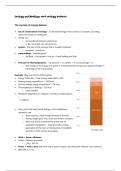
Gross performance: estimated fleet average performance.
Most planes will perform this way, some
might perform better or poorer. You are
at least as likely to achieve gross
performance standards as not. So, a
50% change.
You can apply safety margins, as shown in the above picture. The border is called your safety
standard or net performance. The area between the gross and net performance is your safety
margin. Different parameters use different net performance standards. The ‘location’ of the net
performance is a balance between safety & operating costs.
Net performance: a safety standard which has a determined risk level. For example:
1:100.000 chance for a failure.
Extra safety margin: to meet certain performance
standards, the above example of
1:100.000 would only need a 1:10
extra safety margin to meet a standard
of 1:1.000.000
Important to understand is that a risk to an accident can never be reduced to 0, even when the
right techniques and counter-measures are being used.
4
Performance - Complete Summary
,Table of Contents
Requirements and performance classes 4
Certification 4
Measuring performance 4
Probability of events 5
Performance classes (EU-OPS) 5
Jet engines 6
Jet thrust 6
Propeller aircraft 7
Propellers 7
Drag 7
Minimum amount of drag 7
Increasing mass 8
CL-curve 8
ECTM Graphs 8
L
/D-ratio/alpha graph 8
Power required 9
Turning 9
Icing 9
Fuel consumption 9
General formulas 10
Takeoff performance 10
Runway distances 10
Take-off 10
Speeds during take-off 10
Thrust to weight ratio 10
Rotation 11
Minimum control speed in the air 12
Tyres 12
Flaps during take-off 13
Engine failure during take-off 13
Wet runways 15
Brakes 15
Controllability with asymmetric thrust 15
All engine take-off 16
Clearway 17
Balanced field V1 17
TORR considerations 18
ASDR considerations 18
Factors affecting accelerate stop distance 19
Climbing 19
Climb 19
Best angle of climb speed (VX) 20
Factors that affect the climb gradient 20
Factors that affect the value of VX 20
Take-off safety speed (V2) 20
Climb limit 21
Best rate of climb (VY) 22
Factors affecting the rate of climb 22
2
, Factors affecting V
Y 22
Fuel mileage 23
Summary 24
Buffet boundary limit 25
Range/payload diagrams 26
Descent and landing 26
Driftdown 26
Rate of descent 27
Gliding for endurance 27
Missed approach and balked landing 27
Controllability – VMCL 27
Landing 28
Obstacles 28
Obstacle clearance 28
Take-off 28
En-route 30
Driftdown 30
Landing 30
Advanced take-off techniques 30
De-rated thrust on take-off 31
Contamined runways 32
Aircraft performance with contamined runways 33
Dynamic hydroplaning 33
PCN codes 34
Use of graphs 34
MRJT Graphs 34
Take-off speeds determination 37
VMBE-check 37
Maximum thrust settings 38
Contaminated runway take-off 38
Increased V2 Procedure 38
Additional take-off procedures 39
En-route engine failure 41
Gross level-off altitude 41
Net level-off altitude 41
Net driftdown profiles 41
Landing field length 42
Landing climb limit 43
Quick turnarounds 43
Brake cooling schedule 43
3
, Requirements and performance classes
Incidents and accidents usually result in changing the procedures or performance calculations,
because certain weaknesses become visible here. Some changes are implied very fast, while
others, like ETOPS, are being introduced more gradually.
ETOPS – Extended-range Twin-engine Operational Performance Standards. The use of computers
made manual calculation failures far less common. So, this became much safer.
Many performance calculations are based on an ‘engine-out’ situation: how does this failure affect
our operation?
Certification
When aircrafts are produced, they meet two types of regulations:
- FAR’s – Federal Airworthiness Requirements
- JAR’s – Joint Airworthiness Requirements
Since 2003, EASA is responsible for the regulation of airworthiness requirements within EU-states,
so specific EU-documents were created. The performance requirements are in EASA’s CS23
(smaller planes) and CS25 (bigger planes) The original names were JAR23 and JAR25.
Once all performance requirements are okay, an aircraft will get a Type Certificate.
EU-OPS: second level of regulation to ensure that an aircraft is safe to operate in the public
transport role.
Measuring performance
Measured performance: data produced from pre-production
aircraft.
Gross performance: estimated fleet average performance.
Most planes will perform this way, some
might perform better or poorer. You are
at least as likely to achieve gross
performance standards as not. So, a
50% change.
You can apply safety margins, as shown in the above picture. The border is called your safety
standard or net performance. The area between the gross and net performance is your safety
margin. Different parameters use different net performance standards. The ‘location’ of the net
performance is a balance between safety & operating costs.
Net performance: a safety standard which has a determined risk level. For example:
1:100.000 chance for a failure.
Extra safety margin: to meet certain performance
standards, the above example of
1:100.000 would only need a 1:10
extra safety margin to meet a standard
of 1:1.000.000
Important to understand is that a risk to an accident can never be reduced to 0, even when the
right techniques and counter-measures are being used.
4