PROPERTY OF
VarsityTimes
For more assistance and exclusive, unique assignments, contact us on Telegram:
https://t.me/varsity_times
TAKE YOUR PICK (OPTION A or B)
QUESTION 1
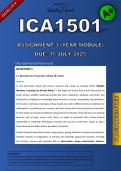
1.1 Apply the concept of reflection-in-action to a situation where learners are disengaged during
a lesson. (5 marks)
Reflection-in-action, developed by Donald Schön, is the teacher’s ability to think critically and
adapt while teaching, unlike reflection-on-action which happens after the lesson. It involves
noticing problems or unexpected learner reactions during teaching and making immediate
adjustments to improve learning.
For example, during an English Home Language lesson on narrative writing in Grade 6, I noticed
learners becoming disengaged, with some staring out the window and others doodling on their
books instead of brainstorming story ideas. Recognising this as a problem, I reflected in action
about
QUESTIONmy 1approach. I realised that my abstract explanation of “narrative structure” lacked
relevance to their experiences. In response, I quickly changed strategy by asking them to share oral
stories
1.1 about
Apply the funny
conceptevents at home or in theto
of reflection-in-action community
a situationbefore
wherewriting.
learnersThis
arereflective
disengagedresponse
during
re-engaged learners as they eagerly shared personal stories, laughed together, and felt confident
a lesson. (5 marks)
to write them down. Thus, through reflection-in-action, I identified disengagement, adapted by
making the lesson practical and learner-centred, and improved engagement by connecting content
Reflection-in-action, developed by Donald Schön, refers to a teacher’s ability to think critically
to their realities, enhancing both participation
during teaching and adjust their methods instantly to respond to learners’ needs. It involves
noticing challenges or disengagement in real time and adapting strategies to improve learning. For
example, during a Grade 5 Natural Sciences lesson about photosynthesis, I noticed that learners
seemed bored and unfocused; some were doodling while others whispered among themselves,
showing clear signs of disengagement. Reflecting in action, I recognised that my lesson was too
theoretical, lacking visual and experiential connections. Immediately, I paused the explanation and
Disclaimer:
took learners outside to observe green plants around the schoolyard. I asked them to touch leaves,
The materials provided are intended for educational and informational purposes only. They
should notice
not betheir green as
submitted colour, andwork
original relateoritused
to chlorophyll and
in violation ofsunlight absorption.
any academic This adaptation made
institution's
policies.the
The buyer is solely responsible for how the materials are used.
concept real and tangible, sparking their curiosity and questions. Through reflection-in-action,
I identified disengagement, adapted my strategy by incorporating experiential learning, and re-
VarsityTimes
For more assistance and exclusive, unique assignments, contact us on Telegram:
https://t.me/varsity_times
TAKE YOUR PICK (OPTION A or B)
QUESTION 1
1.1 Apply the concept of reflection-in-action to a situation where learners are disengaged during
a lesson. (5 marks)
Reflection-in-action, developed by Donald Schön, is the teacher’s ability to think critically and
adapt while teaching, unlike reflection-on-action which happens after the lesson. It involves
noticing problems or unexpected learner reactions during teaching and making immediate
adjustments to improve learning.
For example, during an English Home Language lesson on narrative writing in Grade 6, I noticed
learners becoming disengaged, with some staring out the window and others doodling on their
books instead of brainstorming story ideas. Recognising this as a problem, I reflected in action
about
QUESTIONmy 1approach. I realised that my abstract explanation of “narrative structure” lacked
relevance to their experiences. In response, I quickly changed strategy by asking them to share oral
stories
1.1 about
Apply the funny
conceptevents at home or in theto
of reflection-in-action community
a situationbefore
wherewriting.
learnersThis
arereflective
disengagedresponse
during
re-engaged learners as they eagerly shared personal stories, laughed together, and felt confident
a lesson. (5 marks)
to write them down. Thus, through reflection-in-action, I identified disengagement, adapted by
making the lesson practical and learner-centred, and improved engagement by connecting content
Reflection-in-action, developed by Donald Schön, refers to a teacher’s ability to think critically
to their realities, enhancing both participation
during teaching and adjust their methods instantly to respond to learners’ needs. It involves
noticing challenges or disengagement in real time and adapting strategies to improve learning. For
example, during a Grade 5 Natural Sciences lesson about photosynthesis, I noticed that learners
seemed bored and unfocused; some were doodling while others whispered among themselves,
showing clear signs of disengagement. Reflecting in action, I recognised that my lesson was too
theoretical, lacking visual and experiential connections. Immediately, I paused the explanation and
Disclaimer:
took learners outside to observe green plants around the schoolyard. I asked them to touch leaves,
The materials provided are intended for educational and informational purposes only. They
should notice
not betheir green as
submitted colour, andwork
original relateoritused
to chlorophyll and
in violation ofsunlight absorption.
any academic This adaptation made
institution's
policies.the
The buyer is solely responsible for how the materials are used.
concept real and tangible, sparking their curiosity and questions. Through reflection-in-action,
I identified disengagement, adapted my strategy by incorporating experiential learning, and re-