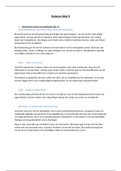
MEDICAL SCHOOL EAR, NOSE AND
THROAT
KNOWLEDGE FOR FINALS
, ENT
Anatomy, physiology and examination of the ear
The external auditory canal is 2.5cm long (The cochlea is also about 2.5 turns
big)
The outer 1/3 of the canal is cartilage, hairy skin, it secretes wax which is non-
migratory.
The inner 2/3 of the canal is bony, hairless, has no wax secretion and is
migratory (migrates to outer third where it mixes with sebaceous secretions
and becomes wax)
The ear canal curves both anteriorly and inferiorly (it is straightened by pulling
pinna up and back to see better when using an otoscope)
When using an otoscope, you have a view of the tympanic membrane, under which
will be the handle of malleus, and the lateral process of the malleus. You can tell
which ear the photo is taken from because the cone of light from the onus is always
anterior.
The tympanic membrane has 2 parts, the pars tensa and pars flaccida. The Pars
tensa has an extra layer and is hence stronger (the pars flaccida hence contributes
to disease often as it is weaker)
Malleus, incus and stapes are the 3 small bones of the inner ear (incus and stapes
are however not visible through the tympanic membrane). Sound vibrates through
the 3 bones to the stapes bone, where this bone transmits sound through the oval
window to the cochlea.
The Middle ear: Converts sound pressure in
the surrounding air, into sound pressure in
fluid, due to the fact that the cochlear is
surrounded by fluid.
The tympanic membrane is 22x larger than
the stapes bone. This acts as a footplate to
concentrate sound onto the stapes bone.
Label the diagram to the left to help yourself
remember the view when using an
otoscope.
, The Eustachian tubes
These equalise pressure between the inner ear and the outside atmosphere.
The Eustachian tube constantly ventilates the middle ear and absorbs the air
from each swallowing actions. In addition, it has a cleaning and mucociliary
function.
Eustachian tube obstructions:
This causes a Vacuum to form, causing an acute transudate and middle ear
effusion. When this becomes infected this causes acute otitis media with
effusion (glue ear)
Long term Eustachian tube dysfunction causes a constant vacuum and inward
collapse of eardrum around the middle ear. This effusion may persist for
several weeks after the ear infection has cleared up.
The Inner ear
The cochlea, a coil of 2.5 turns.
The inner ear holds the mechanism of hearing. Stapes compresses fluid in the
vestibule (the entrance to the cochlea) and causes a pressure wave
throughout the cochlea. This pressure wave passes up the scala vestibule
and scala tympani to the round window outlet. (The round window allows fluid
within the cochlea to be comprehensible and compressible)
The organ of corti between the fluid layers in the cochlea causes small hairs
to be displaced and sound to be sensed by these cells.
Both the scala vestibule and scala tympani are filled with perilymph
The scala media is filled with endo lymph from the Striae vascularis and
bathes the organ of corti.
Area of maximum hair displacement in the cochlea depends on the frequency
of the sound.
Higher frequencies are picked up closer to the stapes bone, at the start of the
2.5 turns. Lower frequencies are picked up nearer to the apex of the cochlea,
further along the 2.5 turns.
The range of Human hearing frequencies = 20hz – 20Khz
THROAT
KNOWLEDGE FOR FINALS
, ENT
Anatomy, physiology and examination of the ear
The external auditory canal is 2.5cm long (The cochlea is also about 2.5 turns
big)
The outer 1/3 of the canal is cartilage, hairy skin, it secretes wax which is non-
migratory.
The inner 2/3 of the canal is bony, hairless, has no wax secretion and is
migratory (migrates to outer third where it mixes with sebaceous secretions
and becomes wax)
The ear canal curves both anteriorly and inferiorly (it is straightened by pulling
pinna up and back to see better when using an otoscope)
When using an otoscope, you have a view of the tympanic membrane, under which
will be the handle of malleus, and the lateral process of the malleus. You can tell
which ear the photo is taken from because the cone of light from the onus is always
anterior.
The tympanic membrane has 2 parts, the pars tensa and pars flaccida. The Pars
tensa has an extra layer and is hence stronger (the pars flaccida hence contributes
to disease often as it is weaker)
Malleus, incus and stapes are the 3 small bones of the inner ear (incus and stapes
are however not visible through the tympanic membrane). Sound vibrates through
the 3 bones to the stapes bone, where this bone transmits sound through the oval
window to the cochlea.
The Middle ear: Converts sound pressure in
the surrounding air, into sound pressure in
fluid, due to the fact that the cochlear is
surrounded by fluid.
The tympanic membrane is 22x larger than
the stapes bone. This acts as a footplate to
concentrate sound onto the stapes bone.
Label the diagram to the left to help yourself
remember the view when using an
otoscope.
, The Eustachian tubes
These equalise pressure between the inner ear and the outside atmosphere.
The Eustachian tube constantly ventilates the middle ear and absorbs the air
from each swallowing actions. In addition, it has a cleaning and mucociliary
function.
Eustachian tube obstructions:
This causes a Vacuum to form, causing an acute transudate and middle ear
effusion. When this becomes infected this causes acute otitis media with
effusion (glue ear)
Long term Eustachian tube dysfunction causes a constant vacuum and inward
collapse of eardrum around the middle ear. This effusion may persist for
several weeks after the ear infection has cleared up.
The Inner ear
The cochlea, a coil of 2.5 turns.
The inner ear holds the mechanism of hearing. Stapes compresses fluid in the
vestibule (the entrance to the cochlea) and causes a pressure wave
throughout the cochlea. This pressure wave passes up the scala vestibule
and scala tympani to the round window outlet. (The round window allows fluid
within the cochlea to be comprehensible and compressible)
The organ of corti between the fluid layers in the cochlea causes small hairs
to be displaced and sound to be sensed by these cells.
Both the scala vestibule and scala tympani are filled with perilymph
The scala media is filled with endo lymph from the Striae vascularis and
bathes the organ of corti.
Area of maximum hair displacement in the cochlea depends on the frequency
of the sound.
Higher frequencies are picked up closer to the stapes bone, at the start of the
2.5 turns. Lower frequencies are picked up nearer to the apex of the cochlea,
further along the 2.5 turns.
The range of Human hearing frequencies = 20hz – 20Khz